Clearance CLR-4175 · AIR724
AIRRWA
Airlines & NetworksClearance sheet
RwandAir to Add Four A330-200s This Financial Year
RwandAir expects four more A330-200s this financial year as it prepares new Europe and Far East routes, deepened Qatar Airways ties and cargo expansion.
Read-back
- RwandAir took delivery of an A330-200 on August 24, 2026, the first of five planned, with four more due this financial year.
- Codeshare and interline agreement with EgyptAir signed June 10, 2026, covering Cairo, Rome and Amman via Kigali.
- Qatar Airways has retired its A330 passenger fleet, offering pilots short-term assignments at RwandAir and transferring one aircraft to Kigali.
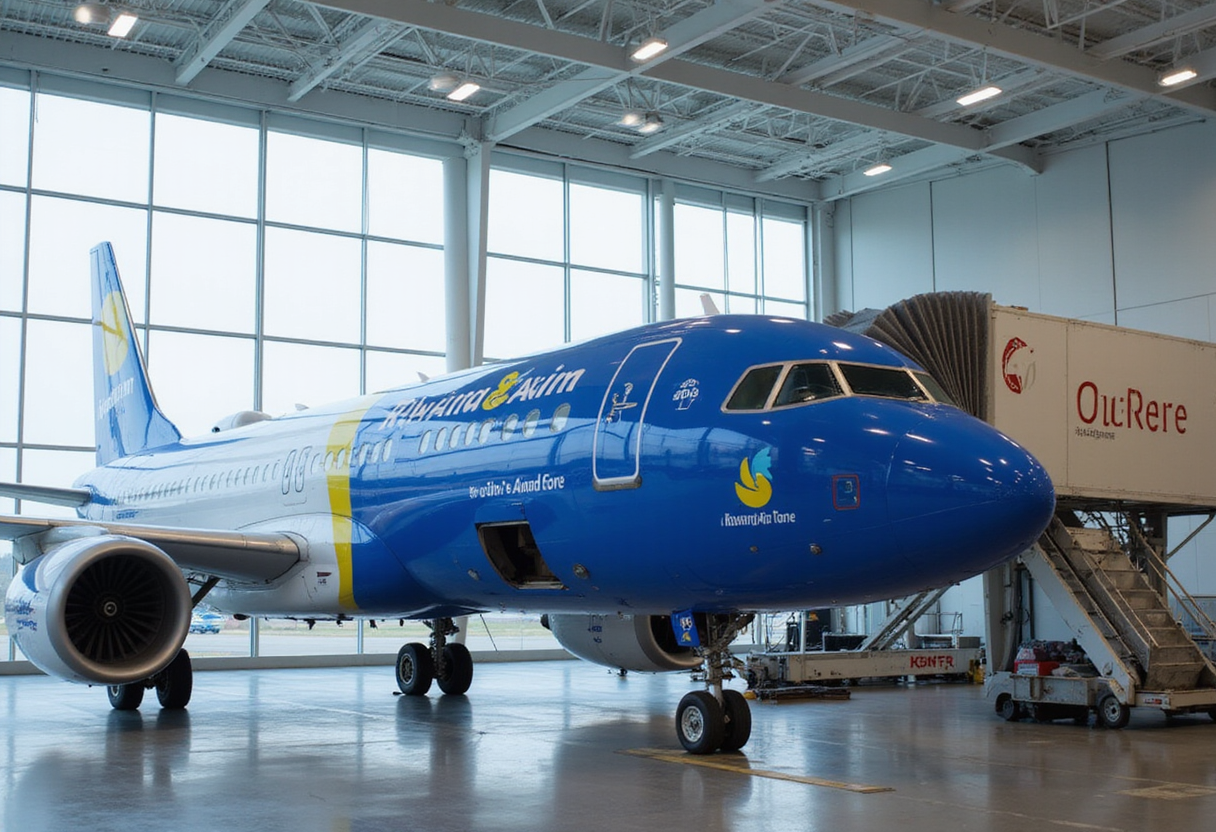
RwandAir expects to take delivery of four more Airbus A330-200s within the current financial year, adding to the widebody it received on August 24, 2026, as it prepares to announce new destinations in Europe and the Far East.
Chief Commercial Officer Reuben Mbonye set out the plan in an interview with AeroTime at the Aviation Africa Summit in Nairobi, held on September 9 and 10, 2026. He framed the airline's growth around three pillars: fleet, network and people.
"We are looking at expanding our fleet, but at the same time also growing our network," Mbonye said. "We have a target to look at more destinations within Europe and the Far East."
Widebody build-out
The A330-200 handed over on August 24 was described by the airline at the time as the first of five planned. If the remaining four arrive on schedule within the financial year, the addition would mark an unusually fast widebody expansion for a carrier of RwandAir's size.
The airline took its third A330 in March 2023. In an April 2024 interview with AeroTime, CEO Yvonne Makolo said RwandAir intended to double its fleet within five years while cutting the number of aircraft types it operates from five to three.
The third pillar is staffing. Mbonye said the airline is investing in RISE, a graduate development program that recruits high-potential Rwandan graduates and rotates them across key departments, building a leadership pipeline to match fleet growth.
Partnerships extend the network beyond Kigali
Mbonye argued partnerships let the carrier sell beyond its own metal. "No man is an island," he said. "We don't fly everywhere, but through partnerships, we're able to give services to our passengers beyond where RwandAir operates to."
Two agreements stand out. RwandAir signed a codeshare and interline agreement with EgyptAir on June 10, 2026, covering Cairo, Rome and Amman via Kigali, including markets the Rwandan carrier does not serve itself. A deepened arrangement with Qatar Airways was announced during the Nairobi summit.
The Qatar Airways relationship dates back to a codeshare signed in October 2021. It has since widened in an unusual direction: Qatar Airways has retired its A330 passenger fleet and is offering those pilots short-term assignments at RwandAir, with one of the aircraft also transferring to Kigali — a arrangement that supplies both capacity and flight crew from a single partner.
Cargo as a growth pillar
Mbonye traced RwandAir's cargo focus back to the pandemic.
"You do recall during the COVID times when no passenger aircraft was taking off," he said. "The only thing that sustained aviation was cargo. So we've learned that throughout this there is a huge opportunity, especially in Africa where it's untapped."
West Africa illustrates the strategy. In June 2026, RwandAir and Nigeria's Federal Ministry of Industry, Trade and Investment expanded an air cargo corridor, opening export routes from Nigeria to Kigali, Lusaka and Harare.
"An airline is just not a standalone, it's an ecosystem," Mbonye said. "We are there to facilitate, there to make sure that businesses continue."
Middle East conflict forces adaptation
Fuel costs were the first effect of the Middle East conflict to hit RwandAir's balance sheet. "It just shot up, it skyrocketed," Mbonye said. "So we had to adapt, of course. We had to review fares such that we are able at least to sustain our operations."
The airline temporarily suspended its Doha and Dubai services and has since fully resumed the nonstop flights. Mbonye said the disruption carried a lesson beyond pricing.
"What that has taught us is that we need to diversify," he said. "So we are looking at operating other destinations that can allow us to retain the level of flexibility and operations that we intend to have."
Taxes and liberalization
Asked what African aviation needs to change commercially, Mbonye pointed to the tax burden on tickets. He cited the Single African Air Transport Market (SAATM), the African Union framework intended to liberalize air travel between member states, and the gap between what governments have signed and what they have implemented.
"There's slow adoption," he said, calling on governments to support the framework so the tax component of fares can come down.
"We need to stop treating aviation like a luxury," Mbonye said. "It's a necessity at this point in time. So we need to see everyone flying."
With four A330-200s due this financial year and new European and Far East destinations set to be announced, RwandAir is positioning the widebody fleet as the instrument for its next phase of long-haul growth.
via timesaerospace-registrations.com (Original)
More from Grace Kim
Show full bio
News editor covering consumer brands and retail at Flightdeck Report.
138 articles
Same bay
- FDR510Ethiopian Airlines Weighs Three-Way Choice for 25-Aircraft Order · September 28, 2026
- FDR323Uganda Airlines Commits to Boeing Order for Fleet Expansion · September 30, 2026
- FDR908Ethiopian Airlines Prepares 100-Plus Aircraft Order · September 28, 2026
- FDR728Uganda Airlines places first Boeing order with eight-jet deal · September 30, 2026
- FDR502Ethiopian Airlines Signs New Aircraft Order Agreement With Boeing · September 30, 2026