Clearance CLR-2595 · AIR852
AIRRYA
Airlines & NetworksClearance sheet
Ryanair carried 20.1 million passengers in September despite 1,000 cancellations
Ryanair carried 20.1 million passengers in September, up 4% year-on-year, despite cancelling 1,000 flights to UK ATC disruption, Belgian strikes and Etna eruptions.
Read-back
- Ryanair carried over 20.1 million passengers in September, up 4% year-on-year, despite 1,000 flight cancellations.
- On 2 September Ryanair cut its fiscal 2027 traffic target to 214 million passengers from 216 million, lowering growth to 3%.
- Ryanair has hedged 80% of fuel through March 2027 at about $67 per barrel; spot jet fuel trades near $140.
- A one-off winter capacity cut from November 2026 to March 2027 is expected to trim winter losses by €70 million.
- Summer 2026 peak traffic target of 145 million passengers, a 5% increase, remains on track.
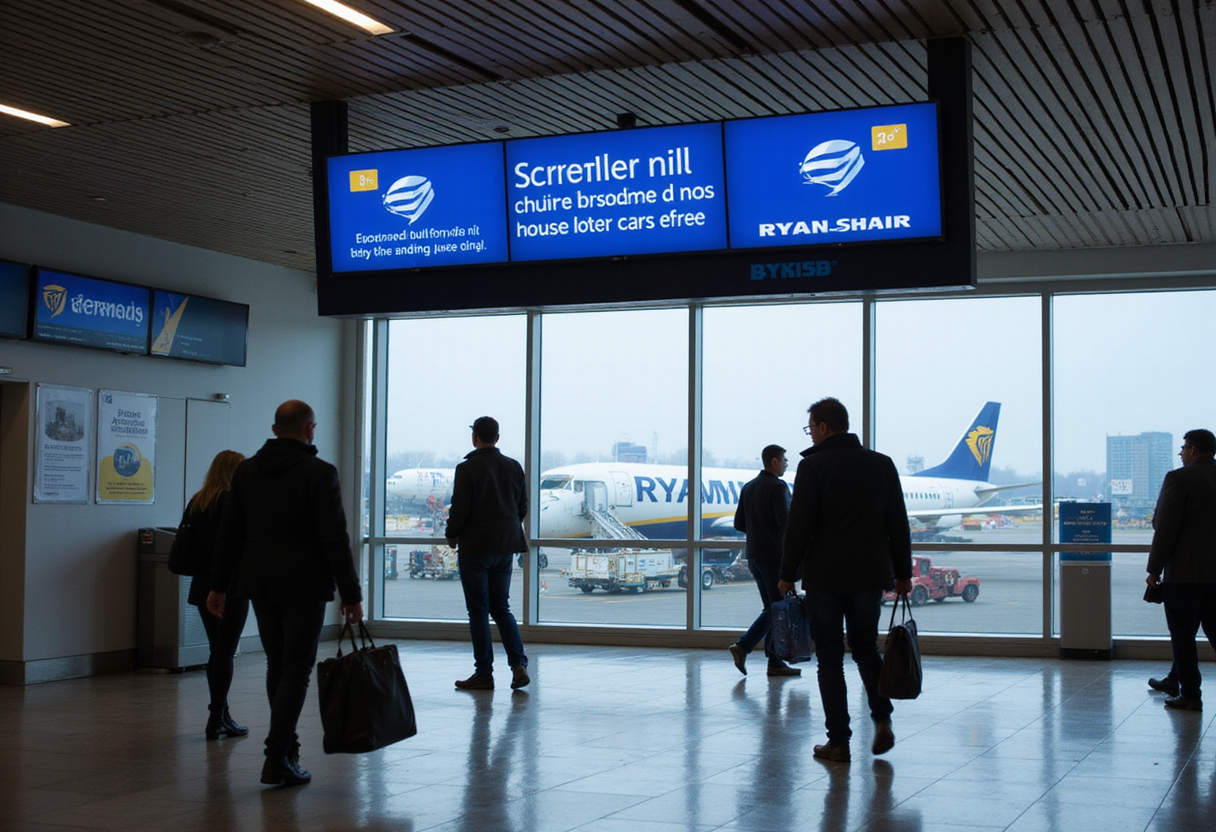
Ryanair carried more than 20.1 million passengers in September, a 4% year-on-year increase, even as it cancelled 1,000 flights during the month.
The Irish budget carrier attributes the cancellations to three external shocks: UK air traffic control disruptions, strike action in Belgium and volcanic eruptions at Mount Etna. The September performance lands weeks after a broader reset of the airline's financial and capacity outlook.
Why did Ryanair cut its full-year guidance?
On 2 September, Ryanair scaled back its traffic target for the financial year ending 31 March 2027 to 214 million passengers, down from 216 million. The revision lowers full-year growth to 3%, from 4% previously.
The airline also warned that fiscal 2027 net profit will fall short of the record €2.26 billion ($2.61 billion) profit after tax it reported in fiscal 2026. The pressure is already visible in the numbers: in its fiscal first quarter ended 30 June, net profit fell by more than a third.
The culprit is fuel. Elevated jet fuel prices hit Ryanair's unhedged fuel position, leaving the carrier exposed on the portion of its requirement not covered by hedging contracts.
How exposed is Ryanair to jet fuel prices?
Ryanair has hedged 80% of its fuel requirement through March 2027 at about $67 per barrel. The remaining 20% is unhedged, and that exposure left the airline vulnerable to spot jet fuel prices trading around $140 per barrel — more than double its hedged rate.
The arithmetic is stark. A fifth of the fuel bill priced at roughly double the hedged level compounds quickly at Ryanair's scale of operations, and it explains both the first-quarter profit decline and the defensive posture the carrier has adopted for the winter.
What is the airline doing about winter losses?
To mitigate unhedged fuel costs during the weaker winter period, Ryanair is executing what it describes as a strategic reduction in capacity. It expects passenger traffic between November 2026 and March 2027 to be broadly flat year-on-year.
The one-off winter schedule cut is expected to trim winter losses by €70 million. That figure quantifies the trade-off: grounding growth in the low season costs revenue, but it removes the marginal flying that would be loss-making at $140-per-barrel spot fuel prices on the unhedged share of consumption.
The strategy is defensive rather than structural. Ryanair is not retrenching its network permanently; it is parking capacity in the season where yields are weakest and fuel exposure bites hardest.
Can summer 2026 still deliver growth?
Ryanair expects summer peak traffic between April and October 2026 to remain on track for a 5% increase, reaching 145 million passengers. That target stands despite the downward revision to the full-year figure.
The split defines the airline's current posture: compress winter flying to contain losses, then restore growth for the peak season when demand and yields can absorb higher costs.
September's 4% growth, achieved through 1,000 cancellations, suggests the operation remains capable of delivering volume even under strain. But the guidance cut, the profit warning and the €70 million winter mitigant together mark a more cautious Ryanair than the one that posted a record €2.26 billion profit in fiscal 2026.
What comes next?
The immediate test is execution. If winter traffic lands broadly flat as planned and the €70 million loss reduction materializes, Ryanair enters summer 2026 positioned to chase the 145 million peak-season passenger target. If jet fuel spot prices stay near $140 per barrel beyond the hedged horizon, the carrier will face fresh decisions on extending hedges or trimming the remaining unhedged exposure into the next financial year.
via FlightGlobal (Source)
More from Grace Kim
Show full bio
News editor covering consumer brands and retail at Flightdeck Report.
356 articles
Same bay
- FDR701Ryanair's O'Leary warns jet fuel costs could stay high until 2028 · October 9, 2026
- FDR662Ryanair's O'Leary Calls for Groundings to Fix Air Traffic Control · September 26, 2026
- FDR292Ryanair Adds 150,000 Winter Seats Across Manchester and Liverpool · September 30, 2026
- FDR340Ryanair Adds 22 New Routes to UK Winter 2026 Schedule · September 27, 2026
- FDR757Ryanair discloses 1,000 cancellations tied to UK ATC disruption · October 2, 2026