Clearance CLR-2323 · AIR334
AIRSIX
Airspace & RegulationClearance sheet
Six Turkish Drones Cross Into Greek Airspace Over the Aegean
Six Turkish military drones entered Greek airspace over the Aegean Sea, according to a Militarnyi report. The outlet disclosed no platform type, duration, coordinates or official attribution.
Read-back
- Six Turkish military drones entered Greek airspace over the Aegean Sea, per Militarnyi.
- The report disclosed no platform type, operating unit, duration, coordinates or time of the incursion.
- Militarnyi carried no direct attribution to Greek or Turkish officials.
- Turkey and Greece are both NATO members with recurring Aegean airspace disputes dating to the 1970s.
- No confirmation yet from the Hellenic National Defence General Staff or the Turkish Ministry of National Defence.
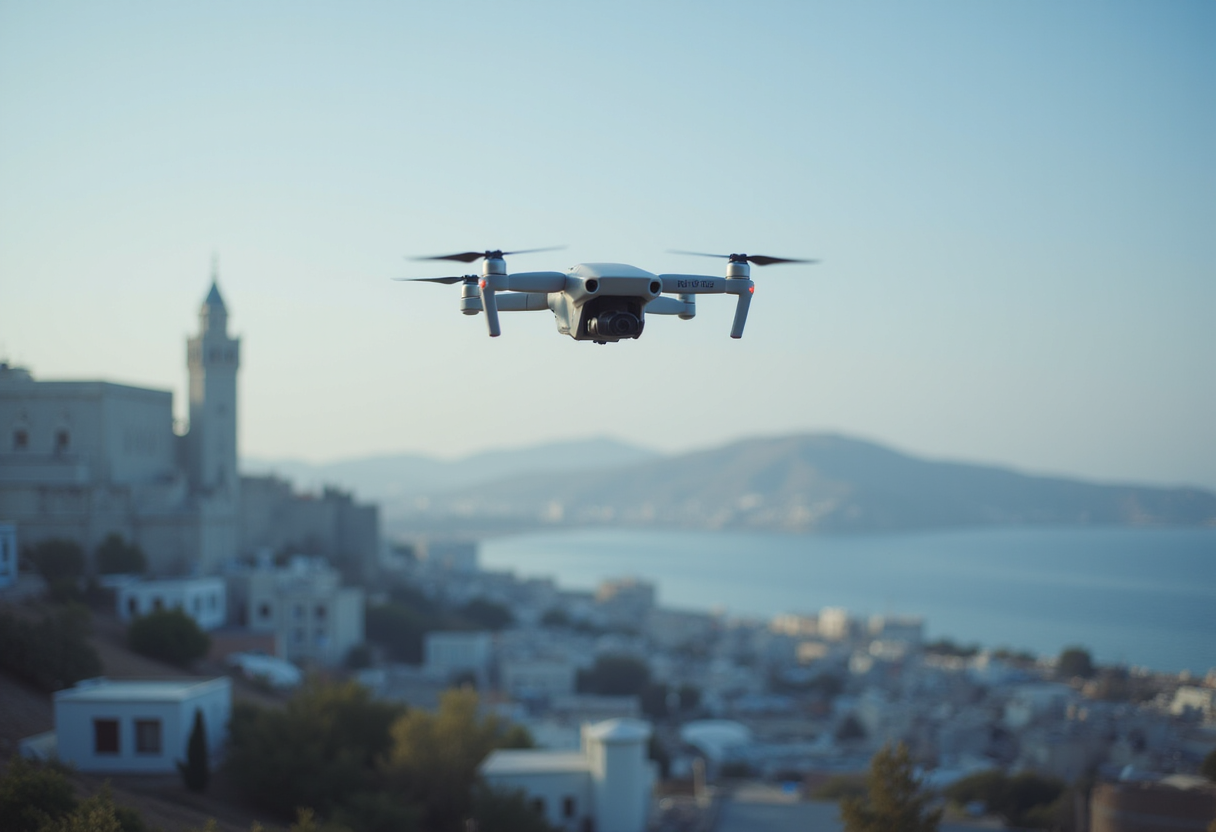
Six Turkish military drones entered Greek airspace over the Aegean Sea, the Ukrainian defense publication Militarnyi reported via its English-language news feed.
The outlet's headline identified the incursion as involving six unmanned aerial vehicles. The report did not specify the platform type, operating unit, coordinates, duration, or the time of the breach. Militarnyi provided no attribution to Greek or Turkish officials and quoted no spokesperson from either side of the dispute.
The report lands inside a long-running pattern of aerial friction between Turkey and Greece, both NATO members whose overlapping claims in the Aegean have produced recurring airspace and maritime incidents since the 1970s. The underlying disagreement covers the delimitation of the continental shelf, territorial waters, and Flight Information Region boundaries, plus the status of demilitarized islands assigned under the 1923 Treaty of Lausanne and the 1947 Treaty of Paris.
How routine are these reports?
Greek authorities routinely log and publish alleged Turkish overflight incidents. Ankara typically contests the framing or asserts that its operations fall within Turkish FIR procedures rather than Greek sovereign airspace.
The two states established a deconfliction mechanism in 2002, modeled on NATO processes, designed to lower the risk of an unintended exchange. That mechanism has not resolved the underlying delimitation question.
What is known about Turkey's drone inventory
Turkey fields one of the largest combat-drone fleets outside the United States and Israel. The fleet has expanded sharply since the early 2020s, with state-owned Turkish Aerospace Industries (TAI) and privately held Baykar driving production.
The Baykar Bayraktar TB2 has logged the highest number of export combat hours of any Turkish type. It has seen documented operational use by Azerbaijan, Libya, Syria, and Ukraine, and entered service with the Turkish Armed Forces in 2014.
The heavier Bayraktar Akıncı, with longer endurance and a larger payload, entered Turkish Air Force service in 2021. TAI produces the ANKA and Aksungur families for surveillance and armed roles.
The Militarnyi report named none of these platforms as the aircraft involved in the reported airspace crossing, leaving the type and unit unverified.
How does Athens usually respond?
Greece's standard response to alleged Turkish airspace violations has been to scramble Hellenic Air Force F-16s to intercept and visually identify intruding platforms, then disengage without escalation.
Athens typically files a diplomatic demarche through NATO channels and the Hellenic National Defence General Staff. The same playbook governs maritime disputes, including Navtex warnings and live-fire exercises in contested waters.
Greece is re-equipping its fighter fleet with Dassault Rafale jets under a 2021 contract for 24 aircraft, and upgrading a portion of its legacy F-16 fleet to the F-16V configuration under programs signed in 2018 and 2021. Both efforts target a quantitative and qualitative gap with the larger Turkish Air Force.
Why the dispute draws external attention
The European Union has sided with Greece in successive statements, citing bloc solidarity. The United States has pressed both allies toward deconfliction, wary that open friction inside NATO complicates Eastern Mediterranean planning.
Turkey's drone exports have also drawn wider attention. Baykar and TAI have signed contracts or delivered systems to a growing customer list that includes Ukraine, Azerbaijan, Pakistan, and Libya.
What remains unverified
The Militarnyi report contains no independent confirmation from Greek or Turkish official channels, no timestamps, no flight-track data, and no identification of the platforms involved.
Without those details, the operational context — training sortie, intelligence-surveillance-reconnaissance mission, or intercept-related maneuver — cannot be determined from the source material alone.
Flightdeck Report has requested comment from the Hellenic National Defence General Staff and the Turkish Ministry of National Defence.
The next opportunity for verification will arrive through the Hellenic Air Force's daily operational summary, when issued, or through Turkish Air Force postings, neither of which has yet commented on the specific incident reported by Militarnyi.
via Google News: Air traffic control and airspace (Source)
More from Nathan Brooks
Show full bio
Correspondent covering technology and product news in Commercial aviation industry coverage for professionals: airline strategy at Flightdeck Report.
384 articles
Same bay
- FDR340Greek outlet reports cluster of Turkish airspace breaches · October 9, 2026
- FDR542Greek Press Reports Another Round of Athens FIR Violations · October 9, 2026
- FDR762Russian Drone Incursions Into NATO Airspace Rise Since 2022 · September 29, 2026
- FDR653Netanyahu Aircraft Crosses European Airspace en Route to US · September 28, 2026
- FDR334Poland Moves to Ease Rules of Engagement for Airspace Incursions · September 28, 2026