Clearance CLR-6443 · AIR232
AIRSOM
Airspace & RegulationClearance sheet
Some 80 Aircraft Hit by Suspected GNSS Jamming Over Dutch Airspace
Seven Schiphol arrivals reported navigation failures on Nov. 9 as some 80 aircraft lost GPS reception in 20 minutes; analysis points to interference from the North Sea.
Read-back
- About 80 aircraft experienced GPS degradation over the Netherlands, Belgium, eastern England and northwestern Germany on Nov. 9 within 20 minutes.
- Seven aircraft arriving at Amsterdam Schiphol reported navigational problems; all flights landed safely.
- Analysis places the interference source 80-110 nm north of Texel in the North Sea, where six Russian-flagged vessels operated.
- IATA reports jamming incidents rose 67 percent in 2025 versus 2023.
- This is the Netherlands' second such incident in 2025, after a July disruption between the UK and the Netherlands.
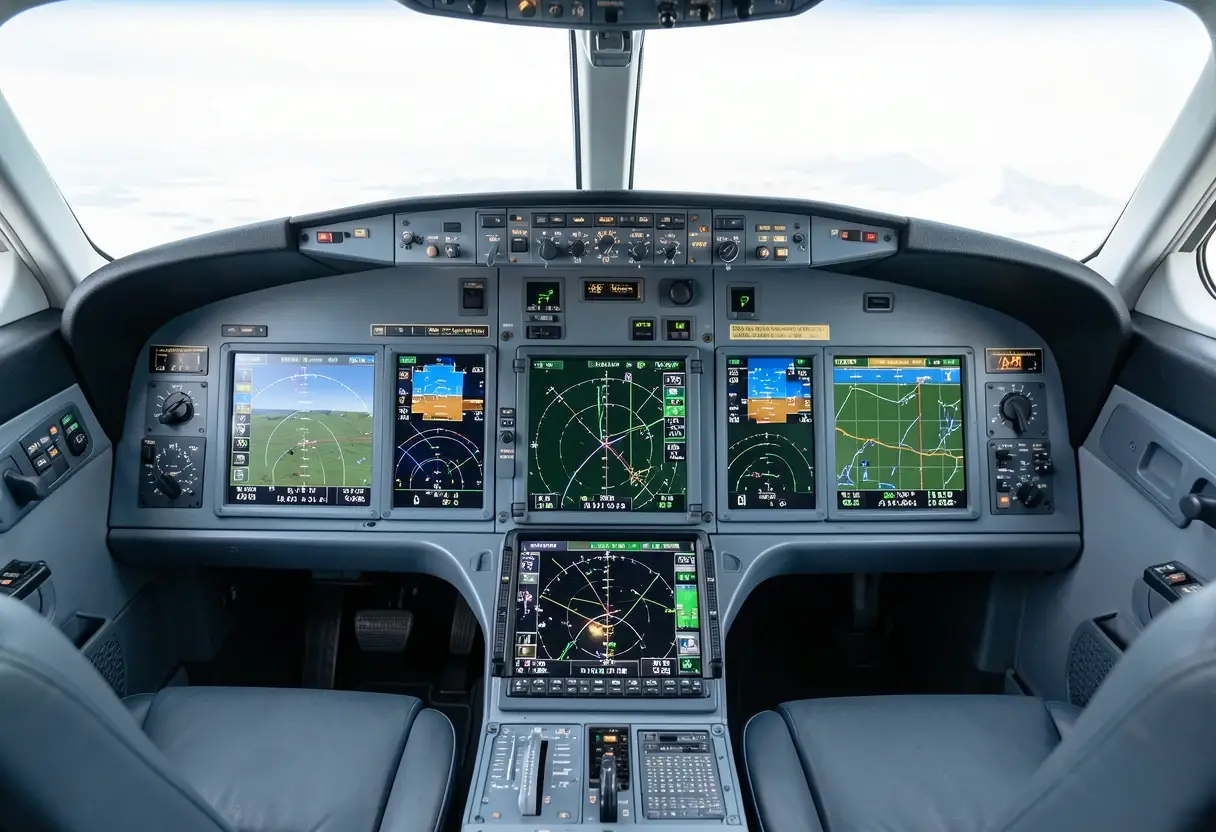
About 80 aircraft lost or suffered degraded GPS reception across the Netherlands, Belgium, eastern England and northwestern Germany on Nov. 9, during a 20-minute window that analysts have pinned to the North Sea.
Seven of those aircraft were arriving at Amsterdam Airport Schiphol and reported navigational problems on approach. KLM Royal Dutch Airlines, Lethansa's German rival Lufthansa, and Air France were among the affected carriers, with additional reports from flights over the North Sea. Dutch air traffic control said GPS jamming is a plausible explanation. Every flight landed safely with controller assistance. That is the operative fact: the system degraded, and the humans held the line.
Where did the interference come from?
Aviation data analyst John Wiseman placed the disruption between 6:07pm and 6:27pm local time. His analysis identified a possible interference source on the North Sea, roughly 80 to 110 nautical miles north of the Dutch island of Texel.
Six Russian-flagged vessels were operating in the North Sea during that period. Three were sailing as a navy-escorted arms convoy and appear on the EU sanctions list. No official confirmation links the ships to the interference. Suspicion is not attribution, and so far the Dutch authorities have offered neither.
What is GNSS jamming, and why does it matter?
The suspected mechanism is Global Navigation Satellite Systems jamming — intentional or unintentional radio-frequency interference that prevents aircraft from receiving satellite navigation signals. An aircraft so affected cannot determine its exact position from satellites alone, forcing pilots and controllers to fall back on onboard inertial systems and conventional radar vectors.
The operational consequence is workload, delay and reduced capacity in precisely the phase of flight — approach into a hub — where margins are thinnest. Schiphol runs near capacity; a 20-minute navigation anomaly across four countries' airspace is a reminder of how little redundancy sits behind a single satellite signal.
GNSS spoofing, which transmits counterfeit or misleading signals rather than simply blocking them, compounds the problem, because a spoofed aircraft believes it knows where it is.
How common has this become?
The International Air Transport Association reported that jamming incidents rose 67 percent in 2025 compared with 2023. That figure covers roughly two years, meaning incidents are growing by close to a third per year on average — a rate no airline navigation infrastructure refresh currently matches.
IATA attributes the rise largely to electronic warfare associated with international conflicts, concentrated over the Baltic Sea, northern Europe, the Middle East and the Ukrainian borders. The Baltic corridor is now a routine jamming environment rather than an exception.
Is this the first such event in the region?
It is not. November's incident is the second the Netherlands has experienced this year. In July, several flights between the United Kingdom and the Netherlands were similarly disrupted. Skeyes, the Belgian air traffic control agency, is reportedly recording a rising number of aircraft with navigational problems, which suggests the phenomenon has outgrown individual anomalies and become a background condition of European operations.
The pattern, in short: two Dutch incidents in four months, a two-thirds global increase over two years, and a plausible source area adjacent to one of Europe's busiest hubs — with no culprit formally identified. Until regulators treat satellite navigation interference as a structural risk rather than a series of one-offs, approach controllers will keep supplying the redundancy that the signal chain does not.
Whether the North Sea convoy proves responsible or not, the November event shows the exposure: one degraded frequency band, 80 aircraft, four countries, 20 minutes.
via travelradar.aero (Source)
More from Grace Kim
Show full bio
News editor covering companies, deals and strategy in Commercial aviation industry coverage at Flightdeck Report.
640 articles
Same bay
- FDR110GPS interference affected 80 aircraft near Schiphol; source uncertain · November 16, 2026
- FDR398United pilots report GPS interference on two overnight flights near LAX · October 9, 2026
- FDR903Schiphol fog disrupts 176 flights, with 29 cancellations · November 11, 2026
- FDR123Poland ends military air operations, reports no airspace violation · October 10, 2026
- FDR440Squawk 7500 Triggers Eurofighter Escort and Nuremberg Shutdown · October 13, 2026