Clearance CLR-9624 · AIR413
AIRSYR
Airspace & RegulationClearance sheet
Syria's L602 corridor logs 2,188 overflights in first phase
Syria's L602 air corridor recorded 2,188 overflights during the first phase of its operation, according to the state news agency SANA, marking the corridor's first published traffic benchmark.
Read-back
- Syria's L602 air corridor recorded 2,188 overflights in its first phase.
- The figure was reported by the Syrian Arab News Agency (SANA).
- The announcement marks the first published traffic count for the corridor since the reopening of routing options through Syrian airspace.
- Averaged over a phase, 2,188 crossings indicate carriers are actively integrating L602 into regional flight planning.
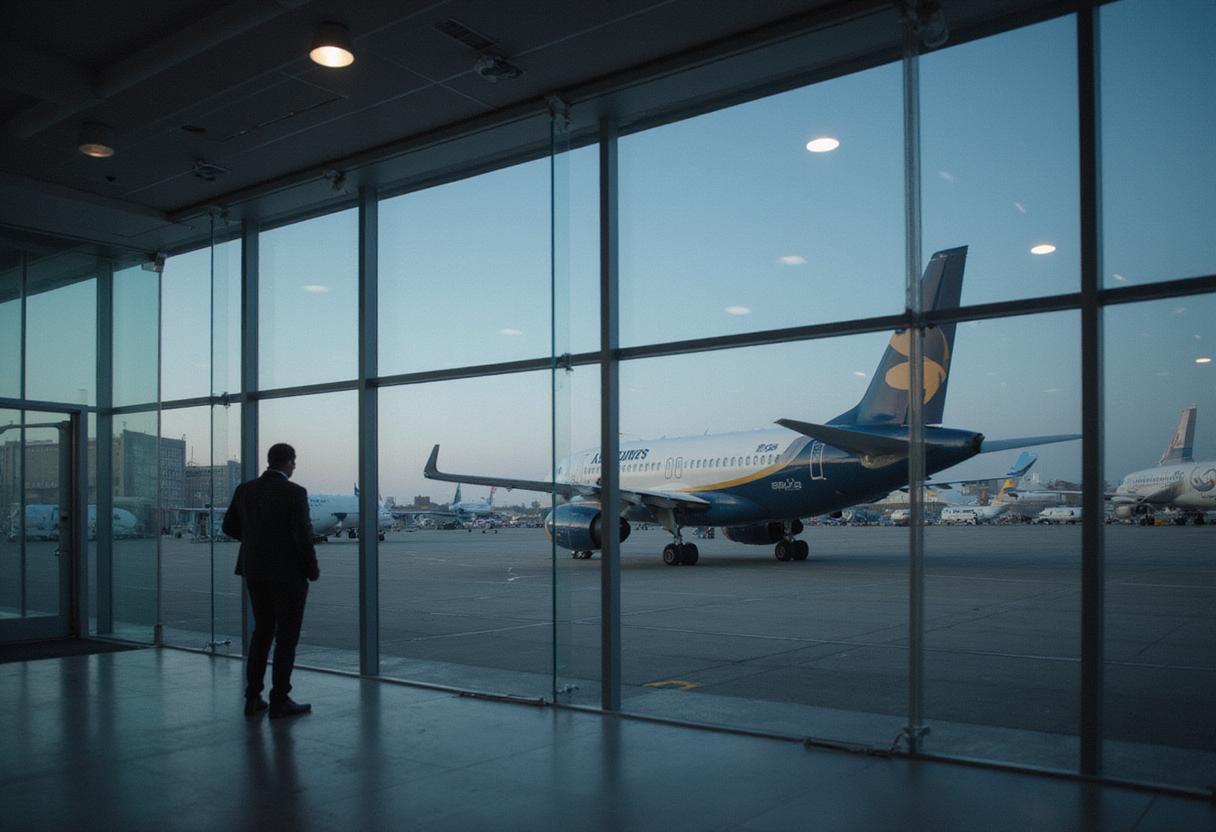
Syria's L602 air corridor recorded 2,188 overflights during the first phase of its operation, according to a report from the Syrian Arab News Agency (SANA). The count is the first consolidated traffic figure published for the corridor since it entered service as a transit route through Syrian airspace.
For network planners and dispatch departments across Europe, the Gulf and South Asia, the number matters less as a statistic than as evidence of behaviour. Overflight routing decisions are made on marginal cost and risk, not sentiment. A four-digit crossing total in an initial phase indicates that a meaningful cohort of operators has already run the numbers on L602 and concluded the route clears their thresholds for fuel burn, schedule integrity and insurance exposure.
What does the 2,188 figure tell operators?
A corridor that carries no traffic is a line on a chart. One that logs 2,188 crossings in its first phase is an operating asset.
The figure establishes several things for carriers weighing the route:
- Dispatch teams are filing flight plans through the corridor, not merely studying it.
- The route is functioning at a sustained rate rather than serving episodic or trial movements.
- The count provides a baseline against which subsequent phases can be measured.
Baselines carry weight in route economics. Airlines that avoided Syrian airspace for years built flight plans around it — lengthening tracks between Europe and the Gulf, the Levant and points east. Each additional mile flown is fuel, crew time and emissions. Every crossing recorded on L602 represents a flight that has, in effect, opted back into the shorter path.
Why the corridor's uptake matters commercially
The reopening question for any previously closed or avoided airspace block is never binary. It is graduated: first, whether regulators and carriers will certify routing through it; second, whether traffic volumes justify the operational investment in monitoring, navigation aids and coordination; third, whether the flow becomes durable enough to factor into long-term schedule design.
The SANA figure speaks to the second stage. A first-phase total of 2,188 overflights demonstrates uptake beyond symbolic levels. It also gives air navigation service providers and aviation authorities a concrete case for continuing investment in the corridor's infrastructure and procedural support.
For the airlines themselves, the corridor's value compounds with each operator that uses it. Congestion on long-standing alternative routings around the region — which added distance to Europe–Gulf and Europe–Asia services — creates its own pressure to qualify new capacity. The L602 count suggests that pressure is now being relieved.
What comes next for the corridor
The pertinent question for the second phase is trajectory. If the overflight count builds on the 2,188 baseline, L602 consolidates its position as a standard routing option rather than a conditional one, and network planners can treat Syrian transit as a standing input in schedule construction rather than a case-by-case exception.
SANA's report did not specify the exact duration of the first phase or break the total down by carrier, aircraft type or route pairing. Those details will determine the pace at which the corridor's share of regional transit traffic grows, and they are the figures the industry will watch as the next phase's count comes in.
via Google News: Air traffic control and airspace (Source)
More from Priya Raman
Same bay
- FDR520Syria advances airspace redesign talks after L602 route launch · September 28, 2026
- FDR181EASA warns airlines to avoid parts of Saudi airspace · September 30, 2026
- FDR628EASA Warns Airlines to Avoid Parts of Saudi Airspace · October 1, 2026
- FDR216EASA Narrows Gulf Airspace Warning, Easing Routing Constraints · September 30, 2026
- FDR701EASA widens Saudi airspace warning after Houthi airport attack · October 9, 2026