Clearance CLR-1555 · AIR712
AIRTEX
Airspace & RegulationClearance sheet
Textron's Aerosonde Flies First UAS Vertiport Operations in US Commercial Airspace
Textron Systems' Aerosonde UAS has flown the first vertiport operations in commercial airspace, backing Virginia's Smart Air mobility initiative.
Read-back
- Textron Systems' Aerosonde UAS completed the first UAS vertiport flights in commercial airspace
- The flights support the Virginia Advanced Air Mobility Smart Airspace initiative
- The milestone demonstrates vertiport operations by an unmanned system under live commercial airspace conditions
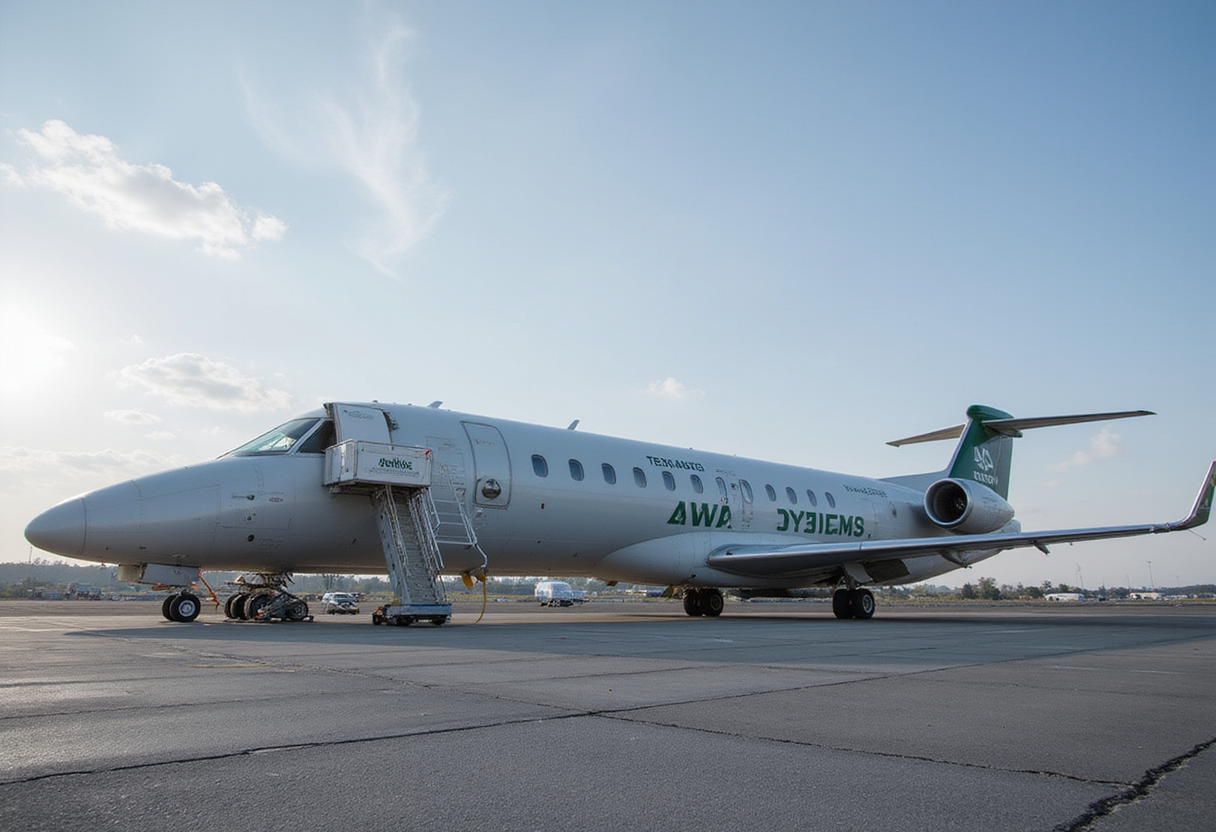
Textron Systems' Aerosonde unmanned aircraft has completed the first UAS vertiport flights conducted in commercial airspace, a milestone the company frames as a step toward routine advanced air mobility (AAM) operations in the US national airspace system.
The flights support the Virginia Advanced Air Mobility Smart Airspace program, an effort to build the operational and regulatory scaffolding that electric vertical takeoff and landing (eVTOL) and cargo drone operators will need if vertiport networks are to move from concept to scheduled service.
The significance lies less in the airframe than in the airspace. The Aerosonde is a long-established fixed-wing UAS with an operational record spanning military and civilian tasking; what is new is the context. Flying a unmanned system into and out of a vertiport — the ground infrastructure type that AAM proponents plan to deploy across US cities — inside airspace that already carries commercial traffic requires a level of procedural integration that has so far eluded most UAS operators outside segregated test ranges and FAA-designated drone corridors.
For Virginia, the flights give the Smart Airspace initiative a concrete data point. State-backed AAM programs in Virginia, Texas, Ohio and elsewhere have spent the past several years positioning for early operational approval, on the theory that jurisdictions with proven airspace-integration credentials will attract vertiport investment, drone-delivery basing and, eventually, eVTOL routes. A first vertiport operation in commercial airspace is exactly the kind of demonstration those programs use to make their case to the FAA and to operators weighing where to deploy capital.
The regulatory backdrop matters. The FAA has moved slowly on beyond-visual-line-of-sight (BVLOS) operations and vertiport certification, and the agency's Part 23-based rulemaking pathway for powered-lift aircraft only recently began taking shape. Demonstrations like the Aerosonde flights serve a dual function: they validate procedures — approach and departure profiles, traffic deconfliction, command-and-control contingencies — and they generate the operational safety data that regulators say they need before granting permissions at scale.
For Textron Systems, the milestone extends the Aerosonde's portfolio deeper into the civil market. The company, a Textron Inc. segment that also produces the Shadow and, through sister business Bell, is developing the military tiltrotor-derived V-280 Valor technology, has positioned unmanned systems as a growth pillar. Civil airspace work of this kind builds credentials that pure-play defense UAS manufacturers lack.
The economics remain unproven. AAM demand forecasts from consultancies and OEM backers run to billions of dollars in annual revenue by the mid-2030s, but those projections rest on assumptions about aircraft certification timelines, vertiport capital costs and per-flight economics that no operator has yet demonstrated at scale. Infrastructure-first demonstrations — vertiports, airspace integration, ground systems — are the cheaper, lower-risk segment of the value chain, and they are where states and established aerospace contractors can participate before certified eVTOL airframes arrive in numbers.
What the Virginia flights establish is procedural proof: an unmanned aircraft can operate from vertiport infrastructure in live commercial airspace today, with existing technology, under current rules. Whether that proof converts into scheduled service depends on follow-on certification work — and on whether the FAA's powered-lift and BVLOS frameworks mature quickly enough to keep pace with the demonstration calendar.
via Google News: Air traffic control and airspace (Source)
More from James Calloway
Show full bio
Staff writer covering industry trends and analytics at Flightdeck Report.
156 articles
Same bay
- FDR210Textron's Aerosonde Flies 150 nm Between Two Vertiports in Commercial Airspace · September 30, 2026
- FDR664Virginia Demonstrates Airspace Procedures For Advanced Air Mobility · September 28, 2026
- FDR515FAA Names Surf Air Mobility as Participating Airspace User in SMART Program · September 28, 2026
- FDR631Fargo completes drone integration into daily airspace · September 29, 2026
- FDR929DOT Weighs Cellular Networks as Backbone for Drone Airspace Safety · September 28, 2026