Clearance CLR-7402 · AIR145
AIRUSC
Airlines & NetworksClearance sheet
US Carriers Resist New China Routes as Russian Overflight Ban Distorts Competition
US carriers oppose new China route approvals, arguing the Russian overflight ban leaves them flying longer, costlier transpacific missions than their Chinese competitors.
Read-back
- US airlines are fighting approval of new China routes
- Russian airspace ban forces US carriers onto longer, costlier transpacific routings
- Chinese airlines still overfly Russia, creating a structural cost advantage on identical city pairs
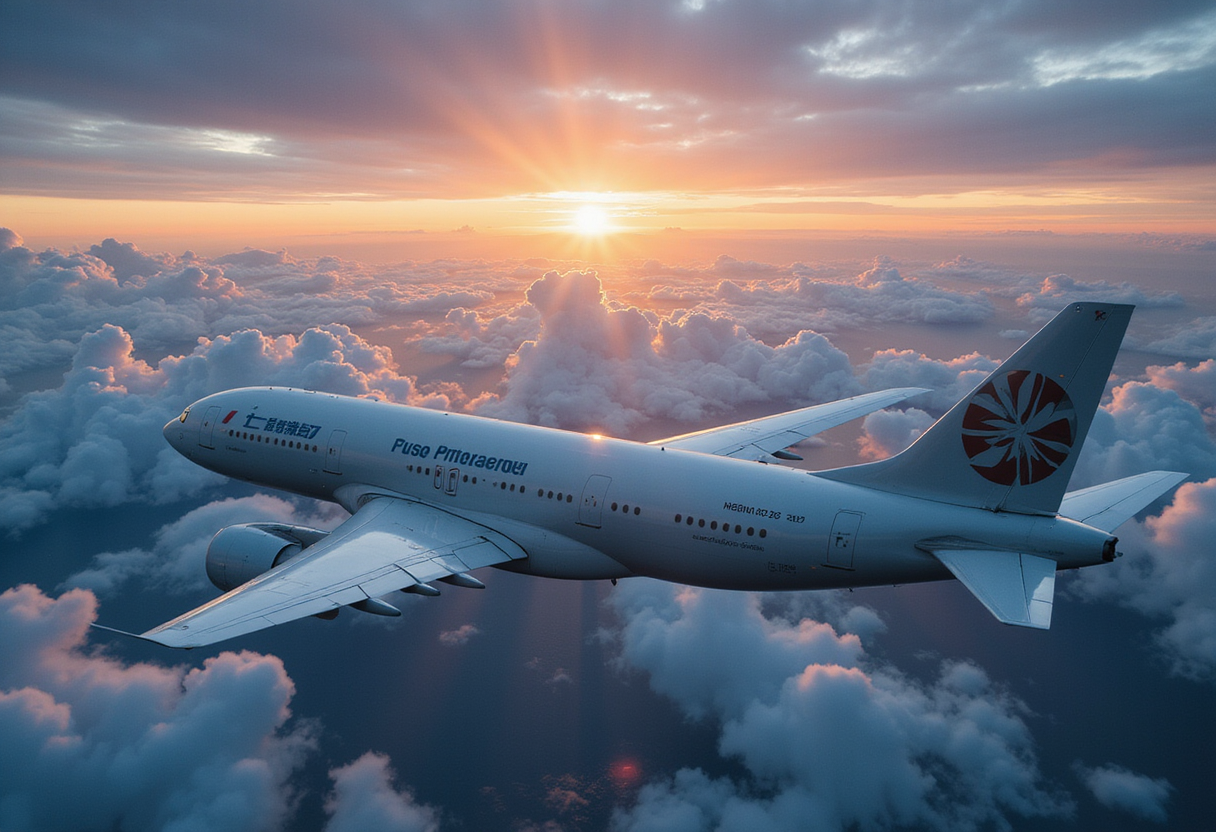
US airlines are pushing back against the approval of new China routes, arguing that Washington's ban on flying through Russian airspace has left them structurally uncompetitive against Chinese carriers on transpacific services.
The dispute, reported by Travel Daily Media, centers on a growing asymmetry in transpacific operations. Chinese airlines continue to overfly Russia on routes to and from the United States, taking direct polar routings that shave flight time and fuel burn. US carriers cannot use the same tracks, and must fly longer, more fuel-intensive paths — typically via the North Pacific — to comply with the US prohibition on Russian overflight.
That difference translates directly into cost per trip. Longer routings mean more block time, higher fuel consumption, additional crew costs, and in some cases payload restrictions on westbound sectors. Carriers operating under this penalty argue that each new China route granted to a Chinese airline compounds a competitive imbalance that US regulators helped create through the airspace policy.
The fight comes as governments on both sides gradually rebuild US–China air service, which was cut back sharply during the pandemic. As route allocations expand, US carriers face a decision: operate at a structural cost disadvantage, or cede market share on routes their competitors can fly more cheaply and quickly.
Chinese carriers benefit from the shorter great-circle routings over Siberia that were standard for transpacific flights before Russia closed its airspace to airlines from countries it regards as unfriendly, and Washington reciprocated. US operators now plan transpacific missions around the closure, adding hours to some sectors compared with what their Chinese competitors fly on identical city pairs.
The economics compound at the network level. Extra block time reduces aircraft utilization, meaning a US carrier needs more aircraft and more crews to fly the same schedule a Chinese operator can mount with fewer resources. On thin long-haul routes, where margins are already narrow, that difference can determine whether a route is viable at all.
The policy question now sits with US regulators. Approving additional China frequencies — sought by Chinese carriers and, in some segments, by travel trade interests — widens the exposure of US airlines to a disadvantage rooted in a geopolitical restriction rather than in market performance. Blocking or delaying those approvals protects US carriers' position but invites reciprocity from Beijing and limits capacity for passengers and cargo shippers.
US airlines have made clear they view the current arrangement as untenable: they are being asked to compete, route for route, against airlines flying shorter, cheaper versions of the same mission. Whether Washington addresses the imbalance through route policy, a negotiated airspace arrangement, or continued restriction of Chinese frequencies will shape the competitive map of transpacific aviation for years to come.
via Google News: Air traffic control and airspace (Source)
More from Grace Kim
Show full bio
News editor covering consumer brands and retail at Flightdeck Report.
138 articles
Same bay
- FDR280US carriers fight Air China's bid for extra Beijing flights · September 26, 2026
- FDR662India Opens Talks With Beijing Over Rerouted Flights as Pakistan Airspace Stays Shut · September 29, 2026
- FDR636India Weighs China Overflight Route to Bypass Pakistan Airspace Ban · September 30, 2026
- FDR215India Opens Talks With Beijing on Alternate Air Route · September 29, 2026
- FDR749India Seeks China Overflight Route as Pakistan Extends Airspace Curbs · September 30, 2026