Clearance CLR-5422 · SAF279
SAFUSI
Safety & OperationsClearance sheet
US indicts man over $60m C-130H destruction at Shannon Airport
US prosecutors say an Irish intruder destroyed a $60 million US Air National Guard C-130H at Shannon on April 11, 2026, before a federal indictment in New York.
Read-back
- DOJ says a US Air National Guard C-130H valued at about $60 million was destroyed at Shannon on April 11, 2026.
- Daithi O’Corrain, 48, faces one federal count of destruction of government property carrying a maximum 10-year sentence.
- The flight crew returned at 09:40, and Irish police arrested O’Corrain shortly before 11:00.
- Shannon Airport suspended operations from approximately 09:50 to 10:15 on April 11, 2026.
- The DOJ announced the indictment on November 17, 2026, but did not disclose whether the United States requested extradition.
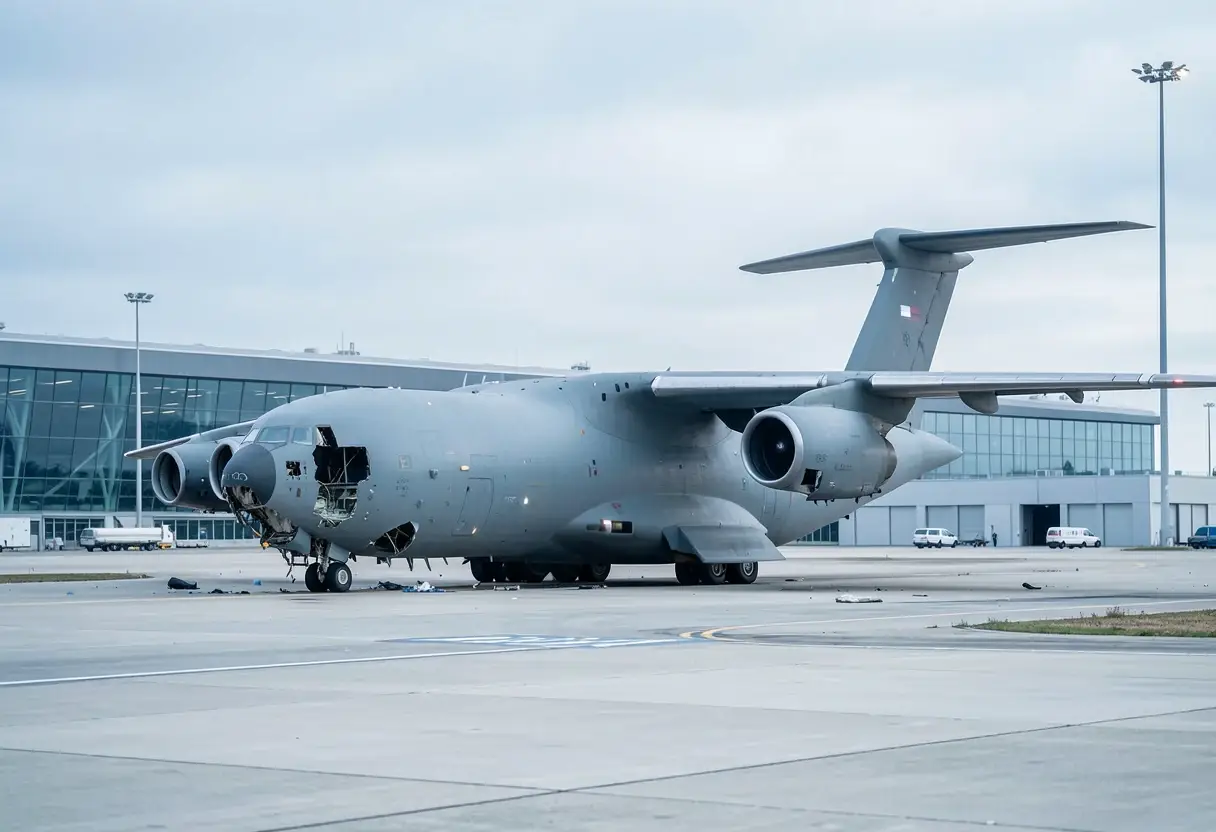
A US Air National Guard C-130H Hercules valued at approximately $60 million will never fly again after an April 11, 2026 attack at Shannon Airport (SNN), according to the US Department of Justice.
The US Attorney’s Office for the Southern District of New York announced on November 17, 2026, that Daithi O’Corrain, 48, an Irish man also known as David Curran, faces one count of destruction of government property. The charge carries a maximum sentence of 10 years in prison.
James C. Barnacle Jr., who heads the New York Field Office of the Federal Bureau of Investigation, said: “This was not an act of spontaneous vandalism.”
O’Corrain remains presumed innocent unless proven guilty. The DOJ calls the aircraft inoperable and effectively destroyed. US authorities have since removed its tail section as part of efforts to store and dismantle it.
Damage and timing
The first public account, published April 12, said the C-130H would remain out of service pending assessment after video showed a man striking its wing and fuselage. The newly unsealed indictment goes further, alleging damage inside the aircraft.
At approximately 04:39 local time on April 11, O’Corrain allegedly breached Shannon’s perimeter and broke the locking mechanism on the rear crew door. The C-130H sat on a taxiway while assigned to a US military transit flight to another country.
Once aboard, prosecutors say, he secured the doors with straps, brackets and screws. He placed ball bearings mixed with epoxy in the door tracks, then cut wire bundles and hydraulic lines. He also crimped a liquid oxygen line, destroyed every cockpit gauge and punctured air ducts.
The indictment adds that O’Corrain brought capsules of gallium, a metal capable of severely damaging aluminum. Prosecutors allege he intended those capsules to attack the aircraft’s aluminum structure.
The flight crew returned at about 09:40 and saw O’Corrain through the cockpit window. Security was alerted. He allegedly left through a roof hatch, struck the exterior with an axe and put unknown substances and objects, including ball bearings, into the fuel tanks.
Irish police used portable stairs to reach the aircraft wing and arrested him shortly before 11:00. Shannon Airport Group suspended airport operations from roughly 09:50 to 10:15, a 25-minute disruption.
A contemporaneous post by @paddafi on April 11 read: “U.S air force plane being hammered in @ShannonAirport this lunchtime.” The footage circulated before the later damage assessment.
Preparation and alleged intent
Prosecutors allege O’Corrain spent months researching the C-130H’s construction, buying gallium and other equipment, and mapping Shannon, including possible perimeter breach points.
He also allegedly subscribed to an aircraft-tracking application and received an email alert when the C-130H arrived. The indictment says he understood the aircraft’s systems and how to damage critical components while avoiding injury to himself.
That last claim needs careful reading. The alleged avoidance of self-injury does not establish that the cockpit, hydraulic, oxygen and fuel damage remained controllable. The indictment’s account of the fuel tanks and liquid oxygen line offers little evidence of restraint.
Prosecutors say cutting the liquid oxygen line rather than crimping it could have triggered a major explosion. They also allege he chose methods to damage critical components while avoiding injury. Both claims remain allegations before a court.
The two legal proceedings
The US case cites a federal provision governing offenses committed outside any US judicial district. The indictment says O’Corrain is “expected to be first brought to and arrested in” the Southern District of New York.
The DOJ release does not say whether the United States has requested extradition. That omission matters. Irish proceedings began first, and O’Corrain was charged there in April 2026 with criminal damage to the aircraft and perimeter fence, as well as trespassing.
He was initially refused bail, then released on bail, according to RTÉ. The US prosecution sits with SDNY’s National Security and International Narcotics Unit. DOJ credits assistance from the FBI, US Air Force Office of Special Investigations, Missouri Air National Guard and Irish authorities. It does not identify the C-130H’s unit.
Earlier security breaches
Shannon serves as a major transatlantic transit point for US military personnel and equipment. The indictment identifies three earlier security breaches involving US military aircraft or airport facilities.
- On May 1, 2025, three people were arrested after a van drove through the airport’s perimeter fence.
- On May 17, 2025, three individuals breached the runway and sprayed a US military aircraft with paint, temporarily rendering it inoperable.
- On November 22, 2025, another van breached the perimeter and reached a restricted area where a US military C-40 was parked before security intervened.
Similar attacks have targeted military aircraft elsewhere in Europe. On June 20, 2025, Palestine Action activists damaged two Royal Air Force Airbus Voyager tankers at RAF Brize Norton in the UK. Counter Terrorism Policing South East charged four people in July with conspiracy to enter a prohibited place and conspiracy to commit criminal damage. A fifth suspect was charged in August. The damage was estimated at approximately £7 million ($9.5 million).
What does this change for Shannon and military transit?
The indictment has two measurable effects: the loss of a $60 million transport and a 25-minute airport suspension. It removes one airframe from military transport capacity, but the release does not identify its unit or fleet size, and it provides no replacement schedule, security-cost estimate or new perimeter rules.
It also places the April attack within four reported incursions or attacks at Shannon since May 2025. The April case adds tracking data, detailed aircraft research and purchased materials; the earlier entries mainly record fences, runways, paint and a C-40 reached.
The practical change is evidentiary rather than immediate regulatory. Authorities must test the prosecution’s account in Ireland and New York, resolve whether O’Corrain will be extradited and explain how he breached a military transit airport. The next measure of progress will be an extradition decision and disclosed perimeter controls before the next military transit movement at Shannon.
via justice.gov (Original)
More from James Calloway
Show full bio
Staff writer covering people, launches and day-to-day practice in Commercial aviation industry coverage at Flightdeck Report.
688 articles
Same bay
- FDR163United grounds 757/767 captain pending review as October 7 posts resurface · October 9, 2026
- FDR538€4.5m Aer Lingus Suit Puts Montreal Convention to the Test · November 16, 2026
- FDR812United 737 MAX 9 Squawks 7500 After Cockpit Breach Attempt · November 10, 2026
- FDR702Flydubai cockpit attack exposes gaps in pilot vetting, ICAO finds no standard · October 9, 2026
- FDR716Paris court convicts Swiftair over 2014 Air Algérie AH5017 crash · September 28, 2026