Clearance CLR-2998 · SAF247
SAFWIN
Safety & OperationsClearance sheet
Windshield Failure Forces United-Route Flight Back to Houston
A Houston-to-El Paso flight returned to its departure airport after the windshield shattered mid-route; the crew landed safely and no injuries were reported.
Read-back
- An El Paso-bound flight returned to Houston after its windshield shattered in flight, per the airline.
- The crew declared an emergency and landed back at the departure airport; no injuries were reported.
- The aircraft type, registration and windshield assembly service details were not disclosed.
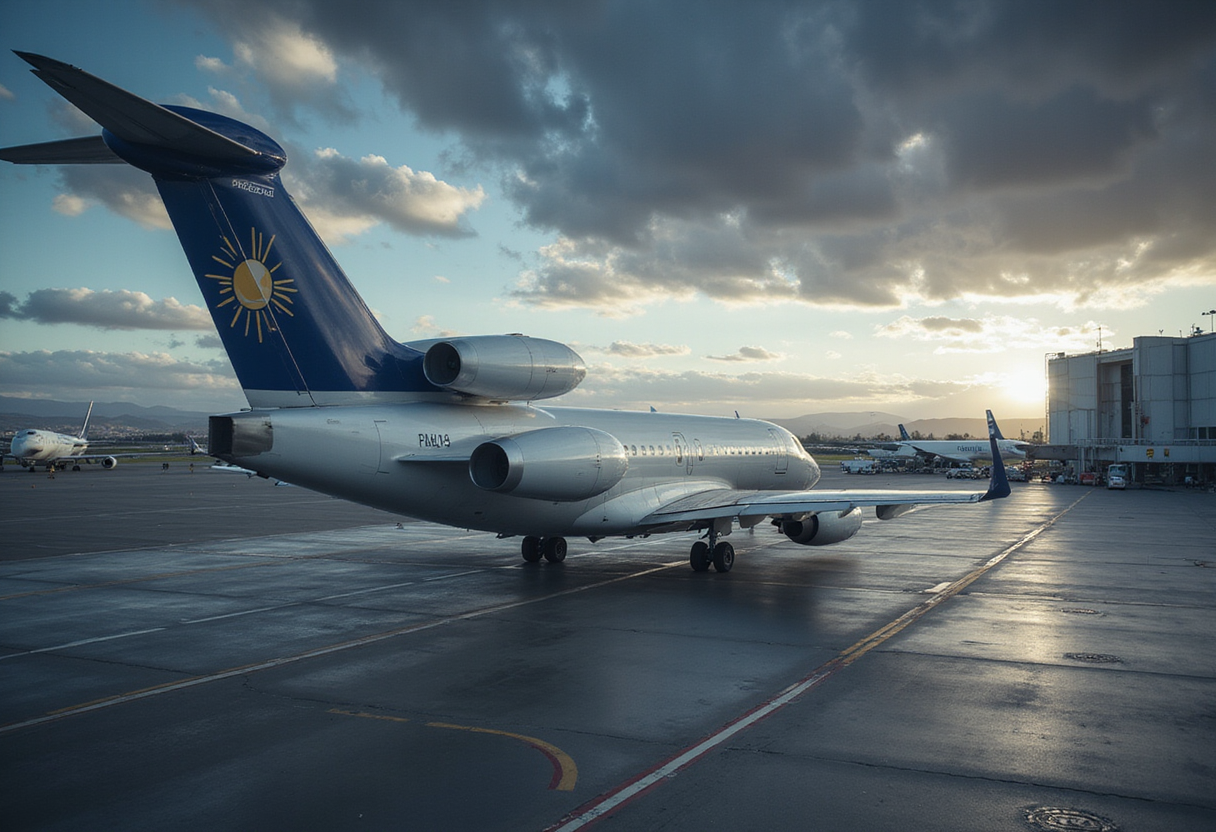
A scheduled flight from Houston to El Paso returned to its departure airport after the aircraft's windshield shattered in flight, the operating airline confirmed.
The crew declared an emergency and brought the aircraft back to Houston rather than continuing the roughly 600-mile sector to West Texas. The airline's account, relayed through ABC7 Chicago, attributes the return to the windshield failure. No information in the available reporting indicates injuries among those aboard.
Windshields on transport-category aircraft are multi-layer laminated structures, typically built from glass and polyvinyl butyral plies stretched over an aluminum or acrylic frame. Certification standards under FAR 25.573 and equivalent European requirements demand that the structure tolerate a single ply failure without loss of cabin pressure or cockpit integrity. In service, that architecture means a shattered outer pane — visually dramatic and often photographed by passengers — is generally a controlled failure mode rather than a breach of the pressure vessel.
What typically triggers the diversion is not structural collapse but procedure. A cracked or shattered pane can compromise the windshield's anti-ice and anti-fog heating, embedded in conductive film between the plies, and can reduce visibility through the affected panel. Operators' quick-reference handbooks direct crews to descend to an altitude where pressurization margins are comfortable, shed electrical load on the affected window heat circuit, and land at the nearest suitable field. Houston, with the departure airport's runways and rescue capacity minutes behind them, fit that criteria precisely.
The event is the second high-profile windshield incident on a U.S. domestic flight in recent memory to capture passenger video, and it follows a well-documented pattern: inspections by maintenance crews, a windshield assembly swap — often an overnight job depending on parts position — and a damage report filed with the FAA under Service Difficulty Report protocols. The agency and the manufacturer use that reporting stream to track whether a failure is an isolated event or part of a fleet-wide trend on a particular airframe type or part number.
The airline did not immediately release the aircraft's registration, its age, or the hours on the failed assembly — the data points that would determine whether this was a random material failure or a maintenance-tracking question. Windshield replacements rank among the more common unscheduled component removals on narrow-body fleets, driven by heating-element failures and impact damage rather than wholesale pane separation.
The aircraft's return to service will depend on the outcome of the inspection and the availability of a replacement assembly. Regulators will review the SDR filing to determine whether any follow-up action is warranted.
via Google News: Air traffic control and airspace (Source)
More from Nathan Brooks
Show full bio
Correspondent covering media and advertising at Flightdeck Report.
149 articles
Same bay
- FDR867Windshield Failure Forces El Paso-Bound Flight Back to Houston · September 29, 2026
- FDR772Windshield Failure Forces United Express Flight Back to Houston · September 28, 2026
- FDR126NTSB Takes Lead in Ryanair Window Blowout Investigation · September 30, 2026
- FDR139Airbus Confirms Coating Defect on A321neo Jets · September 28, 2026
- FDR513ATC Failure Grounds Hundreds of US Flights, Exposing Ageing Infrastructure · September 28, 2026