Clearance CLR-6079 · AIR394
AIRWIZ
Airspace & RegulationClearance sheet
Wizz Air Cancels Abu Dhabi, Dubai Winter Routes Amid Restrictions
Wizz Air has withdrawn planned winter services to Abu Dhabi and Dubai, citing airspace restrictions affecting the Europe-to-Gulf corridor and trimming two long-sector destinations from its forward schedule.
Read-back
- Wizz Air cancelled planned winter services to Abu Dhabi and Dubai
- The cancellation is attributed to airspace restrictions affecting the Europe-Gulf corridor
- The routes had been scheduled for the winter timetable before removal
- The move removes two long-sector destinations from Wizz Air's forward schedule
- Airspace restrictions on the corridor typically force longer routings, fuel-burn penalties, or cancellations
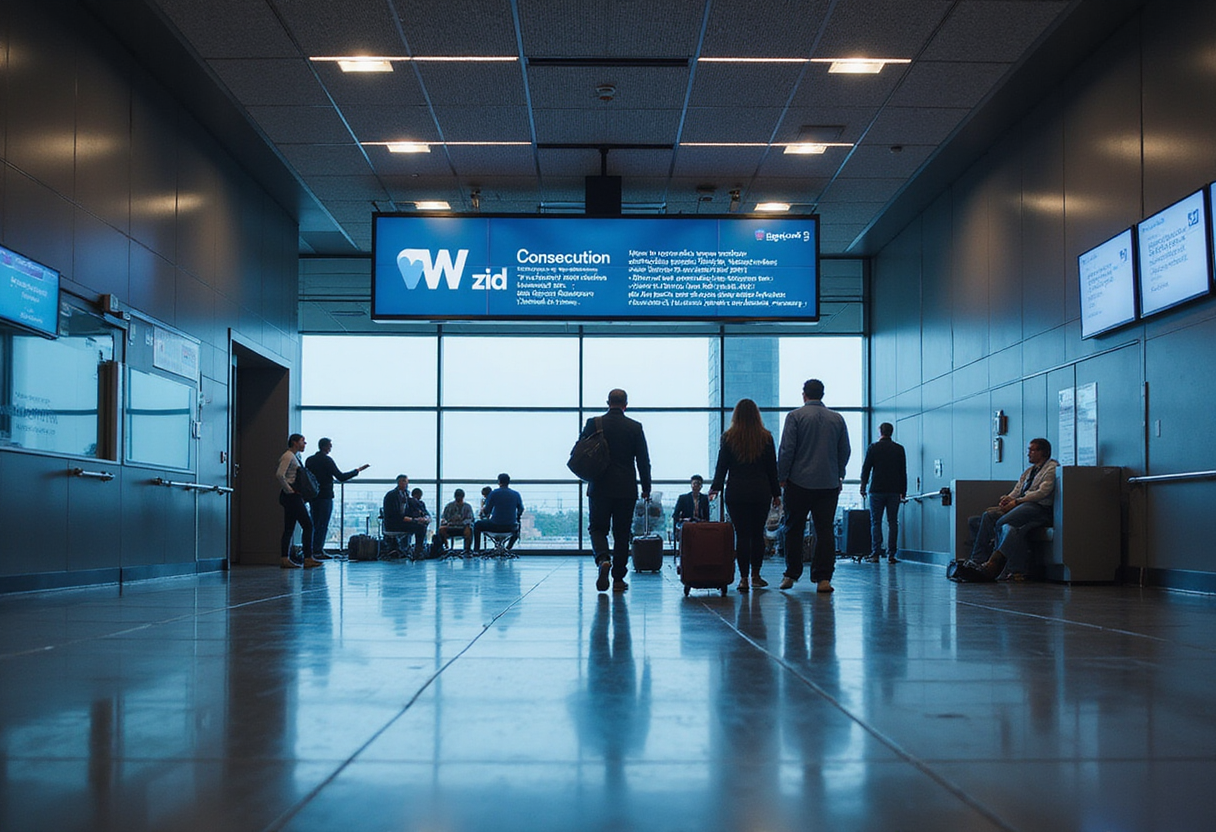
Wizz Air has withdrawn planned winter services to Abu Dhabi and Dubai, citing airspace restrictions affecting the corridor between Europe and the Gulf.
The Hungarian low-cost carrier removed the two United Arab Emirates destinations from its forward schedule, a move that lands during the booking window when airlines normally finalise winter capacity. The published reason — airspace restrictions — points to recurring disruption that has compressed the Europe-to-Middle East operating environment in recent years.
What "airspace restrictions" means for the corridor
The phrase covers closed flight information regions, active conflict zones, NOTAMs tied to military activity, and broader regulatory risk that prevents overflight or routing through certain corridors. For European carriers reaching the Gulf, the principal chokepoints have historically sat over Iran, Iraq, Syria, and Israel, with adjacent FIR closures cascading into longer routings, fuel-burn penalties, or outright cancellations. Single-aisle operators such as Wizz Air feel those penalties more sharply than widebody competitors, because block-time inflation hits narrowbody unit economics harder.
Where the cancellations sit in the network
Abu Dhabi and Dubai sit at the eastern edge of Wizz Air's published network. For an airline whose unit-cost model is built around dense European point-to-point flying, removing two long-sector destinations narrows the geographic span of the long-haul offering and concentrates the carrier on shorter rotations where block times and crew utilisation align with low-cost economics.
The two cities anchor overlapping but distinct demand profiles. Dubai carries a heavy mix of leisure tourism, hospitality-linked visiting-friends-and-relatives traffic, and connecting flows through one of the region's largest hub airports. Abu Dhabi similarly draws tourism alongside flows tied to the emirate's energy and government sectors. Both markets attract competition from flag carriers, Gulf-based super-connectors, and other low-cost challengers, making pricing pressure a structural feature of the corridor.
What a winter withdrawal signals
A winter withdrawal runs against the typical seasonal logic of European-to-Gulf capacity. Demand from Europe into the region traditionally peaks during the colder months at the origin end, when travellers seek warmer climates, school holiday calendars align, and Dubai's hospitality market runs near peak occupancy. Removing Wizz Air capacity during this period pushes residual demand onto competitors and supports higher average fares for remaining operators.
Airlines typically publish winter schedules several months in advance, allowing bookings to accumulate and crew rosters to stabilise. A late-stage cancellation forces the carrier either to wet-lease capacity elsewhere, accept lower load factors on adjacent sectors, or absorb the schedule disruption through crew reassignment.
Open operational questions
Wizz Air has not specified whether the cancellation applies to the full winter season, a partial period, or represents a permanent network exit. The carrier's decision will hinge on the duration of the airspace restrictions, the cost of operating through alternative routings, and the load-factor performance the carrier could reasonably expect from the affected sectors.
For an ultra-low-cost business model, schedule discipline outweighs absolute reach. A withdrawn sector removes the feeding traffic from connecting European markets, depresses load factor on adjacent routes, and reduces the network density that anchors unit revenue. The decision to exit Abu Dhabi and Dubai during the winter window reads as a defensive cut that prioritises fleet utilisation and operational stability over marginal long-sector volume.
The carrier's recent strategic emphasis on fleet density and frequency over absolute reach favours trimming marginal long-haul sectors in favour of higher-utilisation European flying.
What comes next
The forward question is whether the freed aircraft-days redeploy onto other long-sector markets, return to dense European rotation, or sit idle until the carrier reassesses the Gulf corridor. Wizz Air's response will signal how it balances network ambition against the constraint profile of an unstable airspace environment.
via Google News: Air traffic control and airspace (Source)
More from Nathan Brooks
Show full bio
Correspondent covering media and advertising at Flightdeck Report.
353 articles
Same bay
- FDR922Wizz Air delays Abu Dhabi return to January 2027 as EASA flags Jordan risk · October 10, 2026
- FDR614Emirates, Etihad and Flydubai hit by delays as tensions persist · September 28, 2026
- FDR181EASA warns airlines to avoid parts of Saudi airspace · September 30, 2026
- FDR969Gulf Airspace Warning Renewed as Regional Airlines Count Delay Costs · September 30, 2026
- FDR874UAE Halts Iranian Flights Amid Iran's Airspace Closure Threat · October 10, 2026