Clearance CLR-4385 · SAF664
SAFAIR
Safety & OperationsClearance sheet
Air France Wrong Turn at LAX Put Two Jets Within a Mile
Air France Flight 28 turned left off the SUMMR2 departure into American Airlines Flight 1660's path on Nov. 7, closing within a mile — LAX's fourth wrong-turn event since October 2025.
Read-back
- Air France Flight 28 and American Airlines Flight 1660 closed within less than a mile at LAX on Nov. 7.
- The AF28 crew turned left without clearance off the SUMMR2 departure, which allows climbs to 23,000 feet.
- Around 500 passengers were aboard the two aircraft; both flights continued safely.
- The FAA is expected to investigate; the controller warned of a possible pilot deviation.
- LAX has recorded at least four similar wrong-turn events since October 2025, including TAP Air Portugal, ITA Airways and JetBlue flights.
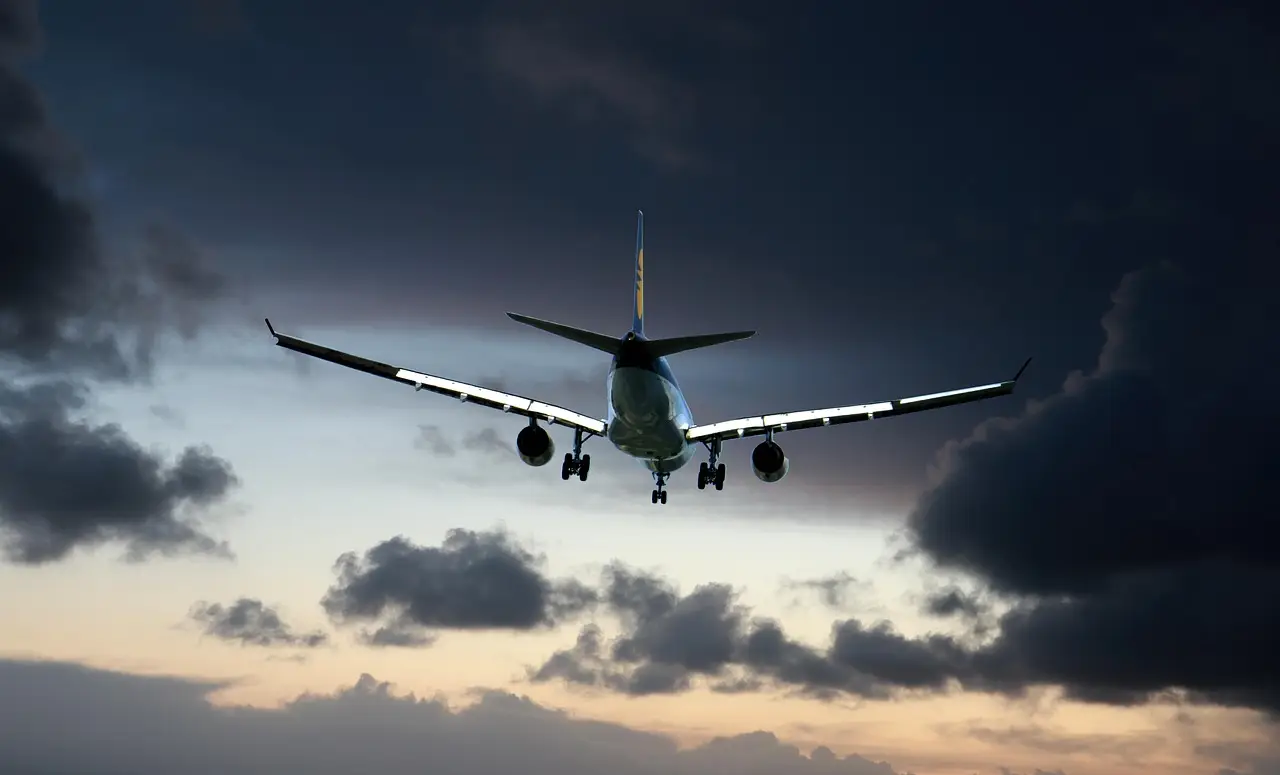
Air France Flight 28 came within less than a mile of American Airlines Flight 1660 over Los Angeles International Airport on Nov. 7, after its crew made an unauthorized left turn off the SUMMR2 departure procedure. Roughly 500 passengers were aboard the two aircraft. Both flights continued safely — AF28 toward its destination, AA1660 toward Dallas-Fort Worth — and nobody was hurt. But the event marks at least the fourth erroneous-turn departure from LAX in under fourteen months, and the Federal Aviation Administration is expected to investigate.
What happened on the night of Nov. 7?
AF28 departed LAX shortly after midnight. Air traffic control had instructed the crew to fly the SUMMR2 departure, the standard procedure that routes westbound aircraft out over the Pacific. Under that procedure, aircraft may climb to 23,000 feet unless controllers direct otherwise. Shortly after takeoff, the crew turned left without clearance — directly into the path of American Airlines Flight 1660, which was departing a parallel runway.
The result was a loss-of-separation event: two aircraft closer than the minimum horizontal or vertical distance controllers are required to maintain. An air traffic controller spotted the conflict and immediately ordered the Air France crew back toward the west. Seconds later, the controller issued a traffic warning to Flight 1660 and instructed its pilots to maintain 2,000 feet. The spacing closed to under one mile before the vectors took effect.
What does the aftermath look like?
When the controller questioned the AF28 crew, the pilots asked ATC to stand by. They then confirmed they had been instructed to fly the SUMMR2 departure. The controller warned them the event could be treated as pilot deviation — the regulatory category covering any pilot action that violates an ATC instruction.
That designation matters. It triggers FAA review of the crew's certificates and typically produces route-compliance findings, remedial training, or enforcement action depending on the circumstances. No official findings exist yet on why the crew deviated. Air France has not issued any statement, and the silence leaves open the obvious questions: fatigue, charting confusion, procedural misread, or something specific to nighttime LAX departures.
The FAA investigation is expected but has not formally begun releasing findings. Until it does, the incident file contains one verified fact — an unauthorized turn — and no verified cause.
Is LAX developing a pattern?
The record says yes. On Oct. 20, a TAP Air Portugal flight to Lisbon made an incorrect left turn off its departure. The crew corrected and climbed to 13,000 feet; ATC then instructed a left turn, and the crew turned right instead. Asked if they were okay, the crew confirmed, and the flight continued to Lisbon.
On Oct. 31, 2025, an ITA Airways flight from LAX to Rome turned left toward an American Airlines flight departing the parallel runway. ATC intervened. No further conflict followed. And in June 2026, a JetBlue flight and a flight school aircraft had a similar encounter.
Four confirmed erroneous-turn events at one airport inside fourteen months is not a statistical accident. Common denominators are worth noting: parallel-runway departures, converging turn geometry, and crews turning the wrong way off an assigned procedure. What is not on the record is any FAA systemic review, any LAX procedure change, or any airline disclosure addressing the cluster.
What does this change for passengers and carriers?
In the near term, nothing visible. Both aircraft on Nov. 7 completed their flights. No injuries, no diversions, no cancellations reported. The operational consequence falls on the Air France crew, whose deviation case will run through FAA process, and on controllers, whose intervention prevented the geometry from closing further.
The structural question is whether LAX's parallel departure design, which places climbing aircraft on crossing tracks within seconds of each other, tolerates single-crew errors too thinly. Each incident so far has ended with a controller catching the mistake in time. The margin has held four times. Nothing in the public record yet guarantees it holds a fifth, and the FAA's Nov. 7 investigation, when it reports, will be the first formal test of whether anyone in authority treats this as a pattern rather than a sequence of isolated deviations.
via travelradar.aero (Source)
More from James Calloway
Show full bio
Staff writer covering people, launches and day-to-day practice in Commercial aviation industry coverage at Flightdeck Report.
619 articles
Same bay
- FDR616Air France A350 Strays From LAX Departure, Closes Within 400 ft of American A321 · November 8, 2026
- FDR807FAA Opens Investigation Into Air France Near-Collision at LAX · November 12, 2026
- FDR829American Airlines 787 Returns to Miami With Gear Disagree on Climb · November 11, 2026
- FDR869Amazon suspends 21 Air after freighter overruns Miami runway · October 9, 2026
- FDR293Burbank's $1.3-Billion Terminal Opens With 14 Gates and Familiar Limits · October 20, 2026