Clearance CLR-2688 · AIR869
AIRAMA
Air CargoClearance sheet
Amazon suspends 21 Air after freighter overruns Miami runway
Amazon has pulled 21 Air from its cargo network after a 21 Air freighter overran a Miami runway. The voluntary suspension comes ahead of any NTSB or FAA finding.
Read-back
- Amazon has suspended 21 Air from its air-cargo network following a runway overrun in Miami
- The decision came from Amazon rather than from the NTSB or FAA
- The initial report does not specify the aircraft type, date, or extent of damage
- 21 Air operates as a contracted cargo carrier in Amazon's air network
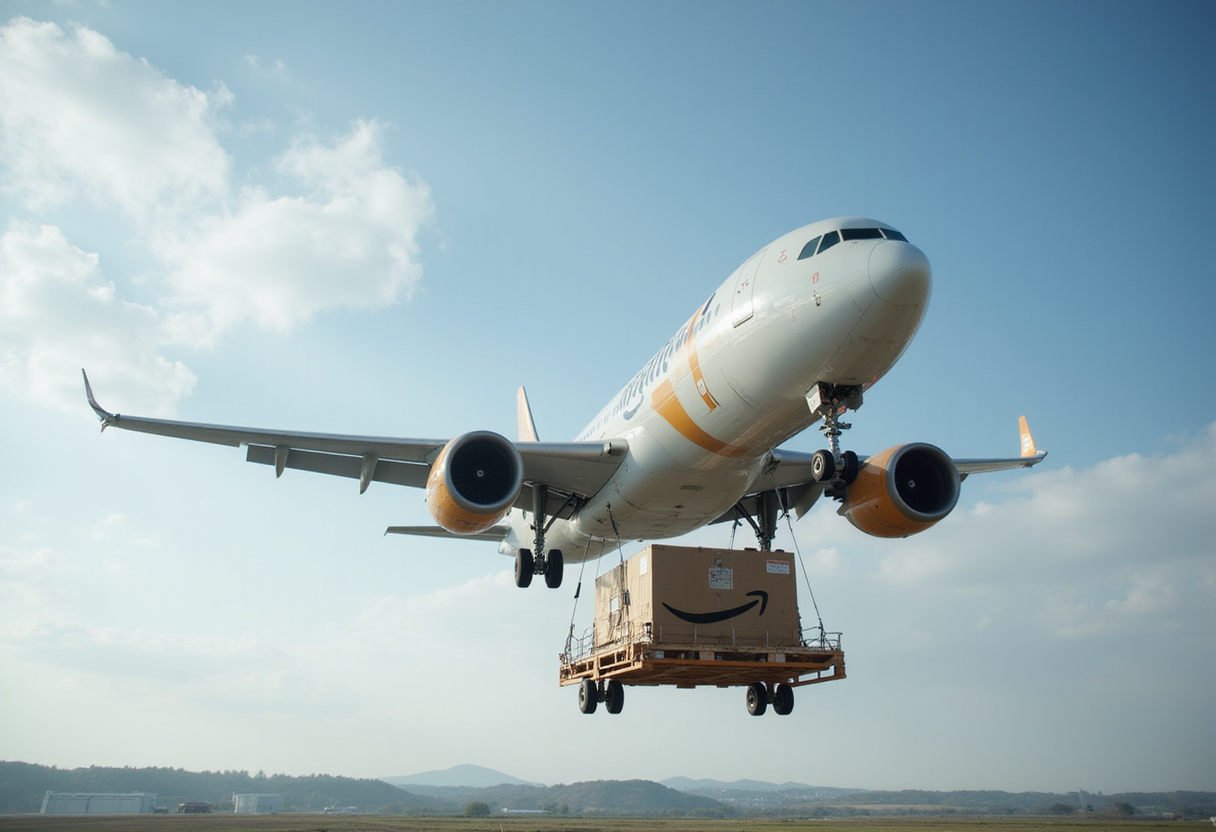
Amazon has suspended 21 Air from its air-cargo network after a freighter operated by the cargo carrier overran a runway in Miami. The pause removes a contracted lift provider from Amazon's air operations as investigators work to establish what sent the aircraft off the paved surface.
The decision comes from Amazon, not from the National Transportation Safety Board or the Federal Aviation Administration. A voluntary suspension short-circuits the usual sequence of regulator findings, certificate action, and operator response. Amazon's air-network team has treated the runway excursion as a sufficient trigger to pull capacity on its own timeline.
What happened in Miami
The initial report describes a 21 Air aircraft that departed a Miami runway during what appears to have been a landing attempt. The airframe came to rest beyond the paved surface. The headline characterization — a plane that "crashed off Miami runway" — places the event past the runway end rather than within a controlled stop.
Details remain thin in early coverage. The source does not specify the aircraft type, registration, flight number, date, or time of the overrun. It does not state whether the NTSB has opened a formal investigation, whether injuries occurred, or the extent of damage to the airframe.
What this means for Amazon's air network
Amazon Air, the e-commerce group's dedicated air arm, relies on a mix of primary contracted operators for trunk capacity and a long tail of wet-lease and charter providers to fill specific lanes. Cargo carriers like 21 Air typically supplement the network on routes where Amazon's main partners lack frequency or the right payload shape.
A pull of 21 Air's aircraft forces Amazon's planning team to redistribute the affected capacity. Options include:
- Adding cycles to incumbent operators
- Sourcing replacement lift from the charter market
- Substituting comparable widebody or narrowbody freighters on the affected lanes
The disruption's cost depends on the suspension's duration and the ease of substitution.
How regulators will weigh in
The NTSB typically classifies runway excursions as accidents. The agency dispatches a go-team when the aircraft sustains substantial damage or when serious injuries occur. A minor excursion with no injuries still generates a factual report, though without the same investigative depth.
The FAA's role centers on the operator's certificate rather than the e-commerce customer. If investigators identify crew, maintenance, or operational deficiencies at 21 Air, the agency can move on the carrier's air-carrier certificate and restrict operations until corrective action is documented. Amazon's commercial suspension operates in parallel but moves faster.
What remains open
Investigators must first establish why the aircraft departed the runway. Contributing factors can include:
- Weather conditions at the time
- Mechanical failure or system anomaly
- Crew action or performance
- Runway surface condition
Next, 21 Air must demonstrate that any identified deficiency has been remediated through training, maintenance, or fleet changes.
Finally, Amazon's carrier agreements typically include safety and dispatch-reliability thresholds. A high-profile overrun can trigger termination clauses regardless of the underlying cause.
A fourth question, less visible but commercially significant, involves 21 Air's other customers. Cargo carriers of this size serve express integrators, freight forwarders, and other e-commerce customers. A runway excursion at a major hub can ripple through those relationships if customers reassess risk on their own timelines.
What to watch next
The pace of Amazon's decision-making offers the first signal. If the suspension lifts within days, the episode likely registered as a single-event trigger under existing contract terms. If the pause extends through a full investigative cycle, Amazon will probably reallocate the affected capacity permanently and reassess 21 Air's standing in the network for the next planning cycle.
via Google News: Air cargo (Source)
More from Grace Kim
Show full bio
News editor covering consumer brands and retail at Flightdeck Report.
298 articles
Same bay
- FDR999Amazon Suspends Operations of 21 Air After Miami Runway Excursion · September 30, 2026
- FDR253NTSB: Late touchdown preceded fatal Amazon Air crash · October 2, 2026
- FDR666NTSB: Amazon Air Jet Flew Past Nearly Half of Miami Runway Before Fatal Landing · October 2, 2026
- FDR688NTSB: Amazon Air jet crossed half of Miami runway before fatal landing · October 2, 2026
- FDR799Amazon Halts Flying with 21 Air After Miami Cargo Crash · October 9, 2026