Clearance CLR-8910 · AIR953
AIRAIR
AirportsClearance sheet
Air Traffic Control Disruptions Add to Delayed Flights at Boston Logan
Delays and air traffic control issues disrupted operations at Boston Logan, a major Northeast hub for JetBlue and Delta, with ripple effects across carrier networks.
Read-back
- Delays and air traffic control issues impacted flights at Boston Logan International Airport
- Logan serves as a focus city for JetBlue and a major gateway for Delta
- FAA ground delay programs triggered by ATC constraints ripple across carrier networks at the airport
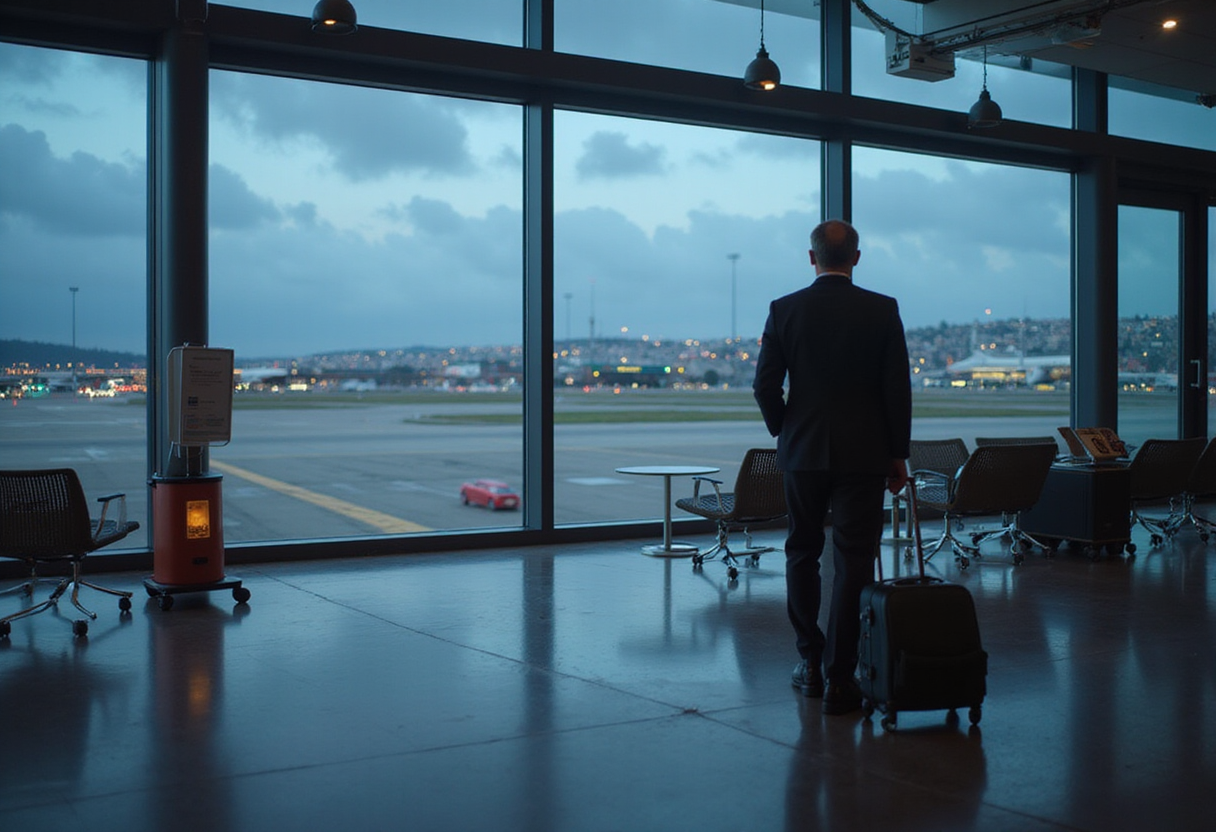
Delays and air traffic control issues disrupted flights at Boston Logan International Airport, one of the busiest airports in the Northeast and a hub for JetBlue, Delta and other US carriers.
The disruption at Logan matters beyond Massachusetts. The airport handles roughly 1,000 daily departures in peak periods and serves as a connecting point for domestic trunk routes and transatlantic services operated by Delta Air Lines, JetBlue Airways, American Airlines and British Airways, among others. When controllers slow arrival and departure flows, the effects propagate quickly across the networks of every carrier with a presence at the field.
Air traffic control problems have become a recurring constraint on US operations. Staffing shortfalls at Federal Aviation Administration facilities have repeatedly forced the agency to impose ground delays or ground stops, and carriers including JetBlue and Delta have publicly identified ATC staffing and equipment limitations as a driver of schedule disruption independent of weather. For an airport like Logan, where the runway configuration and coastal weather already limit capacity at peak hours, controller availability is often the difference between a routine afternoon and cascading delays.
The operational mechanics are straightforward. When the arrival rate at an airport falls below scheduled demand, the FAA's command center issues a ground delay program, holding aircraft at their origin airports so they do not stack up in Boston airspace. Carriers then face a choice: absorb the delays, swap aircraft to protect critical connections, or cancel flights outright. Each option carries a cost. Delayed aircraft burn crew duty time, and cancellations strand passengers and require rebooking across what may already be full flights.
For JetBlue, which counts Boston as one of its focus cities, Logan disruptions hit a disproportionate share of its operation. Delta has also built up Boston as a domestic and international gateway, and United, American and Southwest all maintain significant schedules at the field. Regional carriers flying for the majors — Republic, Endeavor Air, SkyWest and others — often take the first schedule cuts when delay programs tighten, because regional flights are typically the first to be trimmed to free slots.
The FAA, for its part, has acknowledged the strain. The agency has pushed hiring initiatives to rebuild controller ranks after attrition and training backlogs thinned staffing at numerous facilities, though fully certified controllers take years to train. Until staffing at the facilities serving the Northeast corridor reaches target levels, airports like Logan will remain exposed to delay programs triggered by controller availability rather than demand alone.
Boston Logan handled more than 40 million passengers in 2024, and its operators have invested in terminal and airfield infrastructure to keep pace. Runway capacity, however, is a fixed quantity, and efficient use of it depends on a fully staffed and equipped air traffic control system. When that system falters, no amount of airport investment prevents the delays from accumulating.
Passengers at Logan experienced the consequences directly: late arrivals, missed connections and schedule uncertainty. Carriers typically rebook affected travelers on the next available flights without change fees, but during multi-hour delay programs the next available seat can be a day away.
Further disruptions at Boston Logan remain possible whenever air traffic control capacity falls short of the airport's scheduled demand.
via Google News: Air traffic control and airspace (Source)
More from James Calloway
Show full bio
Staff writer covering industry trends and analytics at Flightdeck Report.
156 articles
Same bay
- FDR410NYC Air Traffic Control Disruptions Ripple into Boston Logan · September 30, 2026
- FDR923FAA Grounds Midwest Flights After Minnesota ATC Outage · September 28, 2026
- FDR425Cancellations and Delays Expose US Air Traffic Control Shortcomings · September 30, 2026
- FDR372LAX Air Traffic Control Systems Upgraded Under FAA Modernization Program · September 28, 2026
- FDR445ATC Failure Grounds Hundreds of Flights, Exposing Aging US System · September 30, 2026