Clearance CLR-6949 · SAF438
SAFTHU
Safety & OperationsClearance sheet
Thunderstorms Trigger FAA Ground Stops at Five Northeast US Airports
Thunderstorms forced FAA ground stops at JFK, Newark, LaGuardia, Boston and Philadelphia on November 12, with Boston arrivals assigned delays averaging 80 minutes.
Read-back
- Five ground stops and three ground delay programmes were active across the US network at 3 p.m. Eastern on November 12, 2026
- Boston Logan's ground delay programme averaged 80 minutes, peaking at 186 minutes; LaGuardia averaged 63 minutes, peaking at 150
- JFK's ground stop was initially set to run until 4 p.m.; Newark's until about 3:45 p.m.; Philadelphia's until 3:15 p.m.
- Tornado Watch 705 covered Philadelphia and surrounding counties until 7 p.m. Eastern
- The disruption is separate from a thunderstorm event that affected Northeast airports on November 6
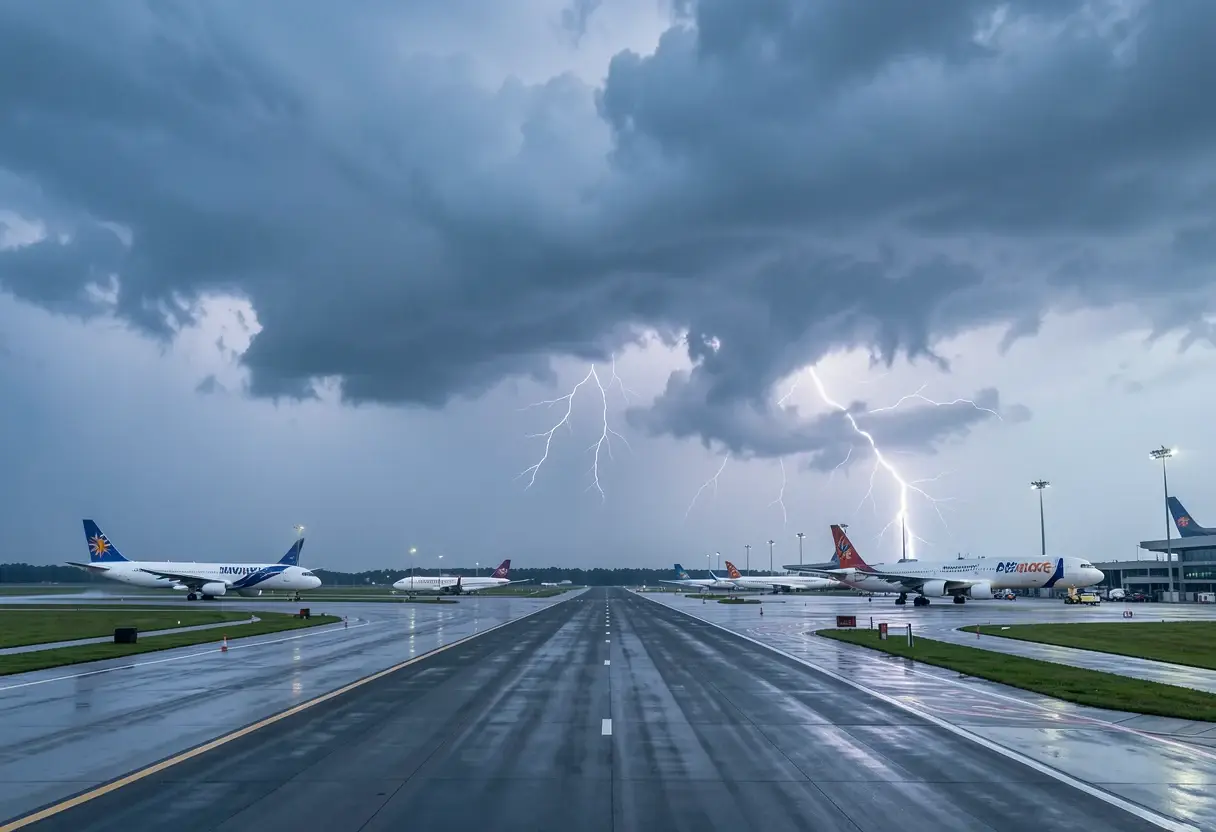
Five ground stops and three ground delay programmes were in force across the US national airspace system at 3 p.m. Eastern Time on November 12, 2026, as thunderstorms forced the Federal Aviation Administration to restrict arrivals at John F. Kennedy, Newark Liberty, LaGuardia, Boston Logan and Philadelphia International airports.
The FAA's operational snapshot captured the worst of a Thursday-afternoon disruption that spread delays far beyond the Northeast itself. A ground stop keeps aircraft at their origin airport until controllers can safely accept more arrivals, so passengers hundreds or thousands of miles from the storms felt the effect. Flights already airborne continued toward their destinations, entered holding patterns or followed other controller instructions depending on conditions.
How long did each airport's ground stop last?
The FAA published estimated end times for the restrictions, though these depended on shifting weather rather than guarantees of resumed operations:
- JFK: ground stop initially scheduled until 4 p.m. Eastern
- Newark: restriction expected to run until approximately 3:45 p.m.
- Philadelphia: estimated end time of 3:15 p.m.
- Boston Logan and LaGuardia: both subject to temporary restrictions
These were traffic-management measures, not airport closures. All five facilities — among the country's busiest domestic and international gateways — kept operating at reduced arrival capacity, affecting connecting traffic to Europe, Canada and across the United States.
What did the delay programmes show?
Separate ground delay programmes layered additional disruption onto Boston and LaGuardia.
Boston's programme assigned average delays of roughly 80 minutes to affected arrivals, with individual assignments reaching 186 minutes. The restrictions there were associated with low cloud ceilings. LaGuardia's programme, linked to thunderstorms, recorded an average assigned delay of 63 minutes and a peak of 150 minutes.
Those figures apply only to flights covered by the FAA programmes, not to every passenger or departure at each airport. Low visibility, storms and congestion cut arrival capacity even with runways open, and late-arriving aircraft then missed their next scheduled departures, propagating delay through airline schedules.
Was severe weather still building?
Yes. The National Weather Service issued Tornado Watch 705 for Philadelphia and surrounding counties in Pennsylvania and New Jersey, warning that conditions could support severe thunderstorms, damaging winds, large hail and possible tornadoes. The watch ran until 7 p.m. Eastern.
The Mid-Atlantic watch sat inside a wider weather system affecting Northeast aviation. Controllers rerouted aircraft around hazardous cells, lengthening flight times and congesting alternative routes — a pattern that risks missed connections at major hubs even after restrictions lift.
What should passengers do?
The November 12 disruption is separate from another thunderstorm event that hit Northeast airports on November 6, so travellers should rely on current, flight-specific information rather than earlier reports.
- Monitor your airline's mobile app before heading to the airport
- Check both sectors of a connecting itinerary — the first flight may operate while the onward leg stays delayed
- Expect recovery time after a ground stop lifts, as airlines reposition aircraft and crews
Under US Department of Transportation rules, passengers whose flights are cancelled or significantly changed may qualify for refunds if they decline the alternative transportation offered. Severe weather does not automatically entitle passengers to hotel or expense compensation under US aviation rules, though carrier-specific weather waivers may add flexibility.
The FAA's figures represent a Thursday-afternoon snapshot, not the day's final outcome. Ground stops and delay programmes can change within minutes, and how quickly the five hubs recover will depend on whether the storm system behind Tornado Watch 705 continues to track across the Northeast corridor.
via rustourismnews.com (Source)
More from Nathan Brooks
Show full bio
Correspondent covering technology and product news in Commercial aviation industry coverage at Flightdeck Report.
631 articles
Same bay
- FDR953Air Traffic Control Disruptions Add to Delayed Flights at Boston Logan · September 30, 2026
- FDR521FAA ground stops delay 187 flights at San Francisco airport · November 10, 2026
- FDR825Airspace Shutdown Delays Nearly 300 Flights at Boston Logan · October 10, 2026
- FDR923FAA Grounds Midwest Flights After Minnesota ATC Outage · September 28, 2026
- FDR883Northeast Flights Resume After FAA Equipment Outage Grounds Region · September 27, 2026