Clearance CLR-8236 · AIR825
AIRAIR
Airspace & RegulationClearance sheet
Airspace Shutdown Delays Nearly 300 Flights at Boston Logan
Nearly 300 flights were delayed at Boston Logan International Airport after an airspace shutdown halted normal operations at the busy Northeast hub.
Read-back
- Nearly 300 flights delayed at Boston Logan International Airport
- Disruption caused by an airspace shutdown over the region
- Logan serves as a key connecting hub in the US Northeast
- Delay count reported by MassLive
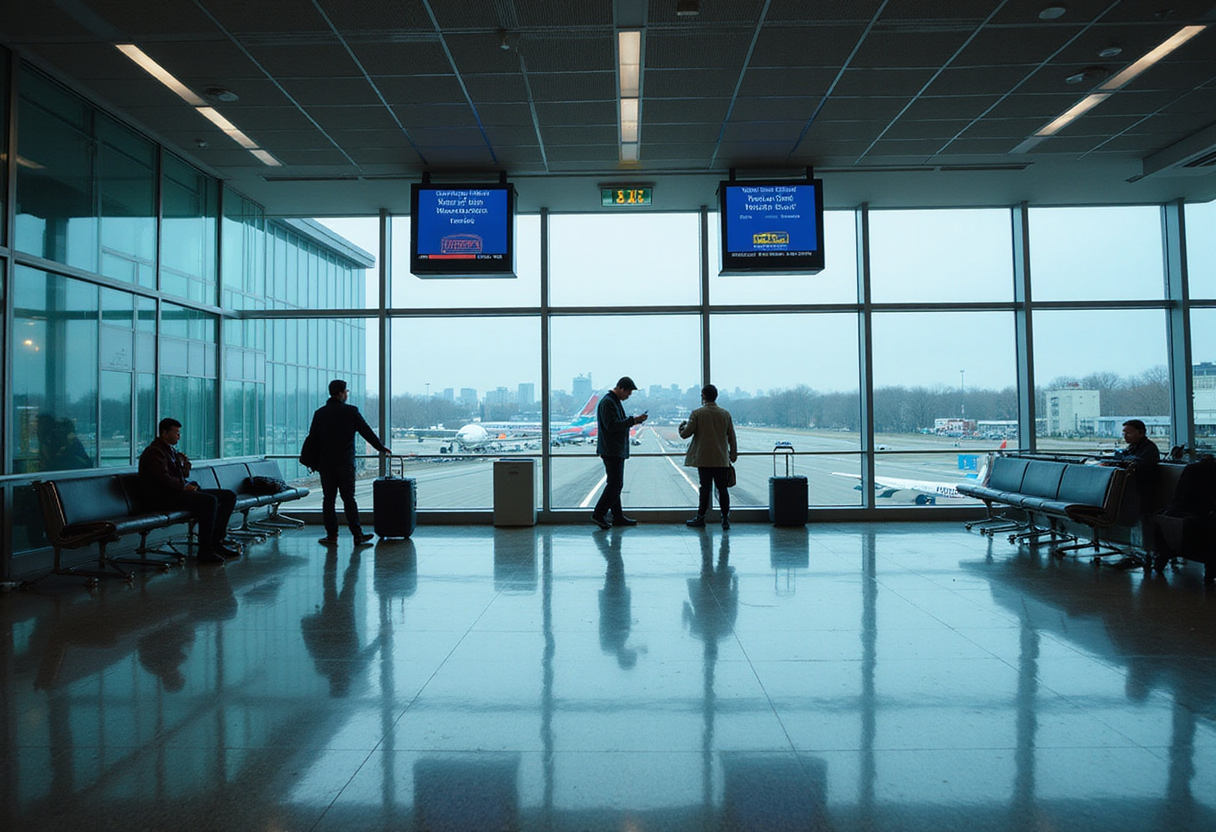
Nearly 300 flights were delayed at Boston Logan International Airport during an airspace shutdown that halted normal operations at one of the Northeast's busiest hubs.
The disruption, reported by MassLive, affected schedules across carriers serving the airport, with travelers facing extended waits as arrivals and departures were held while the airspace closure remained in force.
What happened at Logan?
An airspace shutdown over the region stopped flights from operating normally through the affected sector. Boston Logan, which handles heavy volumes of domestic and regional traffic, saw delays accumulate to nearly 300 flights as controllers and airlines worked around the closure.
Airspace shutdowns of this kind typically force arriving aircraft into holding patterns, push departures onto the ground, and require carriers to re-sequence schedules once the restriction lifts. The knock-on effects often extend beyond the initial closure window, as aircraft and crews fall out of position for subsequent rotations.
What does this mean for passengers and airlines?
For passengers, the immediate consequence was time: flights that would ordinarily depart on schedule were held, and connections through Logan became unreliable for much of the affected period.
For airlines, a delay figure approaching 300 flights at a single airport represents a material operational cost. Crew duty clocks, aircraft turnaround windows and downstream slot compliance all come under pressure when a hub of Logan's scale loses access to its surrounding airspace, even temporarily.
Logan is a critical connecting point for the US East Coast, and disruptions there tend to propagate across the national network as delayed aircraft reposition through the day.
How do airports respond?
When airspace closes, air traffic control and airport operators coordinate with carriers to manage the queue of waiting traffic and restart flows in an orderly sequence once the restriction is lifted. Airlines, in turn, rebook affected passengers and adjust later departures to absorb the backlog.
The scale of the disruption at Boston Logan — nearly 300 delayed flights — underscores how sensitive even short airspace closures are at high-density metropolitan airports, where arrival and departure rates leave little slack to absorb lost capacity.
Further details on the cause of the shutdown and the full duration of the disruption may clarify how quickly Logan returned to normal operations.
via Google News: Air traffic control and airspace (Source)
More from Priya Raman
Same bay
- FDR953Air Traffic Control Disruptions Add to Delayed Flights at Boston Logan · September 30, 2026
- FDR923FAA Grounds Midwest Flights After Minnesota ATC Outage · September 28, 2026
- FDR513ATC Failure Grounds Hundreds of US Flights, Exposing Ageing Infrastructure · September 28, 2026
- FDR883Northeast Flights Resume After FAA Equipment Outage Grounds Region · September 27, 2026
- FDR501Air Traffic Control Fault Disrupts Flights at Major UK Airports · October 10, 2026