Clearance CLR-1696 · AIR883
AIRNOR
Airspace & RegulationClearance sheet
Northeast Flights Resume After FAA Equipment Outage Grounds Region
Northeast US flights are resuming after an equipment outage disrupted air traffic across the region, Transportation Secretary Sean Duffy confirmed.
Read-back
- Transportation Secretary Sean Duffy said flights are resuming after an equipment outage disrupted Northeast US air travel
- The outage affected equipment used by air traffic control in one of the busiest US airspace regions
- Recovery involves clearing aircraft, crew and passenger backlogs across Northeast hub operations
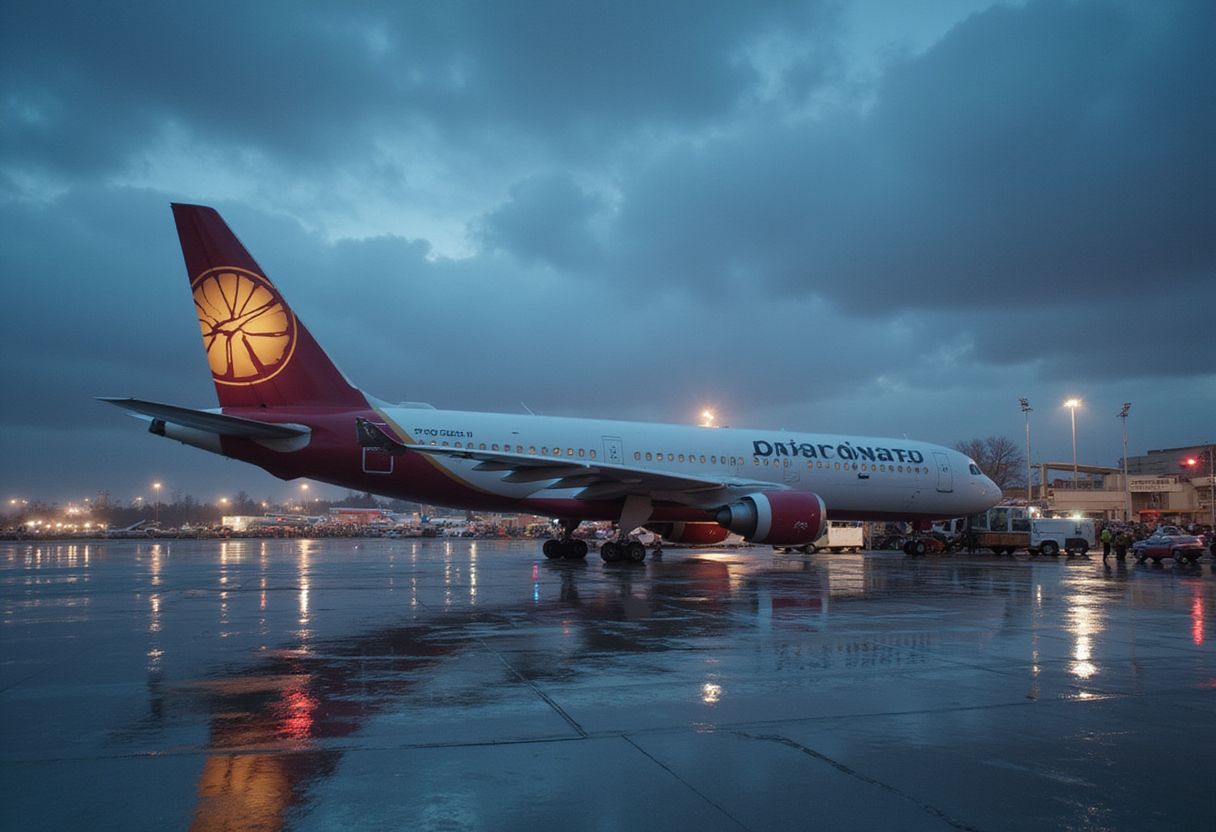
Airline operations in the northeastern United States are resuming after an equipment outage disrupted air traffic across the region, Transportation Secretary Sean Duffy said.
The outage knocked out equipment relied on by air traffic control, forcing interruptions to flights throughout the Northeast — one of the densest and most delay-sensitive aviation markets in the world. Duffy, who oversees the Federal Aviation Administration through the Department of Transportation, confirmed that flights were coming back online as the agency worked through the failure.
The disruption landed at the height of the system's operational vulnerability. The Northeast corridor links the New York and Washington airspace complexes with the transatlantic gateways at JFK, Newark and Boston Logan, and any equipment failure there propagates quickly. Carriers holding slots or operating under airspace flow programs have little slack: a single control facility losing capability can push delays and cancellations across dozens of aircraft rotations within hours.
For airlines, the economics are immediate. Aircraft and crews cycle through Northeast hubs multiple times a day, so a regional stoppage does not simply cancel one departure — it strands the airplane and the flight crew at the wrong end of a rotation, forcing resequencing that can extend into the following day. Network carriers with hub exposure in the region absorb the cost first; regional operators feeding those hubs absorb it next.
Duffy's public confirmation that flights were resuming indicates the failure was contained rather than escalating, but it also underscores the fragility of the equipment base behind US air traffic control. The FAA has long acknowledged that portions of its infrastructure — some of it dating back decades — require modernization, and each high-visibility outage strengthens the case for the replacement programs now competing for funding and congressional attention. Equipment failures of this type are distinct from staffing shortages, which have driven similar disruptions at facilities such as Newark in recent months, but the network consequence is the same: reduced throughput in the busiest corner of US airspace.
Passengers bound for or departing from Northeast airports bore the immediate brunt, with flights disrupted as the outage worked through the system. Carriers typically rebook affected travelers and issue waivers when ground stops or flow restrictions hit a region, and recovery timelines depend on how quickly the affected equipment returned to service and how much arrival and departure backlog accumulated during the interruption.
The FAA has not been reported as stating a final root cause in the immediate aftermath, and Duffy's remarks focused on the operational recovery rather than the technical detail of what failed. That detail matters. Whether the fault sat in a radar system, a communications link or a data-processing component determines both the fix timeline and whether the same failure mode threatens other facilities running similar equipment.
For an agency already managing controller staffing shortfalls at high-priority facilities, an equipment failure in the Northeast compounds the pressure. Throughput in the New York airspace complex is capped well below documented demand even on a fully functional day, which means there is no buffer capacity to absorb recovery surges — aircraft come back into the system faster than the constrained airspace can sequence them.
Duffy's statement that flights are resuming marks the turn from disruption to recovery, but the operational cleanup — repositioning aircraft, restoring crew legality and clearing passenger backlogs — will run longer than the outage itself. The incident now joins the running ledger of infrastructure failures pressing the case for sustained FAA equipment modernization.
via Google News: Air traffic control and airspace (Source)
More from Sophie Lindqvist
Show full bio
Senior reporter covering industry trends and analytics at Flightdeck Report.
161 articles
Same bay
- FDR923FAA Grounds Midwest Flights After Minnesota ATC Outage · September 28, 2026
- FDR513ATC Failure Grounds Hundreds of US Flights, Exposing Ageing Infrastructure · September 28, 2026
- FDR445ATC Failure Grounds Hundreds of Flights, Exposing Aging US System · September 30, 2026
- FDR410NYC Air Traffic Control Disruptions Ripple into Boston Logan · September 30, 2026
- FDR663NATS Disruption Puts UK Air Traffic Resilience Under Scrutiny · September 28, 2026