Clearance CLR-9663 · SAF384
SAFAMA
Safety & OperationsClearance sheet
Amazon Cargo Crew Unaware of Wind Conditions Before Crash
Crash investigation finds the crew of an Amazon cargo flight did not know the wind conditions at the time of the accident, raising questions about weather data flow.
Read-back
- The pilots of the crashed Amazon cargo plane were unaware of the wind conditions at the time of the accident.
- The report raises questions about how wind information reaches cargo crews on approach.
- The carrier involved and specific wind values were not identified in the available report.
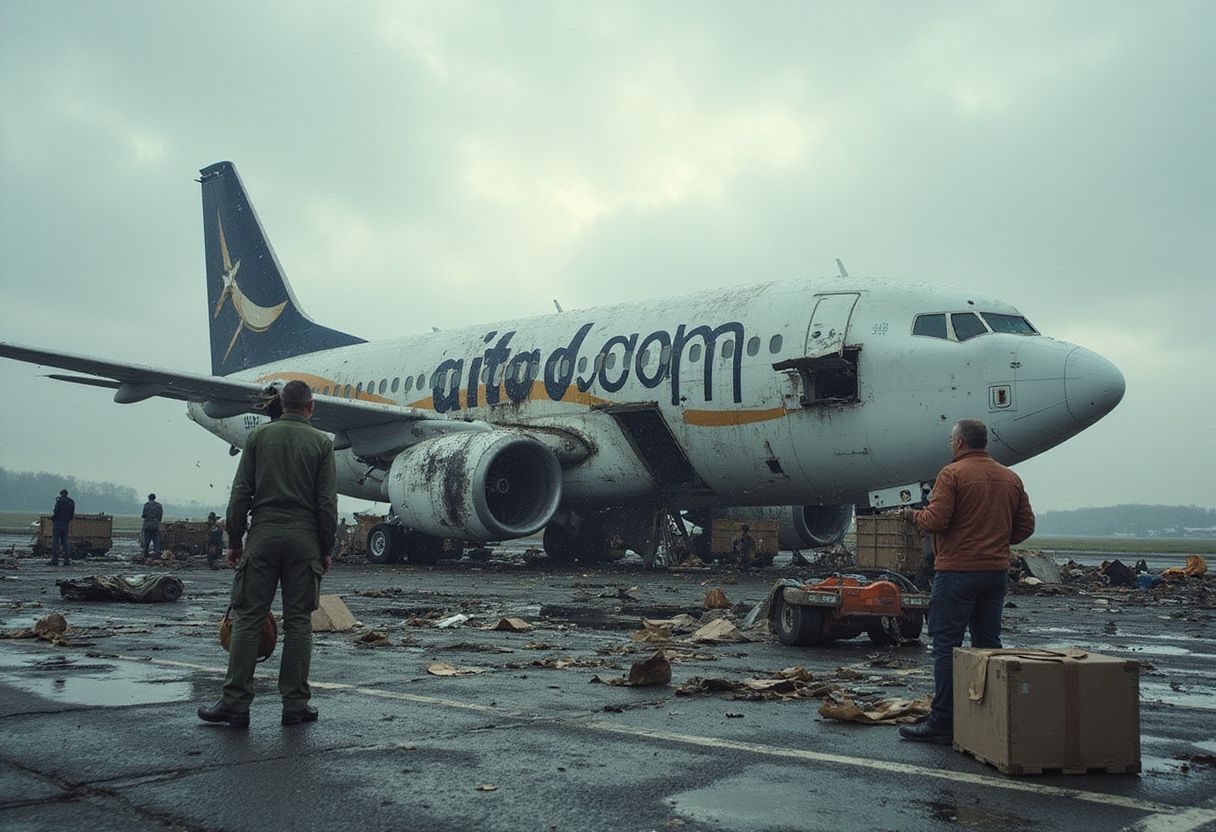
The pilots operating an Amazon cargo flight that ended in a crash were unaware of the wind conditions at the time of the accident, The Straits Times reports.
The finding places the accident in a well-established category of cargo operations risk: crews flying freighter services, often at night and into airports with limited weather reporting infrastructure, can lack timely, accurate wind information on final approach. For Amazon's air network, which relies on contracted carriers flying dense schedules across secondary airports, the margin between a routine landing and a runway excursion can rest on exactly that information gap.
Wind data on approach normally reaches a cockpit through several channels — automated terminal information service broadcasts, tower controllers, onboard wind readouts tied to air data computers, and approach charts listing local wind patterns. An investigation conclusion that the crew simply did not know the wind conditions raises questions about which of those channels failed, or were never available, at the accident airport.
The report does not specify, in the material available, the exact wind values involved, the phase of flight in which the crash occurred, or whether gusts, wind shear or a crosswind component exceeded aircraft limits. It also does not identify which of Amazon's contracted carriers operated the flight.
For Amazon, the accident report lands at a moment when the company's air logistics network has grown into a major consumer of freighter capacity, wet-leased through operators flying Boeing 767 and 737 converted freighters, among other types. Any safety finding that touches on weather information flow has operational consequences: it can drive changes in approach briefing procedures, in the selection of airports served, or in the weather reporting equipment those airports are required to have for cargo operations at night.
Investigators pointing to an unaware crew typically examine whether automated weather stations at the airport were functioning, whether their readings were current, and whether the crew received the latest broadcast before landing. In cargo networks, where flights often arrive outside normal tower operating hours, crews can depend heavily on automated reports that may lag real conditions by several minutes — an interval in which wind can shift materially.
The human-factors dimension is equally consequential. A crew that believes conditions are benign will fly a stabilized approach differently from one expecting gusts or a strong crosswind, and will make different go-around decisions. If the wind information never reached the cockpit, the pilots' decision-making cannot be faulted on its own terms; the failure sits upstream, in the weather-reporting and dissemination chain.
The Straits Times report gives no indication of the regulatory follow-up expected. Depending on jurisdiction, findings of this kind can produce safety recommendations targeting airport weather equipment, air traffic procedures, or carrier dispatch practices — each carrying cost implications for the operator and the airport operator concerned.
For now, the confirmed fact is narrow but significant: the crew lacked knowledge of the wind. The fuller investigation record, when released, will determine whether that gap traces to equipment, procedures or communications — and what Amazon's carriers will need to change to close it.
via Google News: Air cargo (Source)
More from Nathan Brooks
Show full bio
Correspondent covering media and advertising at Flightdeck Report.
172 articles
Same bay
- FDR174Amazon Cargo Crash Crew Were Unaware of Wind Conditions · October 2, 2026
- FDR390Crashed Amazon Cargo Jet Crew Had No Wind Data Before Impact · October 2, 2026
- FDR253NTSB: Late touchdown preceded fatal Amazon Air crash · October 2, 2026
- FDR449NTSB: Amazon Cargo Crew Landed in Miami Without Wind Data · October 1, 2026
- FDR962Victims Identified in Fatal Amazon Prime Air Cargo Crash · September 27, 2026