Clearance CLR-2576 · SAF583
SAFAMA
Safety & OperationsClearance sheet
Amazon cargo crew wind-awareness gap emerges in crash investigation
Investigation into a crashed Amazon cargo flight finds the pilots had no awareness of wind conditions, shifting scrutiny to the dispatch-and-briefing chain that should have delivered the data.
Read-back
- Pilots of a crashed Amazon cargo plane had no awareness of wind conditions at the time of the accident, according to reporting by WTAQ
- The mechanism by which the wind information failed to reach the crew remains under investigation
- Amazon-branded cargo flights operate under a contracted model, with third-party carriers holding the air carrier certificates
- Essential accident details — aircraft type, date, location, casualties, and operating carrier — have not entered the public record
- Cargo operations face elevated weather exposure due to overnight scheduling and sparse reporting at smaller cargo airports
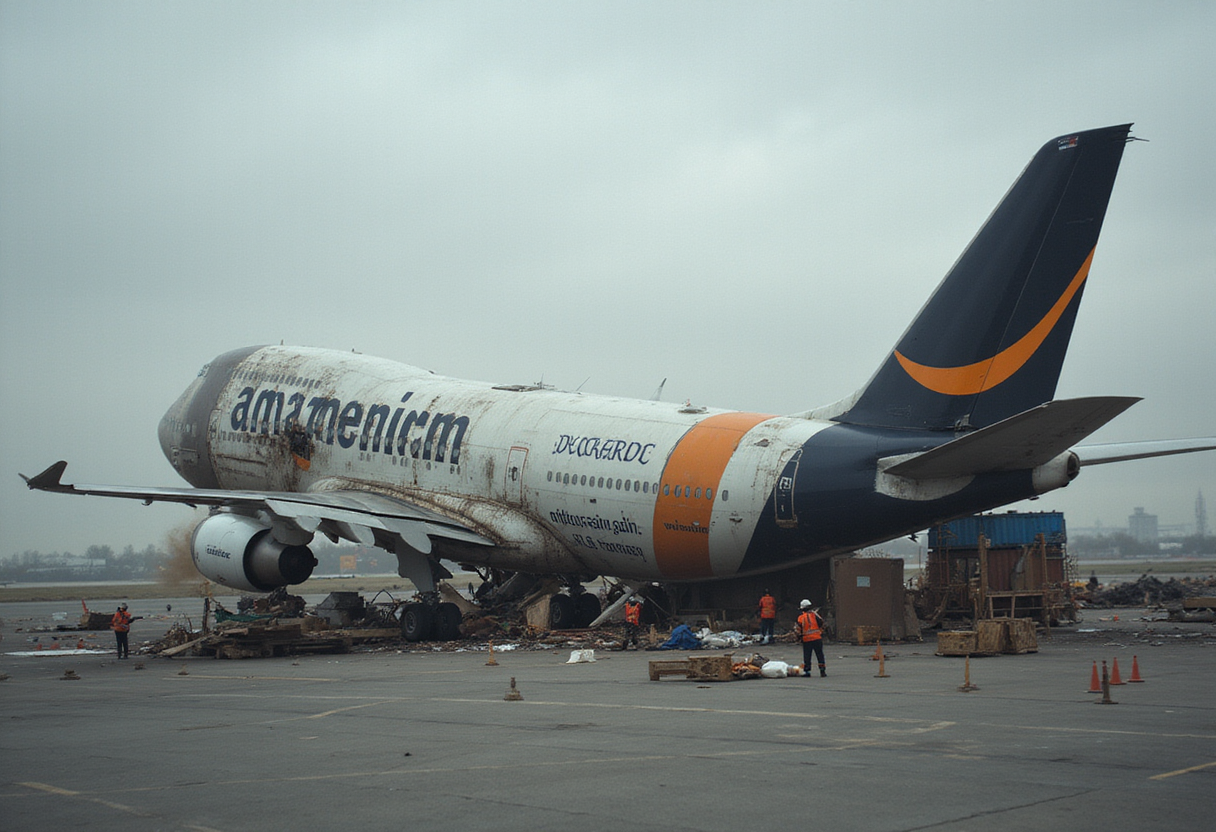
Pilots of an Amazon-branded cargo flight that crashed had no awareness of the wind conditions present at the time of the accident, according to reporting by WTAQ.
The single published finding — that the flight crew operated without knowledge of the wind environment — repositions the investigation onto the chain of information that should have delivered that data to the cockpit. The full mechanism by which the information failed to reach the crew remains under inquiry.
What the finding establishes
A determination of pilot unawareness of wind conditions is itself a significant investigative conclusion. Accident investigators typically reconstruct what crews knew, and when they knew it, by combining cockpit voice recorder data, flight data, dispatch records, and meteorological reconstructions. A finding of unawareness suggests the gap existed from the pre-flight phase rather than from a real-time failure to interpret available information.
That distinction will shape the probable cause. A crew that never received accurate wind data cannot be faulted for not responding to it. A crew that received it but failed to act would face a different line of inquiry. The investigation must now determine which scenario applies.
Where wind information should originate
Wind awareness in a cargo cockpit arrives through several channels:
- Pre-flight weather packages from dispatch
- ATIS and automated weather broadcasts at the destination
- Pilot reports from preceding aircraft
- Onboard weather radar returns
- Air traffic control vectors and advisories
A break anywhere in that chain can leave a crew operating blind. Investigators will document which channels carried accurate information and which did not. The dispatch office, in particular, sits at the front of that chain and typically faces scrutiny when crews arrive at the destination unaware of conditions.
The contracted cargo model
Amazon-branded cargo flights operate under a contracted model. The aircraft, crew, and air carrier certificate belong to third-party operators; Amazon supplies the commercial requirement and the freight. That arrangement places responsibility for crew weather briefings, dispatch releases, and weather-minimum compliance on the operating carrier rather than on Amazon itself.
The structure has scaled rapidly as Amazon built one of the largest dedicated cargo networks in the United States. The growth has drawn the operating carriers — and the FAA's oversight of them — into closer regulatory focus. The wind-awareness finding in this accident will be evaluated against that operational backdrop.
What remains undisclosed
Several essential elements of the accident have not entered the public record through the WTAQ report:
- The aircraft type and registration
- The accident location and date
- The operating carrier's identity
- The number of crew members and any fatalities
- The specific wind phenomena implicated
Each of those data points will need to surface before the investigation can close. Until they do, the wind-awareness finding stands as an isolated thread rather than a complete picture.
Why wind awareness matters
Wind conditions rank among the most operationally consequential variables in aviation. Crosswind limitations on takeoff and landing, wind shear on approach, and gust factors on contaminated runways each carry established accident histories. Crew awareness of those conditions forms a baseline expectation rather than an advanced competency.
When that baseline fails, consequences arrive quickly. Aircraft energy state can change in seconds. Margins for correction shrink. Recovery becomes a function of altitude and airspeed rather than crew technique.
Cargo operations carry additional exposure. Many cargo flights operate overnight, when atmospheric conditions are less predictable and fewer pilot reports populate the system. Weather stations at smaller cargo airports can be sparse. Forecasts calibrated for daytime passenger operations may not adequately capture the wind structure present in the early morning hours.
What the investigation will examine
The Amazon cargo crash will now be evaluated against that framework. Investigators must determine whether the wind-awareness gap stemmed from a briefing failure, a dispatch error, a forecast inaccuracy, or a crew decision to operate without consulting available weather data.
Each of those explanations carries different implications for future safety recommendations and for the operational practices of contracted cargo carriers serving e-commerce networks. The probable cause finding, when issued, will establish which.
via Google News: Air cargo (Source)
More from Priya Raman
Same bay
- FDR384Amazon Cargo Crew Unaware of Wind Conditions Before Crash · October 2, 2026
- FDR891Amazon Cargo Crash Crew Were Unaware of Wind Conditions · October 2, 2026
- FDR174Amazon Cargo Crash Crew Were Unaware of Wind Conditions · October 2, 2026
- FDR390Crashed Amazon Cargo Jet Crew Had No Wind Data Before Impact · October 2, 2026
- FDR175NTSB: Crew Got No Wind Warning Before Miami Amazon Crash · October 10, 2026