Clearance CLR-3784 · SAF891
SAFAMA
Safety & OperationsClearance sheet
Amazon Cargo Crash Crew Were Unaware of Wind Conditions
Reuters reports the crew of a crashed Amazon cargo aircraft were unaware of wind conditions, putting cockpit weather awareness and the operator's information chain at the center of the inquiry.
Read-back
- Reuters reports the crashed Amazon cargo flight's pilots were unaware of wind conditions at the time of the accident.
- The finding points to a gap in the weather-information chain reaching the cockpit rather than an error by a fully informed crew.
- The investigation record will determine whether the failure lay in observation, transmission or interpretation of wind data.
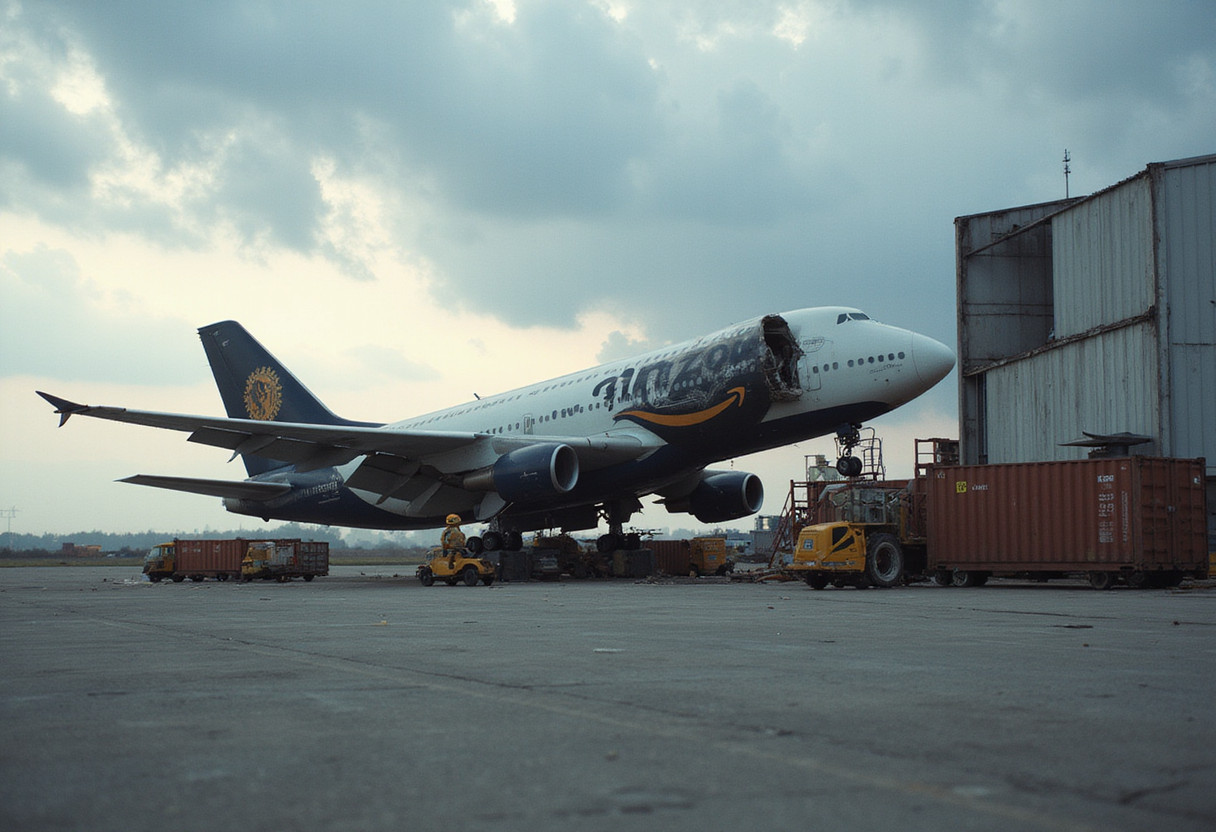
The pilots of a crashed Amazon cargo aircraft were unaware of the wind conditions at the time of the accident, Reuters reports. The disclosure places the crew's weather awareness — and the information pipeline that feeds it — at the center of the emerging picture of the accident.
The Reuters finding, conveyed in its headline reporting on the crash, indicates a gap between the meteorological conditions actually present and the wind information available to the flight crew before or during the approach. Wind awareness is among the most basic inputs a crew relies on when deciding whether to land, go around, or divert, and a failure in that input chain carries implications well beyond a single flight.
For an operator of Amazon's scale, the question that follows is systemic. Amazon's air cargo network, built around aircraft operated on its behalf by contracted carriers, moves high daily volumes on tight schedules. Any finding that crews are receiving incomplete or delayed wind data would apply pressure on several fronts at once: how weather information reaches the cockpit, how carriers brief crews, and how the operator's own network standards account for marginal conditions at the airports it serves.
Wind-related accidents typically trace back to one of several failure modes. The crew may not have received the latest tower-reported winds or automated weather observation. The aircraft's own wind-shear or ground-speed-based systems may have flagged conditions too late in the approach. Or the reported winds at a nearby reporting point may have differed materially from those encountered on final approach, a known hazard at airports with complex terrain or localized gust patterns. Which of these applied here is a matter for the investigating authority, and the Reuters headline alone does not resolve it.
What the finding does establish is that the accident sequence involved an information deficit, not simply an error of judgment on a fully informed crew. That distinction matters for how investigators, regulators and the operator will frame corrective action. If the wind data existed but never reached the cockpit, the corrective pathway runs through communications, avionics integration and dispatch briefing procedures. If the data did not exist in usable form at the airport in question, the pathway runs through airport weather infrastructure and the minimums under which freighter operations are scheduled into that field.
The commercial stakes are concrete. Freight operators fly into a wider set of airports than passenger carriers, often at night and often into fields with less robust weather reporting. A finding that conditions outran the available information would invite scrutiny of scheduling assumptions — how much weather-related diversion risk is priced into a network that depends on nightly sort-window punctuality — and of whether contracted carriers' crews have the tools and authority to act early on deteriorating conditions.
It also raises questions for the carriers that operate Amazon's lift under contract. Those airlines hold the operating certificates and bear regulatory responsibility for crew weather procedures. Any investigation finding that touches briefing, reporting or cockpit awareness will land first on the certificate holder, with the customer's network standards examined in parallel.
The investigative process will determine the precise chain of events: what wind information was generated, what was transmitted, what the crew received, and at what point in the flight each step occurred. That record, once published, will determine whether this was a failure of observation, transmission or interpretation — three very different problems with three very different fixes.
Further reporting from Reuters and the investigating authority's findings, when released, will establish the specific aircraft, airport and phase of flight involved, and with them the concrete operational consequences for the Amazon air network and its contracted carriers.
via Google News: Air cargo (Source)
More from James Calloway
Show full bio
Staff writer covering industry trends and analytics at Flightdeck Report.
182 articles
Same bay
- FDR174Amazon Cargo Crash Crew Were Unaware of Wind Conditions · October 2, 2026
- FDR384Amazon Cargo Crew Unaware of Wind Conditions Before Crash · October 2, 2026
- FDR390Crashed Amazon Cargo Jet Crew Had No Wind Data Before Impact · October 2, 2026
- FDR962Victims Identified in Fatal Amazon Prime Air Cargo Crash · September 27, 2026
- FDR449NTSB: Amazon Cargo Crew Landed in Miami Without Wind Data · October 1, 2026