Clearance CLR-8856 · AIR449
AIRNTS
Air CargoClearance sheet
NTSB: Amazon Cargo Crew Landed in Miami Without Wind Data
NTSB preliminary report: 21 Air 767-300F crew for Amazon Air landed at 160 knots with no wind call-up, speed brakes stowed and reversers undeployed. Five died.
Read-back
- 21 Air 767-300F operating for Amazon Air overran a Miami runway on September 6, killing five people
- FAA controller issued landing clearance without required wind information; winds were 190° at 19 knots gusting 22
- Aircraft touched down 3,750 ft past the threshold at 160 knots groundspeed with speed brakes stowed and thrust reversers not deployed; Amazon has since suspended use of 21 Air
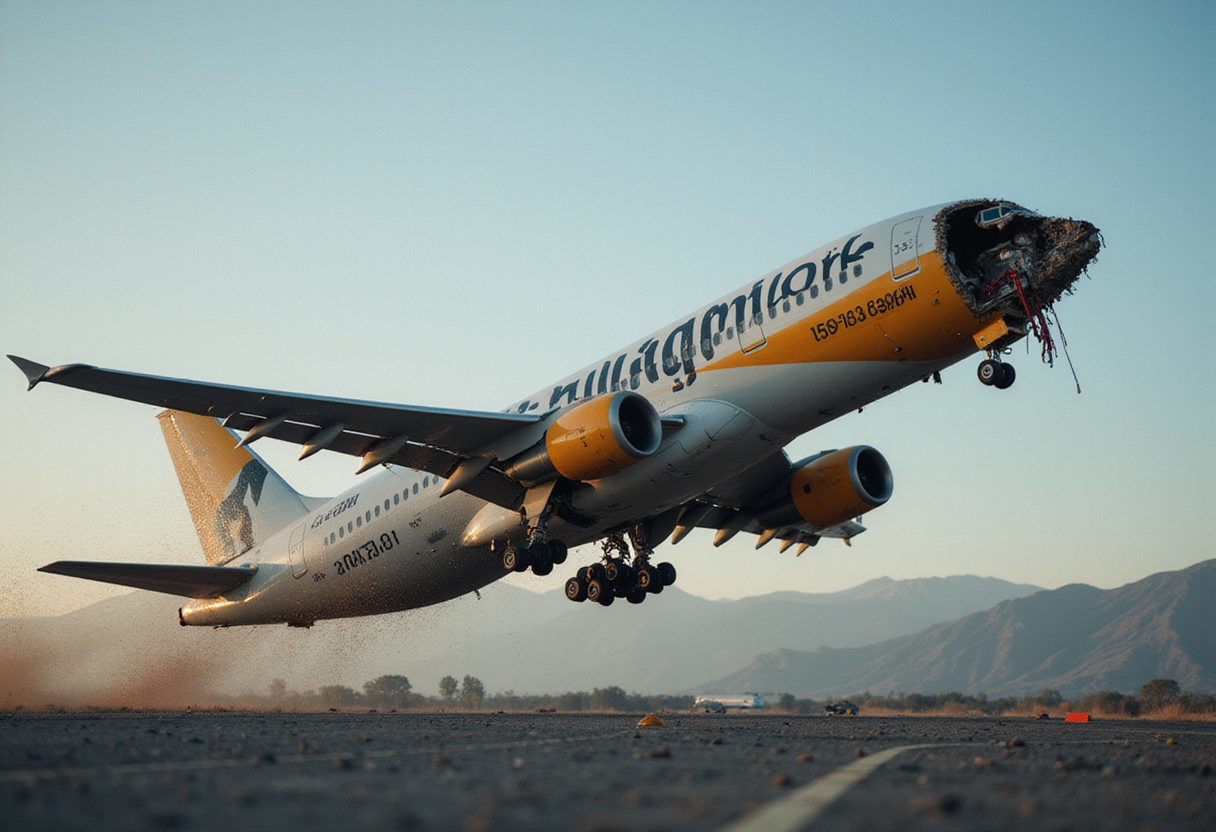
The pilots of a 21 Air Boeing 767-300F operating for Amazon Air never received wind information before overrunning a runway at Miami International Airport on September 6, a crash that killed five people, the National Transportation Safety Board said in its preliminary report on Thursday.
The document is the first detailed account of one of the deadliest US runway accidents in years, and it points to a chain of probable failures spanning the cockpit, the braking systems and the control tower.
According to the NTSB, a Federal Aviation Administration air traffic controller issued the landing clearance but did not pass wind information to the crew, as FAA procedures require. Roughly four minutes before that clearance, when another flight asked for wind data, the same controller reported winds from 190 degrees at 19 knots gusting to 22 knots. The 21 Air flight was not monitoring that radio frequency at the time. The FAA declined immediate comment.
The numbers in the report compound the picture. The aircraft touched down about 3,750 ft (1,143 m) past the runway threshold at a groundspeed of 160 knots — 184 mph. Flight data recorder evidence shows the speed brakes remained stowed and the thrust reversers never deployed during the landing roll.
Cockpit communications detailed by the board add a human dimension. Just over a minute before touchdown, the first officer cautioned the captain that they were flying "too fast" and made further comments about the aircraft's excessive speed. The NTSB found the captain did not verbally acknowledge all of those remarks. Flight data recorder evidence also indicates the captain considered rejecting the landing after the aircraft had already touched down.
The aircraft itself was 32 years old. The 767-300 had flown as a passenger jet for various airlines from 1994 to 2015 before conversion to freighter work. On the day of the accident it was flying its third sector: Cincinnati to Miami, Miami to San Juan, and then San Juan back to Miami, where it overran the runway and struck two vehicles on the ground.
The commercial consequences for the operator were immediate. Amazon, whose Amazon Air network depends on contracted carriers, has suspended its use of 21 Air since the accident. The company said it remains committed to supporting the NTSB's ongoing investigation.
21 Air, based in Miami, struck a measured tone in its response. The carrier said its "executive leadership team is actively engaged in managing operational risk and fostering a culture of accountability and continuous improvement." It added that it is reviewing the preliminary report and "will take all appropriate action to improve our safety based on the facts as they are established."
The report's findings raise questions on two regulatory fronts. The missing wind call-up places the FAA's air traffic procedures under scrutiny, since the controller's own wind readout — 19 knots gusting 22 — existed but never reached the crew that needed it. On the flight-deck side, the non-deployment of speed brakes and thrust reversers, combined with an unacknowledged speed warning from the first officer, points toward procedural and crew-coordination issues that the final report will have to resolve.
For now, the NTSB has drawn no formal conclusions; preliminary reports present facts, not probable cause. The final report will determine what combination of controller omission, approach speed management and deceleration strategy produced the outcome — and what corrective actions the FAA, 21 Air and Amazon Air will be required to take in response.
via static.internazionale.it (Original)
More from James Calloway
Show full bio
Staff writer covering industry trends and analytics at Flightdeck Report.
182 articles
Same bay
- FDR720NTSB: Amazon freighter lacked wind data before Miami crash · October 2, 2026
- FDR332NTSB: 21 Air Crew Lacked Required Wind Data Before Fatal Crash · October 2, 2026
- FDR384Amazon Cargo Crew Unaware of Wind Conditions Before Crash · October 2, 2026
- FDR620Cockpit recorder shows Amazon Air crew called go-around seconds before fatal Miami overrun · September 30, 2026
- FDR891Amazon Cargo Crash Crew Were Unaware of Wind Conditions · October 2, 2026