Clearance CLR-9189 · SUS668
SUSAMA
SustainabilityClearance sheet
Amazon invests in GranBio to scale cellulosic SAF feedstocks
Amazon has invested in Brazilian biotechnology company GranBio to help advance sustainable aviation fuel innovation, targeting cellulosic feedstocks that sit outside the dominant HEFA pathway used in today's SAF output.
Read-back
- Amazon disclosed an investment in Brazilian biotech GranBio to advance SAF innovation via its sustainability channel.
- GranBio specializes in cellulosic ethanol from agricultural residues, an alternative to the HEFA pathway that dominates current SAF output.
- Global SAF production reached approximately 1 million tonnes in 2024, still under 1% of total jet fuel demand.
- Amazon committed to net-zero carbon by 2040 through The Climate Pledge, signed in 2019.
- SAF offtake premiums commonly run two to five times the price of conventional Jet-A in current contracts.
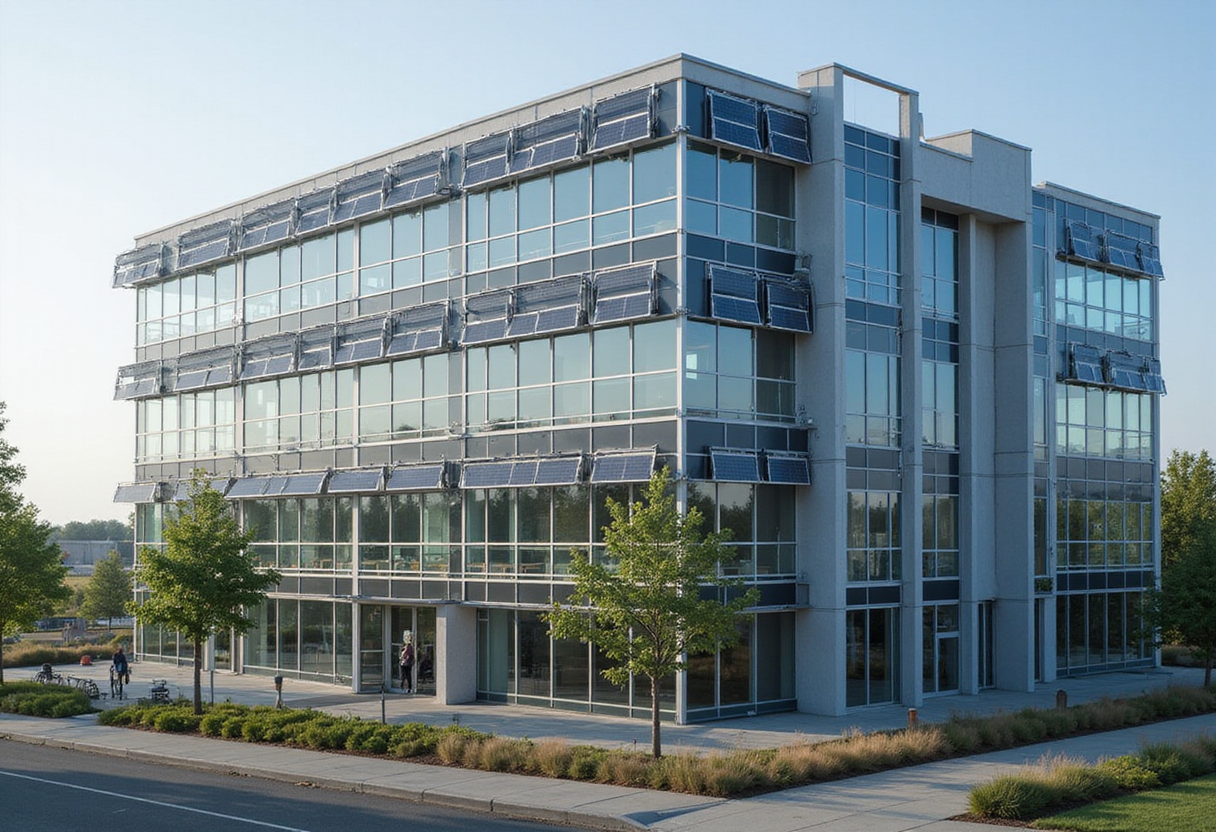
Amazon has invested in Brazilian biotechnology company GranBio to help advance innovation in sustainable aviation fuel (SAF), according to a disclosure on the company's sustainability channel.
The investment targets one of aviation's most stubborn decarbonization bottlenecks: feedstock supply. SAF output today depends overwhelmingly on the HEFA pathway — hydroprocessed esters and fatty acids — which draws on used cooking oil, animal fats and other waste lipids. GranBio works a different route, producing cellulosic ethanol from agricultural residues and dedicated energy crops that can be converted to jet fuel via alcohol-to-jet processing.
Why cellulosics matter
HEFA feedstocks are finite. Used cooking oil and tallow supply chains in the largest producing regions have already tightened, capping how much SAF HEFA alone can ever supply. Cellulosic pathways unlock a much larger raw material base — sugarcane bagasse, straw, forestry residues, energy grasses — without competing directly with food production or driving land-use change.
GranBio operates one of Brazil's largest cellulosic ethanol demonstration facilities and has developed proprietary enzymatic hydrolysis technology that breaks down lignocellulosic biomass into fermentable sugars. Those sugars can be converted to ethanol and further processed into ASTM-qualified SAF blendstocks.
Brazil's sugarcane sector generates substantial volumes of bagasse each season, much of it currently burned for mill heat and power or left to decompose in the field. Tapping this residue stream offers a SAF pathway that does not require new agricultural land.
Why Amazon needs SAF
Amazon Air, the company's air cargo arm, runs a fleet of Boeing 737 Freighters, 767-300 Freighters and a growing number of 777 Freighters, most of them operated through wet-lease and dedicated arrangements with partners including Atlas Air and Air Transport Services Group. Jet fuel burned by those aircraft sits among the largest controllable emissions lines on Amazon's logistics balance sheet.
Amazon co-founded The Climate Pledge in 2019 alongside Global Optimism, committing the company to net-zero carbon operations by 2040 — ten years ahead of the Paris Agreement's 2050 horizon. Reaching that target requires replacing a meaningful share of conventional jet fuel with SAF on routes flown by Amazon Air and its logistics partners.
Where SAF supply stands
Global SAF production reached roughly 1 million tonnes in 2024, according to widely cited industry estimates — still under 1% of total jet fuel demand. Aviation's long-term decarbonization pathways from IATA and ICAO assume SAF volumes will need to climb to a majority of jet fuel consumption by 2050 to keep the sector on a net-zero trajectory.
The gap between today's output and that projected requirement explains why corporate buyers with binding emissions targets are increasingly underwriting pre-commercial feedstock projects. SAF offtake premiums commonly run two to five times conventional Jet-A pricing, a cost that shippers absorb as part of their decarbonization budgets.
What comes next
The GranBio investment is the latest signal that hyperscalers with logistics arms are willing to fund the upstream, highest-risk segments of the SAF value chain — not just buy finished fuel. Whether Amazon's backing accelerates GranBio's biorefinery roadmap toward commercial scale, or simply validates a cellulosic pathway that other capital eventually funds, will shape how quickly aviation can diversify beyond HEFA in the second half of this decade.
via Google News: Sustainable aviation fuel (Source)
More from James Calloway
Show full bio
Staff writer covering industry trends and analytics at Flightdeck Report.
383 articles
Same bay
- FDR363Cellulosic feedstocks could scale SAF supply, study finds · September 28, 2026
- FDR808SAF expansion ties agriculture, aviation and regional economic policy together · October 10, 2026
- FDR846Sorghum syrup enters SAF feedstock discussion under WA proposal · October 2, 2026
- FDR121Biomass-to-SAF Pathway Framed as Route to Canadian Aviation Fuel Targets · September 28, 2026
- FDR238Can woody biomass unlock SAF supply beyond HEFA's feedstock ceiling? · October 10, 2026