Clearance CLR-2611 · SAF366
SAFARM
Safety & OperationsClearance sheet
Army report finds systemic failures behind DC midair collision that killed 67
An Army report cites systemic failures behind the 2025 midair collision between a helicopter and a passenger jet near Washington DC that killed 67 people, and calls for safety fixes.
Read-back
- The US Army report cites systemic failures behind the 2025 midair collision between an Army helicopter and a passenger jet near Washington DC.
- The collision killed 67 people.
- The report calls for safety fixes in response to the findings.
- The investigation examined the crash as a systemic rather than isolated failure.
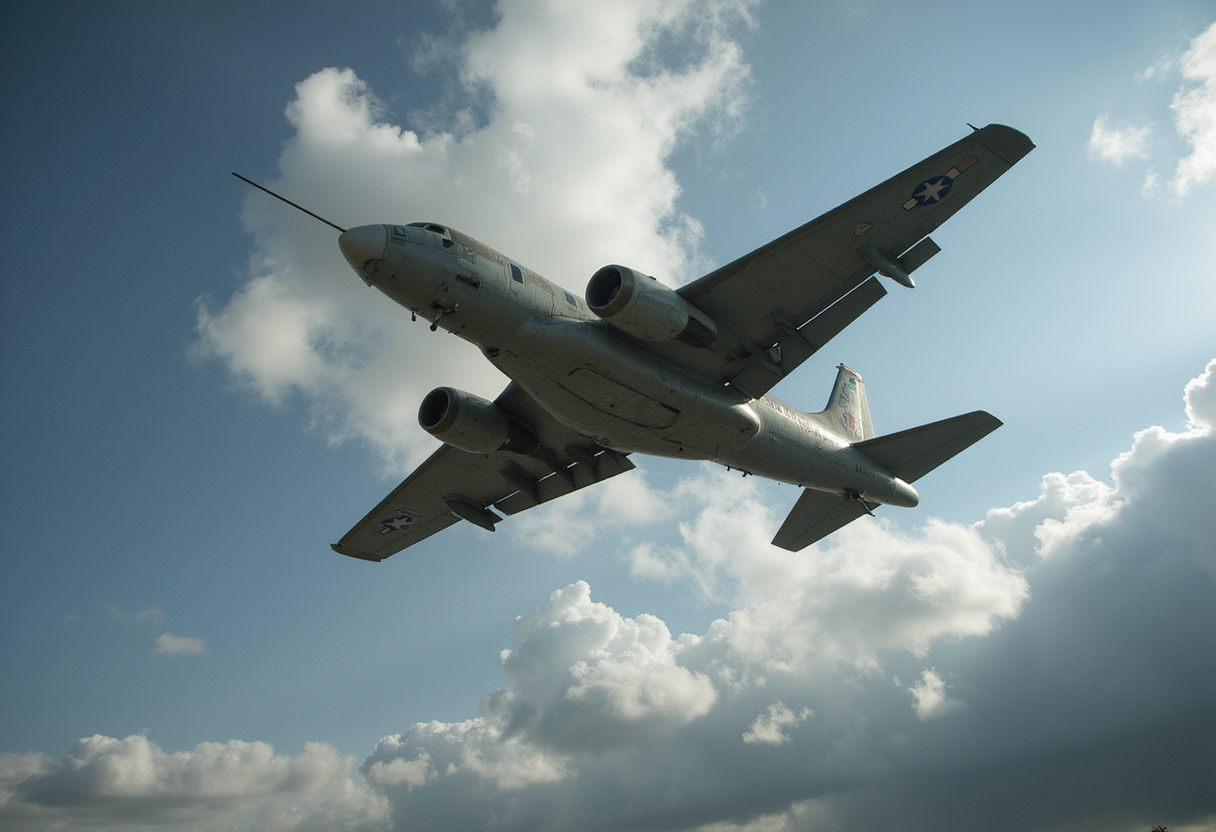
A US Army report into the 2025 midair collision between an Army helicopter and a commercial passenger jet near Washington DC has concluded that systemic failures lay behind the accident, which killed 67 people, and calls for a broad set of safety fixes.
The finding, reported by WJLA, ABC News and Reuters, shifts the framing of one of the deadliest US aviation disasters in recent decades from a single crew's error to a wider institutional and operational breakdown. For a service that flies routine training and transport missions through some of the most congested airspace in the United States, that distinction carries direct consequences for how those missions are planned, authorized and supervised.
What does the report actually say?
According to the reporting, the Army's own review identifies systematic — not incidental — failures connected to the collision. The crash itself involved a military helicopter operating in the vicinity of Ronald Reagan Washington National Airport, where helicopter corridors cross the arrival and departure paths of airline traffic at low altitude.
The report calls for safety fixes, a formulation that points to correctable deficiencies rather than an unexplainable accident. While the detailed findings remain with the full report, the headline conclusions attribute the loss of 67 lives to failures embedded in the system that put the two aircraft in the same piece of sky at the same moment.
Reuters characterizes the document as citing systematic failures in the collision, language that investigators typically reserve for deficiencies spanning multiple layers: training, mission approval, airspace coordination, and risk assessment, rather than the actions of the crews alone in the final seconds of flight.
Why does the distinction between 'systemic' and 'individual' matter?
When an accident review singles out one crew or one controller, remedies tend to be narrow: retraining, discipline, a procedural tweak. When it finds systemic failure, the remedy touches the institution — how missions are risk-assessed before takeoff, how helicopter routes through congested terminal airspace are approved, and how military aviation integrates with the civilian air traffic system.
The DC crash site sits in precisely that contested environment. The corridors used by military helicopters around the capital pass close to one of the busiest runways in the country, and the collision demonstrated what happens when the margin between military and civilian operations shrinks to nothing. A systemic finding implies the margin was already eroded before the two aircraft converged.
For the Army, the report's conclusions will feed into decisions about which helicopter routes remain open, at what altitudes, and under what authorization. For the Federal Aviation Administration and the airlines serving Reagan National, any restriction on military transit routes or changes to airspace design carries capacity and network consequences at a constrained airport where slots are scarce.
Who was involved?
The casualty figure of 67 covers everyone aboard both aircraft — the military helicopter crew and the passengers and crew of the airline jet. The Army conducted its own review of the accident, running alongside the broader federal investigation that follows any US aviation disaster of this scale.
The involvement of multiple investigative tracks — service-level review and national investigation — is standard in accidents where military and civilian aviation intersect. The Army's decision to publish findings citing its own systemic failures is the more consequential signal: the service is not confining the blame to the aircrew.
What happens next?
The report's call for safety fixes now has to be converted into changes that hold up against operational demand. The test for the Army, and for the regulators who share that airspace, is whether the fixes address the structures that allowed the failure — or only the symptoms visible on the night of the collision. Further reporting on the full findings will determine how far the recommended reforms reach into mission approval, route design and airspace integration around the capital.
via Google News: Aviation safety (Source)
More from Sophie Lindqvist
Show full bio
Senior reporter covering industry trends and analytics at Flightdeck Report.
214 articles
Same bay
- FDR226Army Review Finds Systemic Failures Behind DC Midair Collision · October 9, 2026
- FDR942Army report traces DCA midair to systemic failures, not a single error · October 9, 2026
- FDR596U.S. Army investigation finds systemic failures behind DC midair collision · October 9, 2026
- FDR768Army Review Finds Systemic Failures Behind DC Midair Collision · October 9, 2026
- FDR316Post-Wichita–DC Crash Safety Reforms Stall in Washington · September 30, 2026