Clearance CLR-5403 · IND170
INDBOE
Finance & DealsClearance sheet
Boeing Shares Fall as Trump Unveils Smaller China Aircraft Order
Boeing shares dropped after Trump announced a smaller-than-expected China aircraft order, denting hopes of a broad reopening of the Chinese market to US jets.
Read-back
- Boeing shares fell after Trump unveiled a smaller China aircraft order than investors expected
- The reduced order falls short of first-term-era Chinese purchases such as the 2017 deal covering 300 aircraft
- The announcement's terms and delivery schedule remain undisclosed, leaving its backlog impact unconfirmed
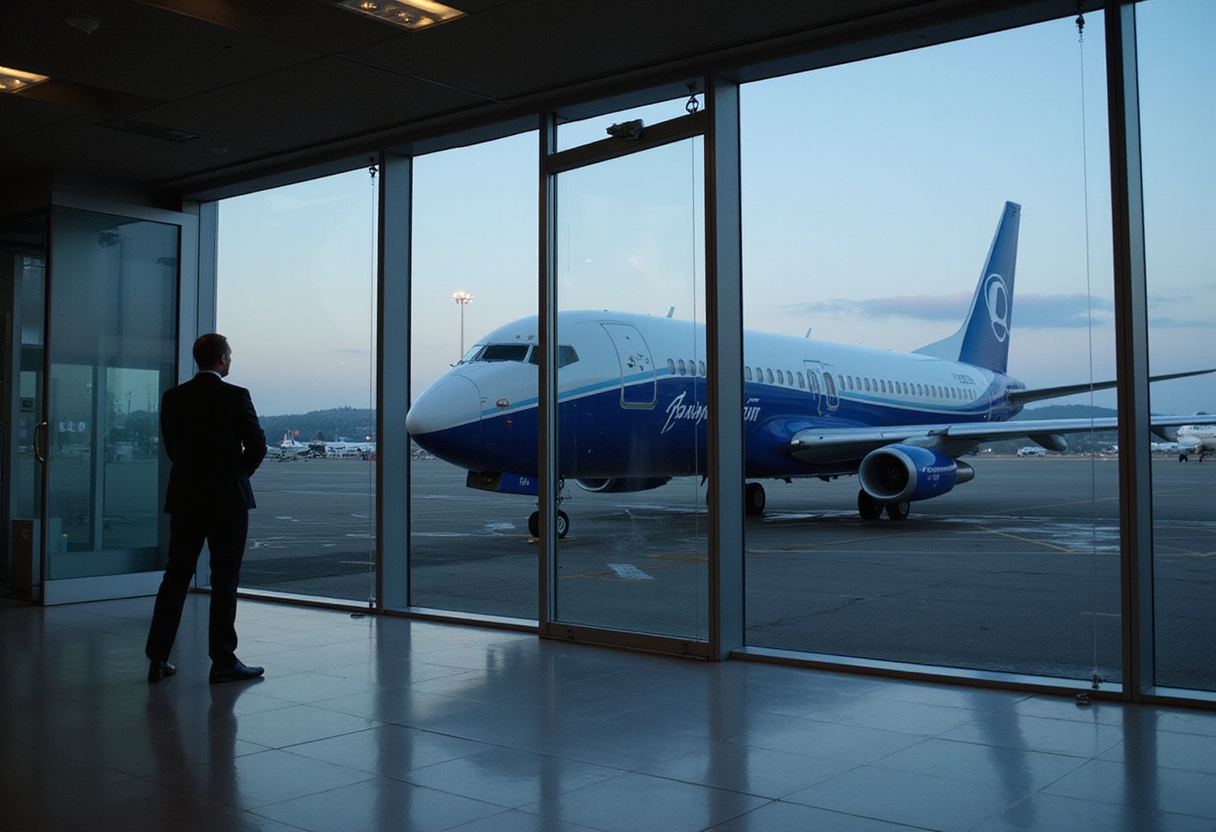
Boeing shares fell after US President Donald Trump announced a smaller-than-expected aircraft order from China, puncturing investor hopes that Beijing was preparing to resume large-scale purchases of American jets.
The announcement detailed a reduced commitment compared with orders Chinese airlines had signed during Trump's first term, when Beijing routinely used aircraft deals as a lever in trade negotiations with Washington. Markets had priced in a broader reopening of the Chinese market to Boeing after years in which tariff disputes and diplomatic friction largely froze deliveries.
The share decline reflects the gap between what Trump presented and what Boeing's backlog needs. China was once a cornerstone of Boeing's widebody and narrowbody demand forecasts, and the manufacturer's delivery records show only a trickle of jets moving to Chinese carriers since trade tensions escalated in 2018-2019 and again during the tariff battles of Trump's second term.
For Boeing, the commercial stakes are concrete. Chinese lessors and airlines hold outstanding orders across the 737 MAX family, and each aircraft redirected, deferred or cancelled ties up delivery slots the manufacturer could otherwise allocate to other customers. A smaller Chinese order leaves Boeing dependent on US, European and Middle Eastern carriers to absorb production from its ramp-up targets — output rates the company has already had to defend against supply chain constraints and regulatory scrutiny from the Federal Aviation Administration.
The timing compounds the pressure. Boeing is working to lift 737 output past the FAA-imposed cap of 38 aircraft per month while certifying the 777-9, and its financial recovery plan assumes steady delivery execution through the end of the decade. A muted Chinese return removes one of the largest potential demand cushions behind that plan.
Trump's presentation also carries political weight. During his first administration, Chinese purchase announcements — including a 2017 package covering 300 aircraft — served as diplomatic signals ahead of summits. The smaller size of the current order suggests Beijing is calibrating its concessions more tightly, offering Washington a gesture without committing to the volume that would materially move Boeing's backlog or China's own fleet plans.
Chinese carriers have their own calculations. Domestic capacity has recovered strongly post-pandemic, but Airbus retains the dominant share of new narrowbody deliveries to China, and COMAC's C919 is gradually entering service with the largest state carriers. A modest Boeing order preserves Beijing's optionality across all three suppliers while keeping aircraft trade available as a bargaining chip in future negotiations over tariffs and technology restrictions.
Investors now face a narrower set of scenarios. If the announced order represents the full extent of near-term Chinese demand, Boeing's Asia-Pacific recovery will rest on Southeast Asian and Indian carriers rather than the market that once accounted for a quarter of global aircraft demand growth. If further tranches follow, they will likely arrive in stages tied to trade talks rather than as a single fleet commitment.
Boeing has not disclosed the financial terms or delivery schedule of the announced order, and the company routinely separates firm contracts from memoranda of understanding in its monthly order and delivery reporting. Until the aircraft appear in those records as firm, the market will treat Trump's announcement as a political signal rather than a backlog event.
The share price movement suggests investors have already made that distinction. What remains uncertain is whether Beijing intends the smaller order as an opening instalment or as the ceiling of its commitment — an answer that will likely emerge only when the next round of US-China trade negotiations produces either expanded purchase agreements or continued silence.
via Google News: Aircraft orders and fleets (Source)
More from Priya Raman
Same bay
- FDR982Boeing Shares Rise on Expected China Aircraft Order · September 27, 2026
- FDR280US carriers fight Air China's bid for extra Beijing flights · September 26, 2026
- FDR145US Carriers Resist New China Routes as Russian Overflight Ban Distorts Competition · September 27, 2026
- FDR602Boeing Books 100-Aircraft Order from SMBC · September 30, 2026
- FDR447Alaska Airlines places largest-ever aircraft order with Boeing · September 30, 2026