Clearance CLR-2771 · SUS706
SUSCHI
SustainabilityClearance sheet
Chinese researchers claim cost breakthrough in sustainable aviation fuel
Chinese researchers claim a breakthrough enabling low-cost, high-margin sustainable aviation fuel, a combination no commercial producer has yet achieved. Certification and scale-up remain unproven.
Read-back
- Chinese researchers claim a breakthrough enabling low-cost, high-margin sustainable aviation fuel, per South China Morning Post.
- No commercial-scale SAF producer worldwide has yet combined low cost with high margins.
- The report does not specify the production pathway, feedstock, claimed cost, or scale-up status.
- Certification under ASTM D7566 would be required before airlines can use the fuel commercially.
- China is the world's second-largest aviation market and a major refining producer.
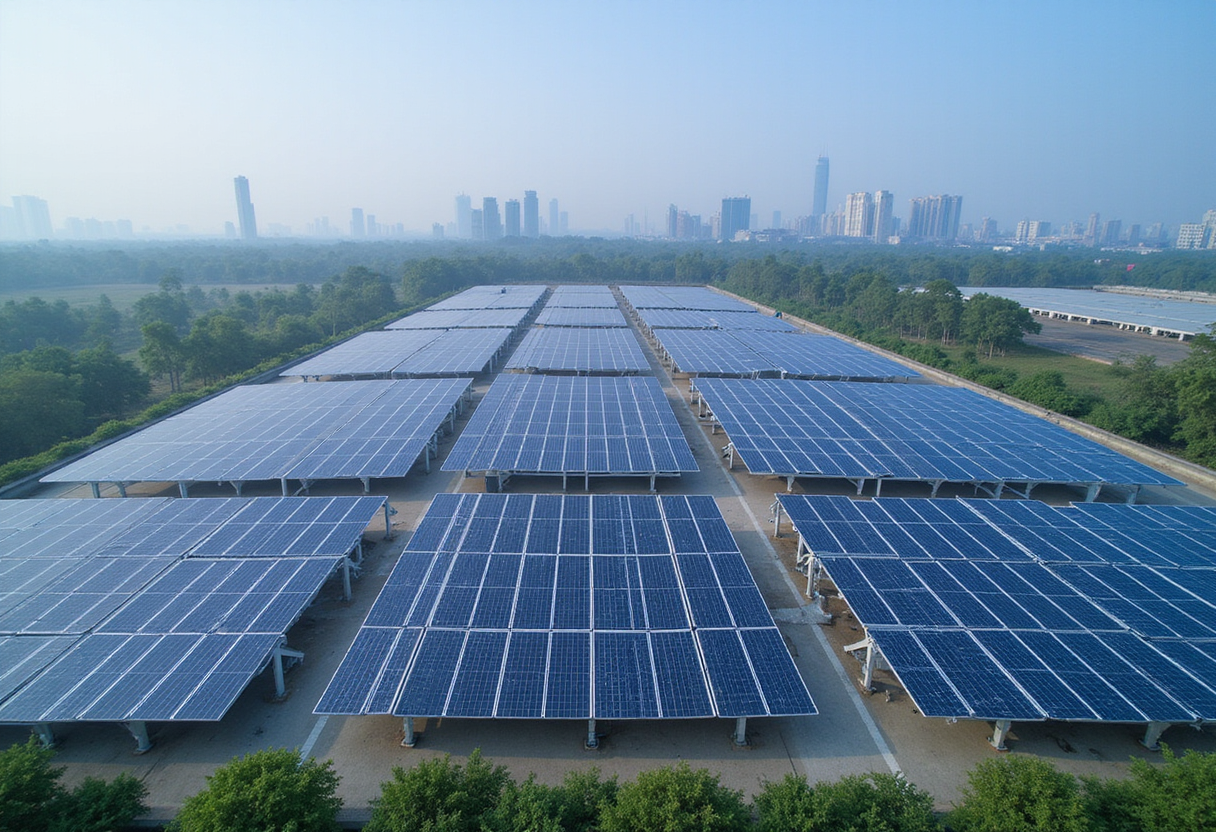
Chinese researchers say they have achieved a breakthrough that unlocks low-cost, high-margin production of sustainable aviation fuel, according to a report by the South China Morning Post.
The claim matters for airline economics. SAF remains two to five times more expensive than conventional Jet A-1 in most markets, and it accounts for a small fraction of global jet fuel consumption. Any production route that materially cuts cost would change the fuel's role from a compliance burden to a competitive input for carriers facing emissions mandates in Europe and elsewhere.
Details of the claimed advance are limited to the report's characterization. The South China Morning Post describes the development as a breakthrough that makes sustainable aviation fuel both low-cost and high-margin — a combination the industry has not yet achieved at commercial scale anywhere in the world.
Why cost determines SAF's future
Airlines have committed to SAF offtake agreements with producers and energy majors, but volumes remain small relative to the roughly 100 million tonnes of jet fuel burned each year by commercial aviation. Refiners, lessors and carriers have repeatedly identified price — not technology or willingness — as the binding constraint on uptake.
China's position sharpens the stakes. The country is the world's second-largest aviation market and a major refining and chemicals producer. A domestically developed, cheaper SAF pathway would give Chinese refiners a new export product and Chinese carriers a cost advantage under emissions schemes such as CORSIA and the EU's ReFuelEU mandates, which require rising SAF blends on European flights.
What separates a claim from certified fuel
The airline industry treats fuel innovations with a defined sequence of gates. A feedstock or process must first work at laboratory scale, then at demonstration scale, then win certification under ASTM D7566 — the standard governing synthetic aviation fuels — before airlines can lift it into commercial tanks.
The SCMP report does not state which production pathway the Chinese research targets, what feedstock it uses, what production cost it claims, or whether the process has progressed beyond the laboratory. HEFA, alcohol-to-jet, power-to-liquid and gasification routes each carry different cost structures and certification statuses, and none has yet delivered the margin profile the report describes.
Verification against these gates will determine whether the announcement is a research milestone or a market event. The gap between the two has been wide across the SAF sector: announced capacity has repeatedly outrun delivered volumes, and much of the fuel airlines actually burn today comes from a small number of HEFA plants using waste oils.
The commercial stakes for carriers and refiners
If the claimed process survives scale-up, the consequences would run through the supply chain. Chinese refiners and chemical producers — including state majors active in jet fuel supply — could add SAF capacity aimed at both domestic mandates and export markets. Airlines flying into Europe would gain a lower-cost route to compliance with blending requirements that escalate through the end of the decade.
Competing producers in North America, Europe and Southeast Asia, which have anchored their business cases on premium SAF pricing, would face margin pressure if a cheaper Chinese route reaches certified, commercial volumes.
What to watch next
The credible checkpoints are concrete: publication of the underlying research, a named demonstration facility, an ASTM certification pathway, and an offtake agreement with a Chinese carrier or exporter. Until those appear, the claim belongs in the same category as the sector's many announced-but-undelivered fuel projects.
The South China Morning Post's report signals that China intends to compete on SAF economics rather than simply comply with them; whether the breakthrough survives the laboratory-to-refinery transition will define its significance for global airline fuel costs.
via Google News: Sustainable aviation fuel (Source)
More from Nathan Brooks
Show full bio
Correspondent covering media and advertising at Flightdeck Report.
194 articles
Same bay
- FDR578Sustainable Aviation Fuel Remains Scarce and Costly · October 2, 2026
- FDR432CEPU Chief Puts Sustainable Aviation Fuel at Center of China Debate · September 27, 2026
- FDR481Sustainable Aviation Fuel Market Forecast to Hit $43.75 Billion by 2034 · September 30, 2026
- FDR618European SAF Supply Reaches 2.8% of Aviation Fuel · September 30, 2026
- FDR171Geopolitical Risk Strengthens the Case for Sustainable Aviation Fuel · September 30, 2026