Clearance CLR-3080 · SAF101
SAFCOP
Safety & OperationsClearance sheet
Copa 737 Strikes UPS 767 Freighter Nose in Miami Taxiway Collision
A Copa 737's wingtip sliced the nose of a UPS 767 freighter at Miami International on November 14, 2026; ATC audio shows the UPS crew had been told to yield.
Read-back
- Collision occurred at about 21:15 local time on November 14, 2026, at Miami International Airport.
- Copa flight 427 from Panama City carried 166 passengers and six crew; UPS flight 358 was bound for Bogota.
- Two passengers suffered minor injuries; none required hospitalization.
- ATC audio shows the UPS 767 had been instructed to give way before its nose entered the 737's path.
- The incident came one day after a roughly four-hour nationwide US ground stop blamed on ATC equipment issues.
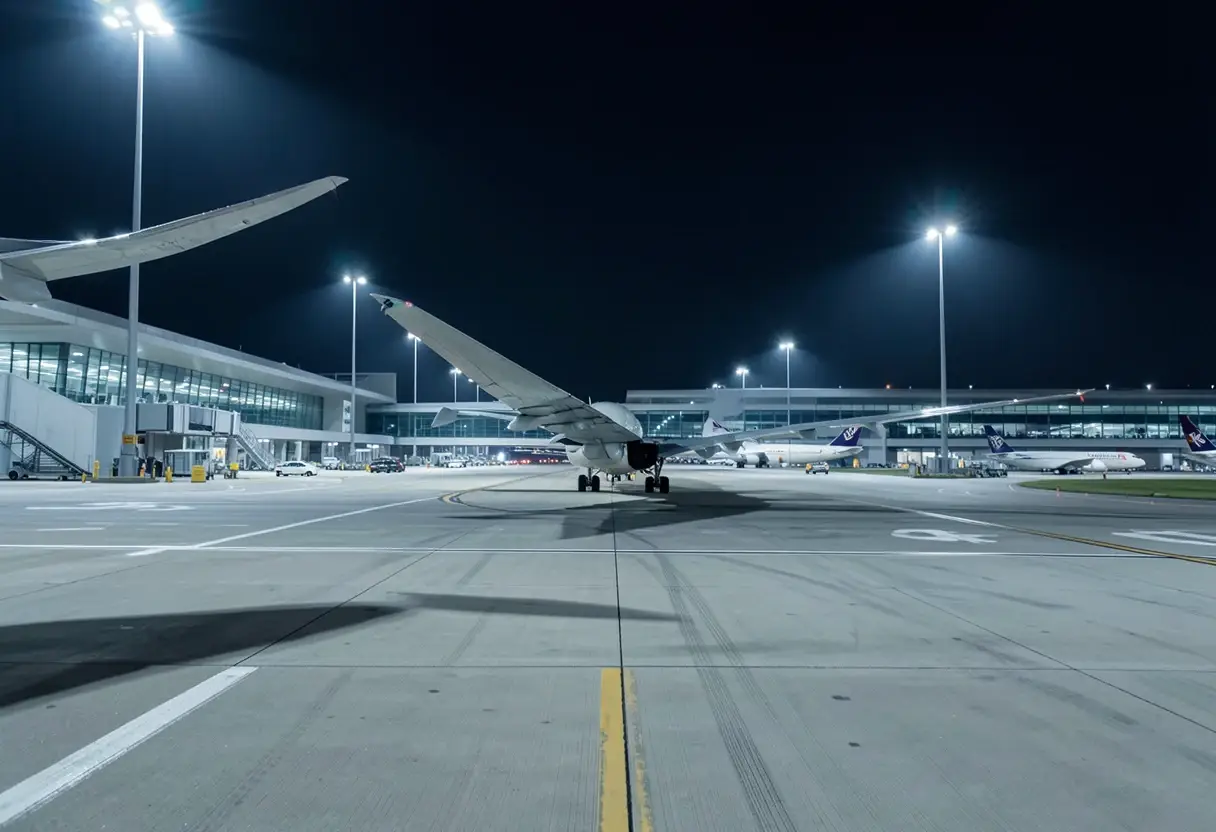
A Copa Airlines Boeing 737 sliced through the nose of a UPS Boeing 767 freighter with its left wingtip at Miami International Airport (MIA) at approximately 21:15 local time on November 14, 2026, injuring two passengers minorly and grounding both aircraft.
The 737, operating Copa flight 427 from Panama City (PTY), had just landed and was taxiing to the gate with 166 passengers and six crew on board. The 767, operating UPS flight 358, was holding in preparation for departure to Bogota (BOG), Colombia.
Both injured passengers were on the Copa flight. Neither required hospitalization.
What does the cockpit and controller record show?
Air traffic control (ATC) audio made public since the collision shows the UPS 767 had been instructed to give way to the taxiing 737. For reasons not yet determined, the freighter rolled too far forward, and its nose entered the area where the Copa aircraft was moving. The 737's left wingtip then struck the 767's nose section.
Photographs taken after the incident show significant damage to the freighter's nose. Passengers aboard the Copa flight recorded the aftermath on mobile phones from inside the cabin, and the footage has circulated widely on social media.
The precise sequence of taxi instructions, crew readbacks and aircraft positions will form the core of the investigation. A ground collision between a taxiing aircraft and one positioned for departure typically turns on taxi route design, hold-short line placement, lighting, and whether both crews had a clear view of each other in the ramp or taxiway environment.
What does this change for operations at Miami?
Two aircraft are now out of service pending structural inspection and repair. For UPS, the 767 is a mainstay of its narrowbody-and-widebody freighter fleet, and the loss of an airframe to nose-section damage carries both repair cost and capacity consequences on the Miami–Bogota lane, one of the busiest US–Latin America cargo corridors. Nose damage on a 767 can involve the radome, forward fuselage frames and avionics bays, making repair timelines dependent on structural assessment.
For Copa, the incident removes a 737 from a fleet that operates high-frequency Latin American connectivity through its Panama City hub. The aircraft was on the ground at the gate position after a routine landing, and the airline's exposure is concentrated in passenger reaccommodation and airframe inspection.
Miami International is the primary US gateway for Latin American passenger and cargo traffic, and ground incidents on its ramp and taxiway system carry outsized network consequences. A collision blocking a taxiway or apron area at peak evening departure banks can ripple across arrivals and freighter departures for hours.
A system under strain
The mishap occurred as airports and airlines across the United States were still recovering from a nationwide ground stop the previous day. That outage lasted approximately four hours and has been attributed to technical issues with air traffic control equipment.
The timing places the Miami collision within a broader operational context: a national system returning to normal flows after a control equipment failure, with congested ramps, rescheduled departures and elevated workload for both controllers and crews. Whether recovery operations contributed to the sequence at Miami will be a question for investigators, alongside the fundamental one of why the 767's nose entered the path of a taxiing aircraft after its crew was told to yield.
No regulator or operator statement on the cause has yet been issued; the determining evidence will be the airport surface detection data, the ATC tapes already public, and the cockpit communications of both aircraft.
via twitter.com (Original)
More from Priya Raman
Show full bio
Market editor covering money, funding and market shifts around Commercial aviation industry coverage at Flightdeck Report.
627 articles
Same bay
- FDR699Copa 737 Strikes UPS 767 on Miami Taxiway; FAA Opens Investigation · November 16, 2026
- FDR309Copa 737 Wingtip Strikes UPS 767 on Miami Taxiway, Two Minor Injuries · November 15, 2026
- FDR620Cockpit recorder shows Amazon Air crew called go-around seconds before fatal Miami overrun · September 30, 2026
- FDR812United 737 MAX 9 Squawks 7500 After Cockpit Breach Attempt · November 10, 2026
- FDR227MIA keeps two runways closed after 21 Air 767 overrun kills five · October 10, 2026