Clearance CLR-4029 · AIR422
AIRDUB
AirportsClearance sheet
Dubai International Traffic Down 28% as Recovery Takes Hold
Dubai International handled 50.4 million passengers through September, down 28.1% year-on-year, but the quarterly decline narrowed to 22.1% as summer traffic recovered.
Read-back
- DXB handled 50.4 million passengers in January–September 2026, down 28.1% year-on-year.
- Third-quarter traffic of 18.8 million was down 22.1% on Q3 2025; August was the busiest month at ~6.6 million.
- Dubai Airports forecasts more than 70 million passengers for full-year 2026, versus 95.2 million in 2025.
- In September, connecting passengers made up 51% of traffic and direct passengers 49%.
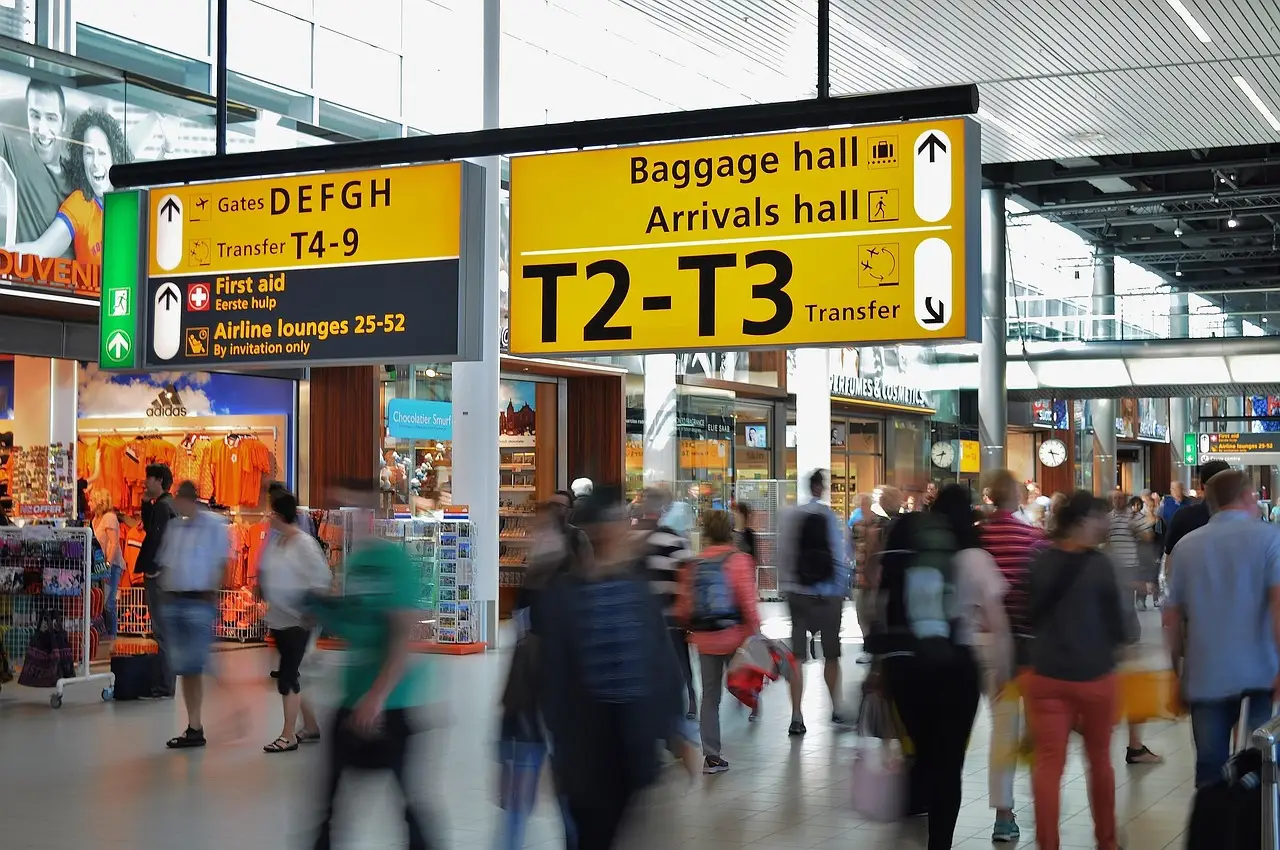
Dubai International handled 50.4 million passengers in the first nine months of 2026, a fall of 28.1% against the same period last year, according to figures released by Dubai Airports on November 17. The number quantifies the disruption that hit the world's largest hub for international connections earlier this year — and shows the rate of decline slowing as the year progressed.
The third-quarter data makes the trajectory clearer. DXB processed 18.8 million passengers between July and September, down 22.1% on the corresponding quarter of 2025. That is a smaller contraction than the 28.1% recorded over nine months, which means summer volumes recovered relative to the spring. August stood out as the busiest month of the quarter, with roughly 6.6 million travelers passing through.
The gap to full recovery remains wide. Dubai International carried 95.2 million passengers across the whole of 2025, and even the strongest recent quarters sit well below that run-rate. Dubai Airports expects traffic to exceed 70 million for the full year 2026 — a meaningful rebound, but still far short of the record set a year earlier.
What does the split between direct and connecting traffic change?
The passenger mix is the variable that matters most for Dubai's wider economy. In September, passengers flying directly to or from Dubai accounted for 49% of traffic, while connecting passengers — those transferring between international flights — made up 51%. Direct and connecting volumes have stayed broadly balanced through the year.
The distinction has a direct financial consequence. Connecting passengers may never leave the airport, using its facilities without spending on the city's hotels, restaurants and attractions. Direct visitors, especially in the winter season, are far more likely to book accommodation and contribute to local tourism spending.
That makes the fourth quarter disproportionately important. Cooler winter temperatures drive Dubai's beach-holiday, shopping, major-events and luxury-hotel business, so a strong season for direct traffic would offset more of the year's losses than an equivalent surge in transfers.
Is the disruption over?
For travelers passing through the region, the headline 28.1% figure describes the past rather than the present. The cumulative number captures the disruption of earlier months, while the narrowing quarterly decline indicates improving conditions through the summer.
Dubai Airports says it continues to invest in technology and operational improvements to support passenger processing — the systems that determine how quickly travelers clear check-in, security and immigration — and to prepare capacity for future growth.
The operator's own forecast frames the recovery: more than 70 million passengers expected in 2026, against 95.2 million in 2025. Meeting that target depends heavily on a strong winter quarter, when millions of passengers are expected to move through the airport.
Dubai International connects Europe, Asia, Africa, Australia and the Americas, and its throughput has long served as a proxy for the health of intercontinental travel. With the fourth quarter now under way, its monthly numbers will remain a key indicator of how quickly international aviation connectivity across the Middle East returns to 2025 levels.
via rustourismnews.com (Source)
More from Sophie Lindqvist
Show full bio
Senior reporter covering people, launches and day-to-day practice in Commercial aviation industry coverage at Flightdeck Report.
673 articles
Same bay
- FDR267DXB Traffic Down 28% But Dubai Airports Holds 70 Million Target · November 17, 2026
- FDR591Global passenger growth stalls at 0.6% in H1 2026 as Middle East conflict drags regional traffic down 21% · October 9, 2026
- FDR353Dubai's Al Maktoum Airport: $35bn Expansion Targets World's Biggest Hub · October 9, 2026
- FDR119Global passenger demand fell 0.8% in August as Middle East traffic plunged 14.6% · October 10, 2026
- FDR159dnata Cargo Volumes Climb to 3.2M Tonnes on Middle East Disruptions · October 10, 2026