Clearance CLR-3932 · AIR267
AIRDXB
AirportsClearance sheet
DXB Traffic Down 28% But Dubai Airports Holds 70 Million Target
Dubai International handled 50.4 million passengers through nine months, down 28.1%, yet Dubai Airports still expects 70 million for 2026 as 57 carriers rebuild the hub's network.
Read-back
- DXB handled 50.4 million passengers in the first nine months of 2026, down 28.1% year on year
- Q3 traffic fell 22.1% to 18.8 million; August was the busiest month at 6.6 million
- Dubai Airports still expects more than 70 million passengers for full-year 2026
- 57 airlines now serve 235 airports in 101 countries, with BA, Royal Air Maroc, SunExpress and Cebu Pacific returning
- India was the largest Q3 market at 2.6 million passengers; flights fell 27.6% and cargo 23.2%
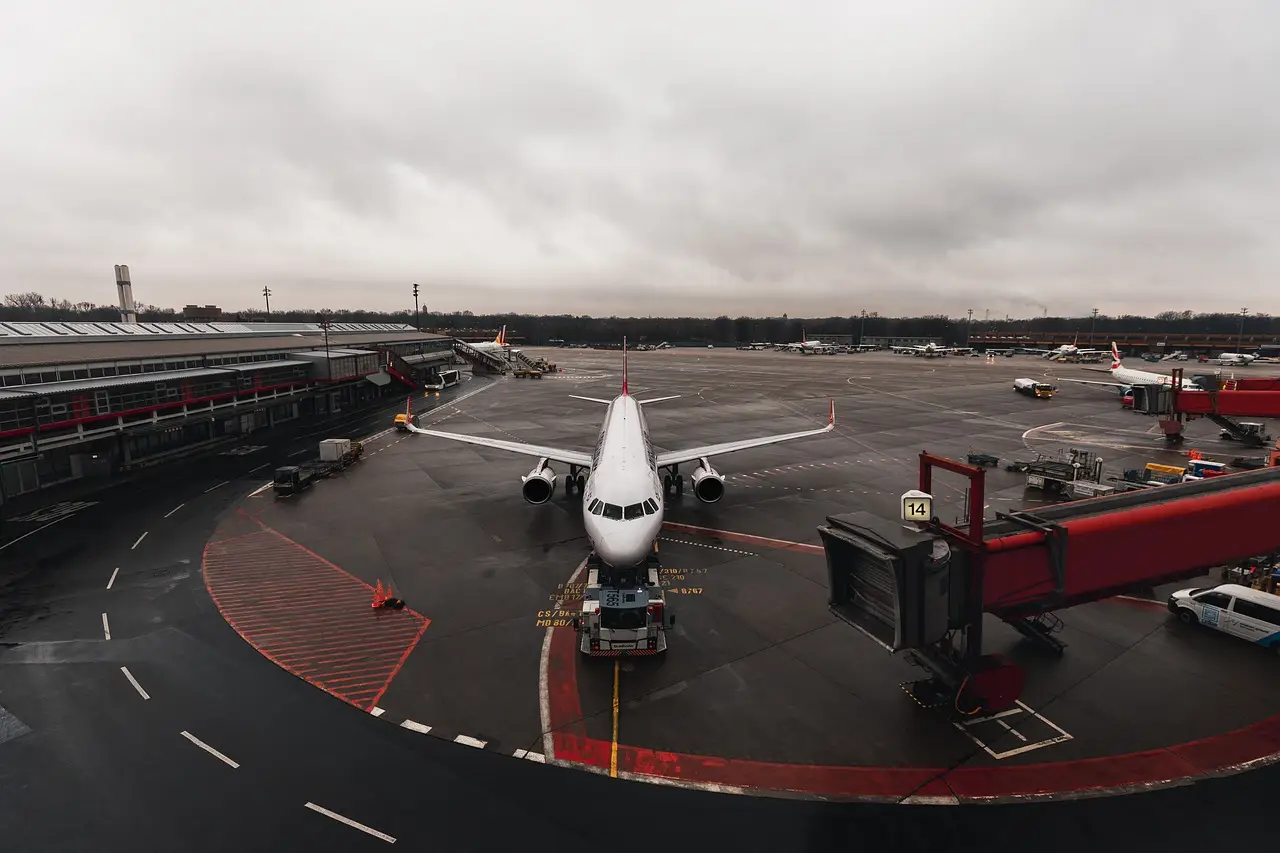
Dubai International handled 50.4 million passengers in the first nine months of 2026 — 28.1% fewer than the same period last year — yet Dubai Airports still expects more than 70 million passengers for the full year as carriers return to the hub.
The third quarter softened the decline. DXB moved 18.8 million passengers between July and September, down 22.1% year on year, with August the busiest single month at 6.6 million. The gap between the 28.1% nine-month figure and the 70-million full-year forecast is a bet on recovery momentum: more capacity returning week by week, and a winter tourist and events season ahead.
"As more airlines return to Dubai and our network strengthens, we are focused on continuing to accommodate future growth while making journeys simpler and more seamless," said Paul Griffiths, CEO of Dubai Airports.
Which airlines are coming back?
The hub currently fields 57 airlines serving 235 airports across 101 countries. British Airways resumed flights earlier this month, joining Royal Air Maroc, SunExpress and Cebu Pacific on the list of returning carriers. More are expected in the coming weeks, according to the operator.
Traffic split is a textbook hub profile. In September, 51% of passengers were connecting rather than starting or ending their journeys in Dubai. The airport expects the local share to grow over the winter season, when events and tourism pull point-to-point demand into the emirate.
What do the route numbers show?
India remains DXB's largest market by a wide margin. The top country markets in the third quarter:
- India: 2.6 million passengers
- Saudi Arabia: 1.4 million
- UK: 1.3 million
London was the busiest city route with 784,000 passengers, ahead of Mumbai, New Delhi, Riyadh and Jeddah.
Leisure routes grew against the overall decline — a signal that discretionary long-haul demand held up even as the hub's aggregate traffic contracted. Milan was up 20%, Phuket 17%, Cape Town 14%, Barcelona 13% and Bali's Denpasar 11%.
How is the airport performing operationally?
Queue times stayed tight through the downturn. In the third quarter:
- 99.9% of passengers waited under 10 minutes at departure passport control and under 15 minutes on arrival
- 99.7% waited less than five minutes at security
- Of 48 million bags handled so far this year, 91% reached passengers within 45 minutes of arrival
That service level matters less for today's traffic than for what comes next. Dubai Airports is channeling money into AI, predictive analytics, self-service and biometrics, with a stated goal of pushing more passengers through the existing terminals without building new ones — capacity added through technology rather than concrete, and a cost answer to the 70-million-plus trajectory Griffiths is banking on.
What about flights and freight?
The passenger decline ran through the whole operation. Flight numbers fell 27.6% to 243,000 in the first nine months, and cargo volumes dropped 23.2% to 1.2 million tonnes — a fall that tracks almost in lockstep with passenger traffic, underlining how much of DXB's belly-freight capacity rides on the passenger network now rebuilding.
The airport's own numbers frame the recovery question simply: to hit 70 million, DXB needs roughly 19.6 million passengers in the final quarter — a pace above any single quarter it has posted so far this year.
If the returning carriers keep to schedule and the winter season delivers, Griffiths' target holds. If not, 2026 closes as the year Dubai's hub proved it could keep queues short while traffic ran 28% light.
via travelwires.com (Source)
More from Nathan Brooks
Show full bio
Correspondent covering technology and product news in Commercial aviation industry coverage at Flightdeck Report.
674 articles
Same bay
- FDR422Dubai International Traffic Down 28% as Recovery Takes Hold · November 17, 2026
- FDR438British Airways Back in Dubai as Saudi Suspensions Stretch Into 2027 · November 9, 2026
- FDR683Emirates opens Tokyo travel store, lifts Japan to 28 weekly flights · October 14, 2026
- FDR694British Airways resumes London-Dubai flights after eight-month halt · November 9, 2026
- FDR657Dubai Unveils $572bn Project Pipeline Anchored by Airport Expansion · October 13, 2026