Clearance CLR-9829 · AIR658
AIREAS
Aircraft & EnginesClearance sheet
EASA Certifies Universal Avionics' Connected FMS for Business and Regional Fleets
EASA has certified Universal Avionics' Connected FMS upgrade via an AML STC, bringing secure iPad flight planning and wireless database updates to European operators of Citations, Falcons, Gulfstreams, ATRs and Dash 8s.
Read-back
- EASA certified Universal Avionics' Connected FMS upgrade as an Approved Model List Supplemental Type Certificate (AML STC)
- The approved model list covers 10+ aircraft families including Gulfstream GIII/GIV/V, Dassault Falcons, Citations, ATR 42/72, Dash 8 and Embraer ERJ135/145
- The upgrade builds on existing FAA and TCCA AML STC approvals for Part 23 and Part 25 aircraft
- The SSDTU+ hardware reuses the existing SSDTU's mechanical and electrical installation, enabling quick-turn retrofits
- CEO Dror Yahav says the certification reflects extensive cybersecurity work to connect tablets to certified avionics
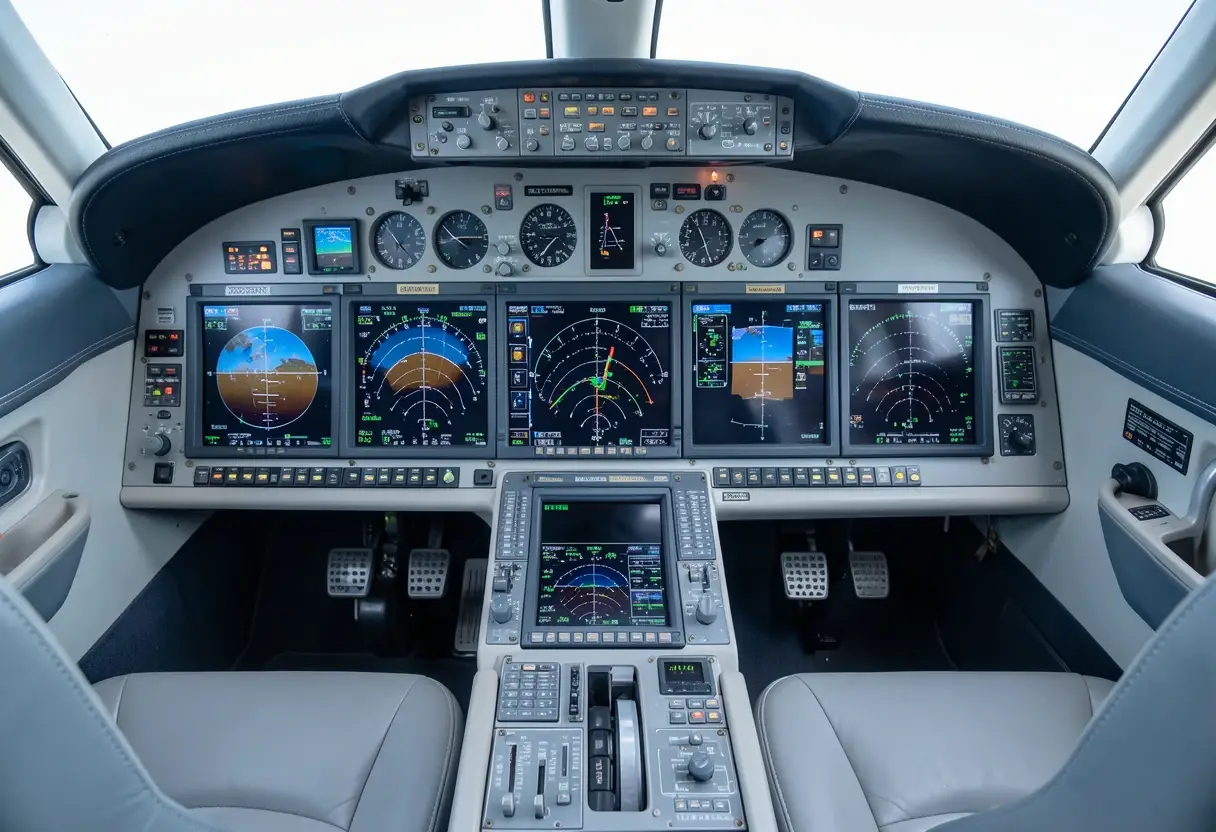
Universal Avionics has secured EASA certification for its Connected FMS upgrade, opening secure iPad connectivity — flight planning, database updates and flight data access — to European operators flying more than a dozen aircraft types, from Gulfstream GIVs to ATR 72s and Dash 8 Q400s.
The approval, an EASA Approved Model List Supplemental Type Certificate (AML STC), extends to Europe a capability Universal's customers in the U.S. and Canada already hold under FAA and Transport Canada Civil Aviation (TCCA) approvals for Part 23 and Part 25 aircraft.
"European operators can now take advantage of the same time savings and real-time flight planning already available to our customers in the U.S. and Canada," said Universal Avionics CEO Dror Yahav.
What does the upgrade actually do?
The system lets an FMS talk securely to an iPad on the ground and in flight. Operators can:
- Wirelessly sync database updates before departure and aircraft data after landing
- View and amend the FMS flight plan from a tablet
- Run third-party applications that consume FMS flight data or extend its data flow
- Push post-flight performance insights automatically to flight operations and maintenance teams
The maintenance angle matters for fleet operators. Universal positions simpler routine tasks — above all, the elimination of manual database loading — as a lever on aircraft availability. For operators of older airframes where downtime for data updates compounds scheduling pressure, that is the cost case, not the tablet itself.
Which aircraft are covered?
The EASA-approved model list spans the business and regional spectrum:
- Bombardier CL-601-1A/3A/3R
- Cessna Citation 500, 550 (V/Ultra/Encore/Bravo), 560 (Excel, XLS Series) and 650 (III/VI/VII)
- Dassault Falcon 10/20/200/50/900A/900B/2000/2000EX
- Gulfstream G200/GIII/GIV/V
- Hawker 800A/B/XP and Hawker 1000
- Learjet 31/31A/35/35A/36/36A/40/45/55/60
- ATR 42-300/320/500 and ATR 72-200/500
- De Havilland Dash 8-100/200/300 and Q400
- Embraer ERJ135/145 family variants including 145ER/145LR/135KL/145XR/145MP/145EP
- Saab 340A/B
The breadth of the list is the story's quiet substance: these are largely aging types — Falcon 10s, GIIIs, first-generation ATRs — that form the working backbone of regional and charter fleets across Europe. Connecting them to modern tablet-based workflows extends connected operations into a segment that rarely gets fresh avionics investment.
How does the hardware work?
The upgrade rides on Universal's SSDTU+, which adds a secure, low-power cockpit Wi-Fi access point with built-in cybersecurity protection. Aircraft already fitted with the earlier SSDTU need no new mechanical or electrical installation — the SSDTU+ uses the same footprint and wiring, which Universal says makes it a quick-turn retrofit.
Cybersecurity, not hardware, was the certification's heavy lift. "This certification reflects the extensive cybersecurity work required to securely connect tablets to certified avionics, and it brings connected operations to even more of the aircraft flying with Universal today," Yahav said.
Linking uncertified consumer devices to certified flight-deck equipment sits squarely in EASA's most scrutinized territory. The AML STC framework lets Universal cover multiple aircraft types under one approval rather than certifying each airframe individually — the mechanism that made a list this long economically viable.
What comes next?
With FAA, TCCA and now EASA approvals in place, Universal's addressable connected-FMS base spans most of its installed fleet across North America and Europe. European operators flying the listed types can now schedule the SSDTU+ swap and start cutting database-update and post-flight data-handling time from their turnaround cycles.
via universalavionics.com (Original)
More from Nathan Brooks
Show full bio
Correspondent covering technology and product news in Commercial aviation industry coverage at Flightdeck Report.
580 articles
Same bay
- FDR369Duffy picks Air Space Intelligence for ATC software push · October 14, 2026
- FDR364GE Aerospace Names FL Technics Indonesia as First Avionics MRO · October 10, 2026
- FDR712Textron's Aerosonde Flies First UAS Vertiport Operations in US Commercial Airspace · September 30, 2026
- FDR719Surf Air Mobility Joins FAA SMART Program as Airspace User · September 28, 2026
- FDR922Fleet expansion drives sustained aircraft modification demand · October 9, 2026