Clearance CLR-8966 · AIR631
AIRFAR
AirportsClearance sheet
Fargo completes drone integration into daily airspace
Fargo's Hector International Airport has completed a milestone integration of military and commercial drones into everyday airspace, including scheduled airline traffic operations.
Read-back
- Fargo's Hector International Airport completed integration of military and commercial drones into everyday airspace
- The airport handles commercial airline traffic alongside military and general aviation operations
- The milestone moves drone operations from segregated test corridors into routine daily airspace management
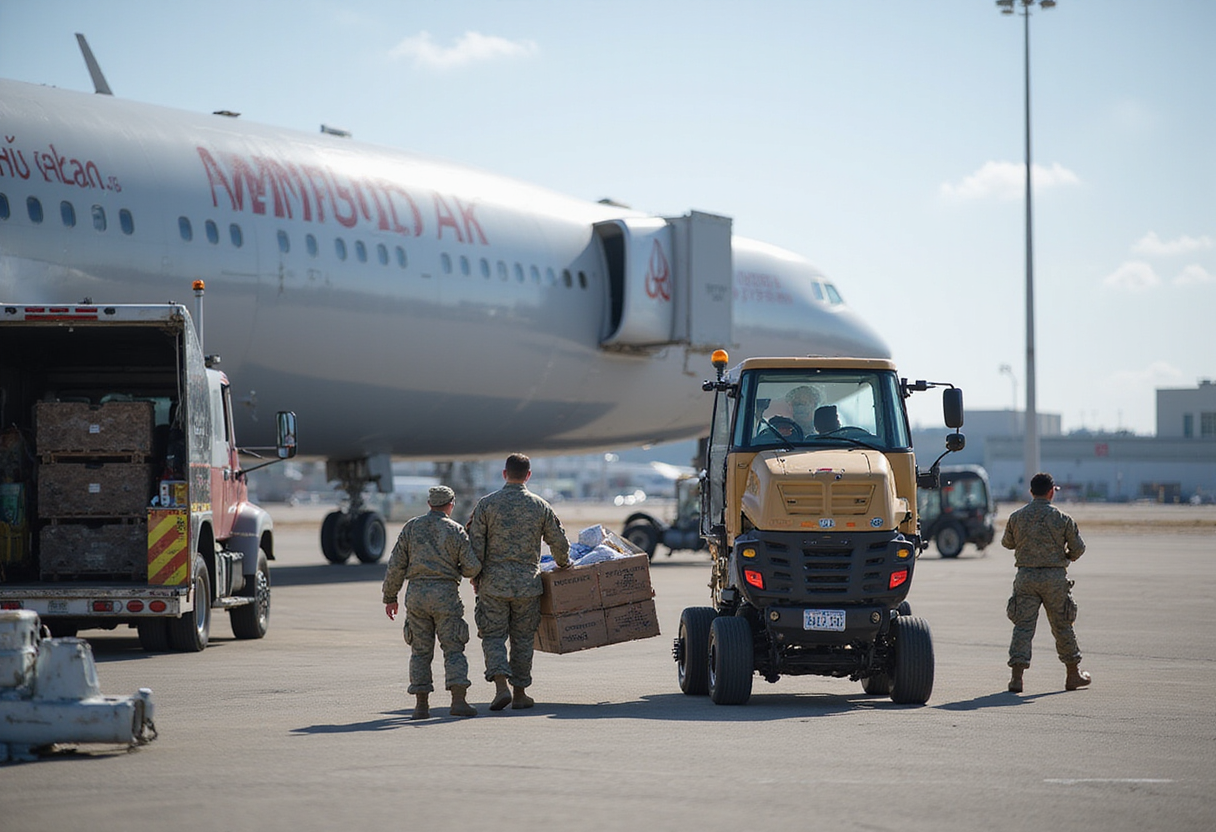
Fargo's Hector International Airport has completed a milestone integration of military and commercial drones into its everyday airspace, marking a concrete step in the broader effort to fold unmanned aircraft into routine US airport operations.
The North Dakota facility, which serves both commercial airline traffic and military units, reached the integration point after working through procedures that allow unmanned aerial systems to share the same operating environment as scheduled passenger flights and general aviation. The program positions Fargo as one of the first US airports to move drone operations from segregated test corridors into daily, operational airspace management.
North Dakota has built its reputation as a drone-development hub over the past decade, drawing on a combination of military presence, state investment and federal test-site designation. The Fargo milestone extends that work from experimentation into the regular air traffic environment, where controllers and operators must manage mixed traffic as a matter of routine rather than as a special event.
For commercial drone operators, integration into everyday airspace removes a structural constraint that has limited routine services such as delivery, inspection and survey work near busy airports. Military units gain the ability to train and operate without requiring airspace segregation that displaces or delays other users.
The achievement also carries implications for the Federal Aviation Administration's broader unmanned traffic management effort. Demonstrating that mixed operations can function at a mid-continent commercial airport provides a working model for other facilities weighing similar integrations, and gives regulators operational data on how drone flights interact with conventional traffic flows at a field handling scheduled airline service.
Fargo airport authorities framed the completion as a milestone, capping work that combined airport operations staff, military operators and commercial drone users under shared procedures. The specifics of the integration — which aircraft types fly, at what altitudes and under which authorization pathways — reflect procedures now embedded into the airport's standard operations rather than one-off approvals.
The development comes as the FAA continues to refine rules for beyond-visual-line-of-sight drone operations, the regulatory gate most frequently cited by industry as the barrier to scaling commercial unmanned services. An airport-level integration of the kind completed at Fargo offers a test case for how those operations can coexist with manned traffic at facilities that cannot simply close or segregate airspace.
Hector International handles commercial airline service alongside its military and general aviation roles, making the mixed-use character of the integration significant: the procedures cover traffic that includes scheduled passenger flights, not only a dedicated drone airfield or restricted military range.
For airports elsewhere, the Fargo model suggests a path that avoids the binary choice between barring drones and dedicating separate infrastructure. Whether the procedures transfer directly to larger, busier facilities remains an open question, but the North Dakota airport has now demonstrated the operating concept in live, daily conditions.
Further milestones of this kind are expected to shape how the FAA and airport operators nationwide approach unmanned integration as commercial drone activity moves from pilot programs toward scheduled operations.
via Google News: Air traffic control and airspace (Source)
More from Priya Raman
Same bay
- FDR851Fargo Airport Integrates Military and Commercial Drones Into Daily Airspace · September 29, 2026
- FDR712Textron's Aerosonde Flies First UAS Vertiport Operations in US Commercial Airspace · September 30, 2026
- FDR664Virginia Demonstrates Airspace Procedures For Advanced Air Mobility · September 28, 2026
- FDR187FAA to Deploy AI-Enhanced Software for National Airspace Management · September 26, 2026
- FDR602AIDC Runs Counter-Drone Drill to Extend Infrastructure Airspace Cover · September 30, 2026