Clearance CLR-3920 · SAF753
SAFFLY
Safety & OperationsClearance sheet
Flydubai Incident Puts Cockpit Door Security Back Under Scrutiny
A safety expert's analysis of the Flydubai incident highlights that reinforced cockpit doors, mandated after 2001, protect against intrusion from outside — not threats already inside the flight deck.
Read-back
- Reinforced cockpit doors became mandatory after the 2001 US attacks, hardening flight decks against forcible intrusion, small arms and blasts.
- The Germanwings 9525 crash in March 2015, which killed 150, showed the door design cannot address threats from inside the cockpit.
- Mitigations such as cameras and two-person cockpit rules remain procedural or optional rather than universal structural mandates.
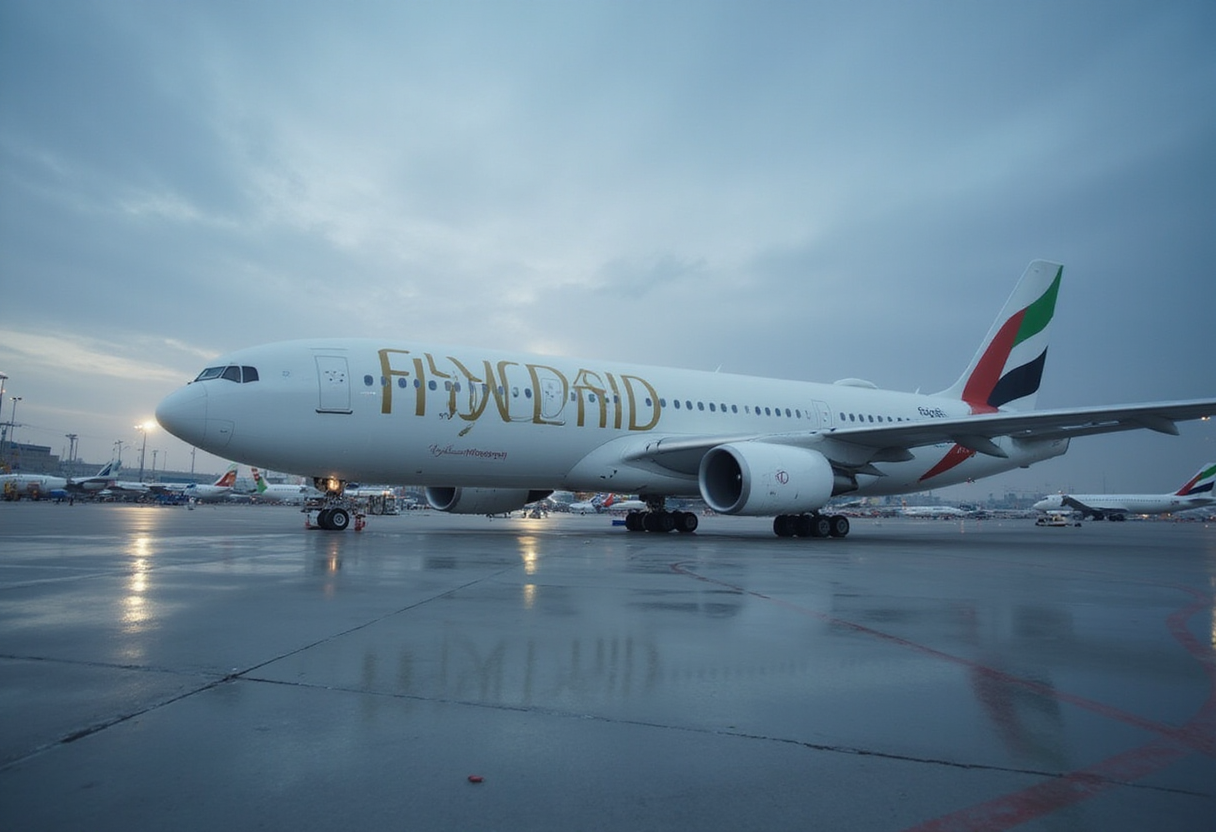
The Flydubai incident has renewed attention on one of the most consequential design changes in modern commercial aviation: the reinforced cockpit door. An airline safety expert writing for The Conversation has used the event to explain a distinction the industry has lived with since the early 2000s — cockpits on modern airliners have become substantially more secure, but only against threats originating outside the flight deck.
That qualifier carries weight. The reinforced, ballistic-resistant cockpit door became a global mandate after the September 2001 attacks in the United States, when regulators including the FAA and EASA required operators to harden access to the flight deck. The doors now fitted across Flydubai's Boeing 737 fleet and virtually every western-built airliner in service are engineered to resist forcible intrusion, small-arms fire and blast pressure. Crews follow strict access procedures: coded entry panels, cross-checks between cockpit and cabin crew, and locks that flightdeck occupants can activate to deny entry entirely.
The system works as designed against its intended threat. What it cannot do, as The Conversation's expert analysis makes clear, is mitigate a threat that originates inside the cockpit itself. A pilot at the controls sits behind the strongest door on the aircraft, with the ability to lock out colleagues, cabin crew and any intervention from the cabin. The same barrier that stops a hostile intruder can, in the wrong circumstances, isolate two people at the controls from everyone else aboard.
The industry has confronted this problem before. The March 2015 crash of Germanwings Flight 9525, in which a co-pilot locked the captain out of the cockpit and flew an A320 into terrain in the French Alps, killing all 150 aboard, exposed the gap between the two-person cockpit convention and the fortified-door architecture. European regulators responded by requiring two people on the flight deck at all times whenever a pilot steps out. Many carriers elsewhere adopted similar two-person rules voluntarily. The measure, however, remains procedural rather than structural, and several airlines relaxed or discontinued it after the immediate post-Germanwings period, citing operational burden and its own risk trade-offs.
Other mitigations debated since Germanwings have not become universal. Cameras that would let cockpit crews verify who is requesting entry remain optional equipment rather than a mandate. Ground-based or automated override of cockpit controls — technology that could theoretically allow authorities to intervene in a hijack or pilot-outreach scenario — has been studied and largely rejected, on the grounds that introducing a remote control path creates its own cybersecurity and command-integrity vulnerabilities. The design equilibrium that emerged keeps the door absolute: once locked, nothing in the certified architecture lets anyone on the other side force it open.
The Flydubai incident returns these questions to the operational agenda. Flydubai, the Dubai government-owned low-cost carrier, operates an all-Boeing 737 fleet and has been a launch customer for successive 737 variants, giving it one of the younger narrowbody fleets in the region. Its crews work under the UAE General Civil Aviation Authority's regulatory framework, which aligns closely with ICAO standards on flight deck security procedures. Under those standards, the carrier's cockpit doors, access codes and entry protocols follow the same hardened architecture flown by every major operator of western-built jets.
What the expert analysis underscores is that this architecture is asymmetric by construction. Decades of investment have gone into ensuring that no one can reach the controls uninvited. Comparatively little certified hardware exists to address the scenario of an authorized person at the controls acting against the aircraft's occupants. Mental-health screening, peer-reporting programs and license medical certification form the current defense layer for that risk — administrative controls rather than engineered ones, and ones that depend heavily on self-reporting in a profession where disclosing psychological difficulty can still carry career consequences.
For airlines and regulators, the cost calculus of closing that gap is not trivial. Retrofitting cameras, mandating permanent two-person rules or re-examining override architectures each carry certification pathways, equipment cost and crew-union negotiation, set against a risk that statistical safety records characterize as vanishingly rare relative to other accident categories. That rarity is precisely why the Germanwings-era reforms stalled at the procedural level rather than advancing to structural mandates.
The Flydubai incident will now test whether that equilibrium still holds. Investigations and subsequent regulatory reviews will determine whether the event exposes weaknesses in current cockpit access doctrine or confirms that the reinforced door remains, as The Conversation's analysis frames it, a barrier effective against every threat except the one already seated at the controls.
via Google News: Aviation safety (Source)
More from Nathan Brooks
Show full bio
Correspondent covering media and advertising at Flightdeck Report.
149 articles
Same bay
- FDR223Flydubai Jet Survives 16,000-Foot Uncontrolled Descent · October 1, 2026
- FDR126NTSB Takes Lead in Ryanair Window Blowout Investigation · September 30, 2026
- FDR765Boeing safety leader takes lessons to United Nations forum · September 26, 2026
- FDR967Netanyahu: Flydubai 737 Max pilot stabbed colleague in sabotage attempt · September 30, 2026
- FDR396flydubai Diversion Puts Cockpit Violence Under UAE Legal Lens · September 30, 2026