Clearance CLR-1343 · SUS870
SUSGEO
SustainabilityClearance sheet
Georgia Aviation and Agriculture Leaders Form New SAF Research Group
Aviation and agriculture leaders in Georgia have formed a new research group to study sustainable jet fuel production, linking feedstock supply to airline decarbonization.
Read-back
- Aviation and agriculture leaders in Georgia have formed a new group researching sustainable jet fuel production
- The group will study how jet fuel can be produced from agricultural feedstocks
- SAF is the only certified drop-in fuel substitute for existing commercial jet fleets
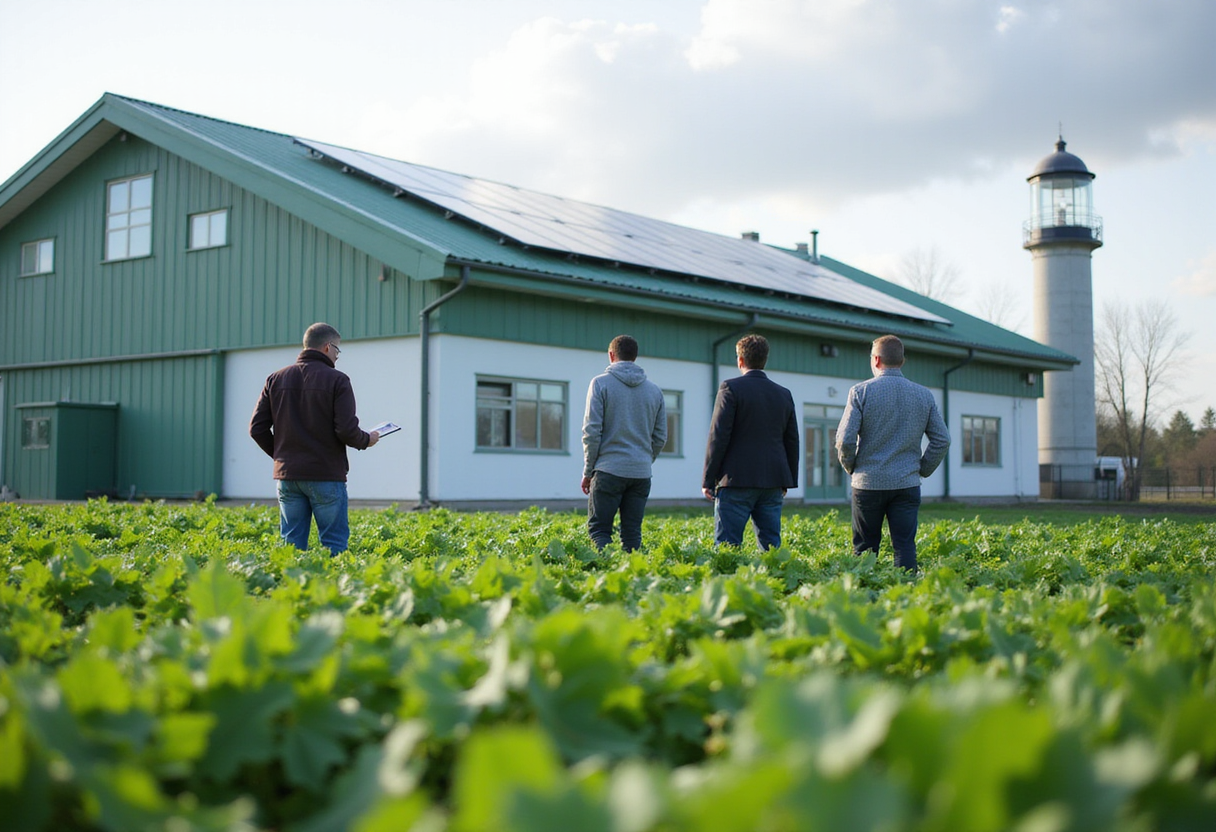
Aviation and agriculture industry leaders in Georgia have formed a new research group dedicated to sustainable jet fuel production, Georgia Public Broadcasting reports.
The announcement establishes a formal bridge between two of the state's largest economic sectors. Airlines and aircraft operators face mounting pressure to decarbonize, and sustainable aviation fuel — SAF — remains the only near-term drop-in substitute for conventional kerosene in commercial jet engines. Agriculture, in turn, controls the feedstock supply — the crops, residues and land that determine how much fuel the sector can physically produce.
The new group's purpose is research. Its members will study how jet fuel can be produced from agricultural inputs at scale, a question that sits at the center of the aviation industry's most difficult decarbonization problem.
Why the pairing matters
Aviation cannot electrify its mainline fleets on any timeline relevant to current climate commitments. Battery energy density remains orders of magnitude below jet fuel, and the aircraft certified today — from Airbus A320neos to Boeing 737 MAXs — will still be flying in 2050. That leaves liquid fuel substitution as the primary lever, and SAF as the only certified option for the existing fleet.
The constraint is supply. Current global SAF output covers a small fraction of airline demand, and the bottleneck is feedstock. Producing fuel from agricultural sources requires land, crops, processing capacity and logistics chains that do not yet exist at industrial scale. A research group that connects airlines directly with agricultural producers attacks that bottleneck at its source.
For airlines, the economics are unforgiving. SAF currently costs a multiple of conventional jet fuel, and carriers that commit to voluntary blending targets absorb that premium on routes where margins are already thin. Any research that identifies cheaper feedstock pathways or more efficient conversion processes translates directly into fuel cost — typically an airline's largest or second-largest operating expense after labor.
For agricultural producers, the calculation runs the other way. A viable aviation fuel market would create demand for crops and residues on a scale comparable to no other energy buyer. The question the new group must answer is which production pathways make sense for Georgia's farmland and processing infrastructure.
What is established, and what is not
The formation of the group is a fact. Its research agenda, membership roster, funding structure and timeline are matters the announcement leaves to future disclosure, and those details will determine whether the initiative produces deployable results or remains a coordination exercise.
What is already established elsewhere in the industry: SAF is certified for commercial use in blends with conventional jet fuel, and airlines worldwide have already flown millions of passengers on blended fuel. What remains unresolved — and what this group will examine — is how production can scale from pilot volumes to a supply base large enough to matter for airline fuel procurement.
The stakes for the region
Georgia's economy depends heavily on both sectors represented in the new group. Hartsfield-Jackson Atlanta International Airport is among the busiest passenger hubs in the world, and the state's agricultural output spans poultry, peanuts, cotton and timber — categories with potential relevance to fuel feedstock research, depending on which pathways the group prioritizes.
If the research succeeds, the consequence would be regional as well as environmental: fuel production capacity located near a major hub shortens the supply chain, and a domestic feedstock base insulates carriers from fuel price volatility tied to imported supply.
The group's first published findings — whenever they arrive — will show whether Georgia's agricultural base can support fuel production at volumes an airline network can actually absorb.
via Google News: Sustainable aviation fuel (Source)
More from Nathan Brooks
Show full bio
Correspondent covering media and advertising at Flightdeck Report.
172 articles
Same bay
- FDR663Kleinman Center Examines Renewable Natural Gas as SAF Feedstock · September 30, 2026
- FDR614$1.4B Sustainable Aviation Fuel Plant Planned for Louisiana · September 28, 2026
- FDR171Geopolitical Risk Strengthens the Case for Sustainable Aviation Fuel · September 30, 2026
- FDR999Rhodium Group Asks How Fast Sustainable Aviation Fuel Can Scale · September 30, 2026
- FDR618European SAF Supply Reaches 2.8% of Aviation Fuel · September 30, 2026