Clearance CLR-4834 · AIR969
AIRIRA
Airspace & RegulationClearance sheet
Iraq's Kata'ib Hezbollah threatens airspace closure over Iran flight ban
Iraq's Kata'ib Hezbollah threatens to close Iraqi airspace in retaliation for a ban on flights to and from Iran, escalating pressure on Baghdad's aviation authorities and regional air corridors.
Read-back
- Iraq's Kata'ib Hezbollah has threatened to close Iraqi airspace over a ban on flights to and from Iran
- The threat targets one of the region's busiest east-west overflight corridors used by Europe–Gulf and Asia-bound traffic
- The standoff tests Baghdad's sovereign control over airspace management amid broader restrictions on Iranian air traffic
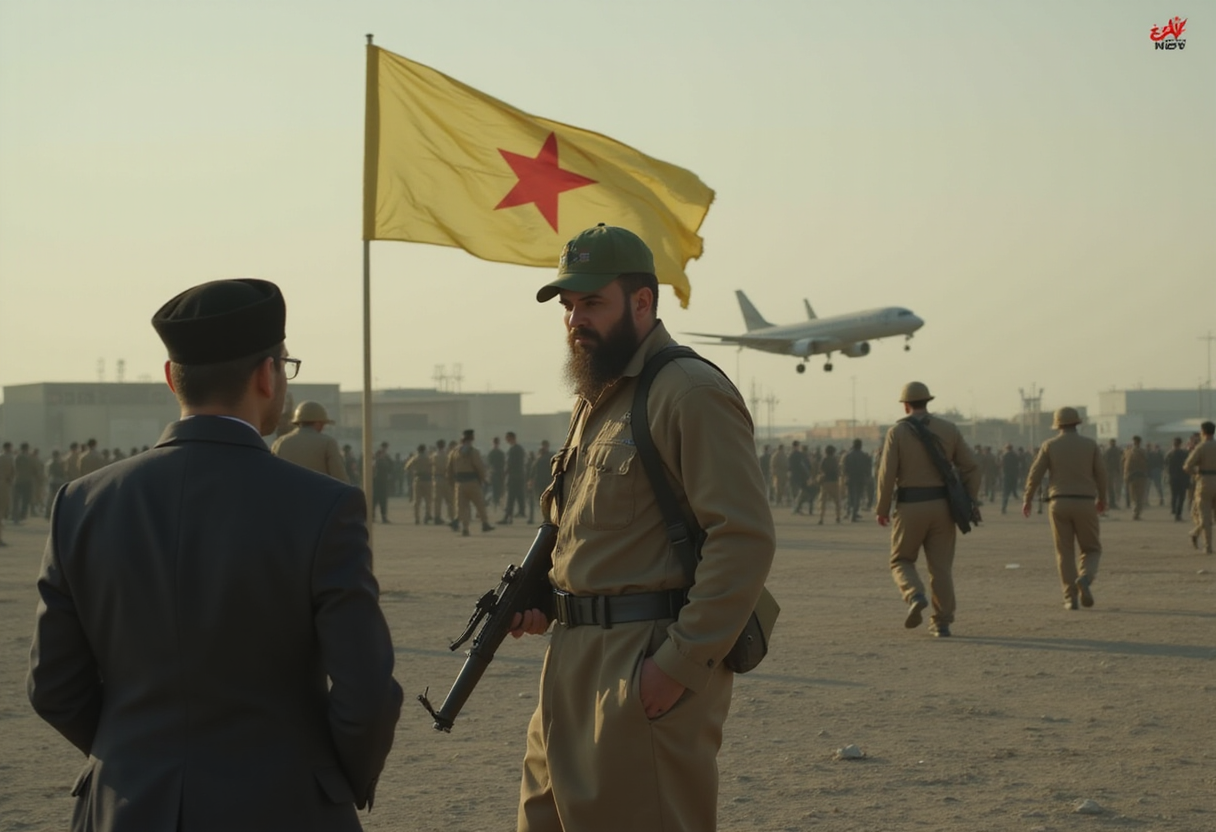
Iraq's Kata'ib Hezbollah has threatened to close the country's airspace in response to a ban on flights to and from Iran, according to a report from the Tehran Times. The threat escalates a standoff between the Iran-aligned armed group and the restrictions now placed on air traffic connecting the two neighbors.
At issue is the suspension of flights between Iraq and Iran — a measure that has grounded what had been a regular corridor of regional traffic. Kata'ib Hezbollah, one of the most prominent armed factions within Iraq's constellation of Iran-backed groups, has framed the ban as an unacceptable constraint and has responded by threatening to shut Iraqi airspace entirely if the restriction stands.
The threat carries weight because of the group's record. Kata'ib Hezbollah has previously demonstrated the ability to hold Iraqi decision-making hostage, including through pressure on the presence of foreign forces and through actions that have disrupted Baghdad's relations with Washington. A threat to airspace, however, would mark an expansion of the group's leverage from the security and political domains into civil aviation — a sector that Iraq has been trying to rebuild as part of its post-conflict economic recovery.
The practical consequences for aviation would be immediate. Iraq sits on one of the busiest east-west air corridors in the region. Overflight traffic between Europe and the Gulf, South Asia and beyond routinely crosses Iraqi airspace, and carriers depend on it as a routing alternative to other Middle Eastern corridors that have been closed or degraded by regional conflict in recent years. Any move to force a closure — whether through attacks on aircraft, interference with air traffic control, or political pressure on Baghdad — would force airlines into longer routings, raising fuel burn and flight times across a wide band of international traffic.
For Iraqi carriers and operators serving Iranian destinations, the stakes are more direct. A ban on flights to Iran already removes a market; a retaliatory closure of Iraqi airspace would compound the disruption, cutting Iraq's own international connectivity at a moment when the country's aviation sector is working to restore capacity and attract foreign operators.
The threat also tests the authority of Iraq's civilian aviation institutions. Airspace management and flight bans fall to the state, and any armed group asserting a de facto veto over who flies and where would represent a further erosion of Baghdad's control over its own sovereign infrastructure. How the government responds — and whether it can enforce a state monopoly on decisions about airspace — will shape both the security picture and investor confidence in Iraqi aviation.
There is also a regional dimension. The flight ban at the center of the dispute reflects broader tensions surrounding air travel to and from Iran, which has been curtailed repeatedly during periods of escalation between Tehran and its adversaries. Iraq, which borders Iran and hosts both close Iranian partners and US forces, has repeatedly found its airspace and its airports caught between the two. The Kata'ib Hezbollah threat follows that pattern, converting a restriction on Iranian flights into a potential crisis for Iraqi aviation as a whole.
Whether the group follows through remains the central question. Previous threats from armed factions in Iraq have ranged from rhetorical positioning to concrete action, and the aviation consequences of the latter — a single incident involving a civil aircraft would likely trigger immediate rerouting by international carriers, insurance repricing and possibly prolonged closure of the corridor — far exceed the cost of the current flight ban itself.
For now, the situation rests on the gap between a threat and an operational decision. Airlines and airspace users will be watching Iraqi authorities' next moves, and any indication that Kata'ib Hezbollah begins acting on its warning would quickly turn a political dispute into a regional routing crisis.
via Google News: Air traffic control and airspace (Source)
More from Grace Kim
Show full bio
News editor covering consumer brands and retail at Flightdeck Report.
138 articles
Same bay
- FDR320Baghdad and Muscat Close to Iranian Carriers as US Sanctions Bite · September 30, 2026
- FDR270Dubai Bars Iranian Aircraft and Tehran Retaliates With Airspace Ban · September 26, 2026
- FDR520Syria advances airspace redesign talks after L602 route launch · September 28, 2026
- FDR792EASA Issues Saudi Airspace Advisory After Houthi Attacks · September 30, 2026
- FDR214EASA Narrows Gulf Airspace Warning as Regional Risk Recalculated · September 28, 2026