Clearance CLR-9636 · AIR681
AIRCSI
Airspace & RegulationClearance sheet
CSIS: Syrian Airspace Gains Traffic as Iran Conflict Forces Detours
A CSIS analysis argues that airlines detouring around Iranian airspace are channeling traffic and overflight revenue through Syrian corridors, creating what it calls "detour dividends."
Read-back
- CSIS published an analysis titled "Detour Dividends: How Syrian Airspace Benefits from the Iran War"
- Airlines avoiding Iranian airspace are routing traffic through Syrian corridors, generating overflight revenue
- Syrian airspace began reintegrating into international civil aviation after the Assad government collapsed in December 2024
- The report argues the revenue benefit persists only as long as the Iran conflict suppresses use of Iranian airspace
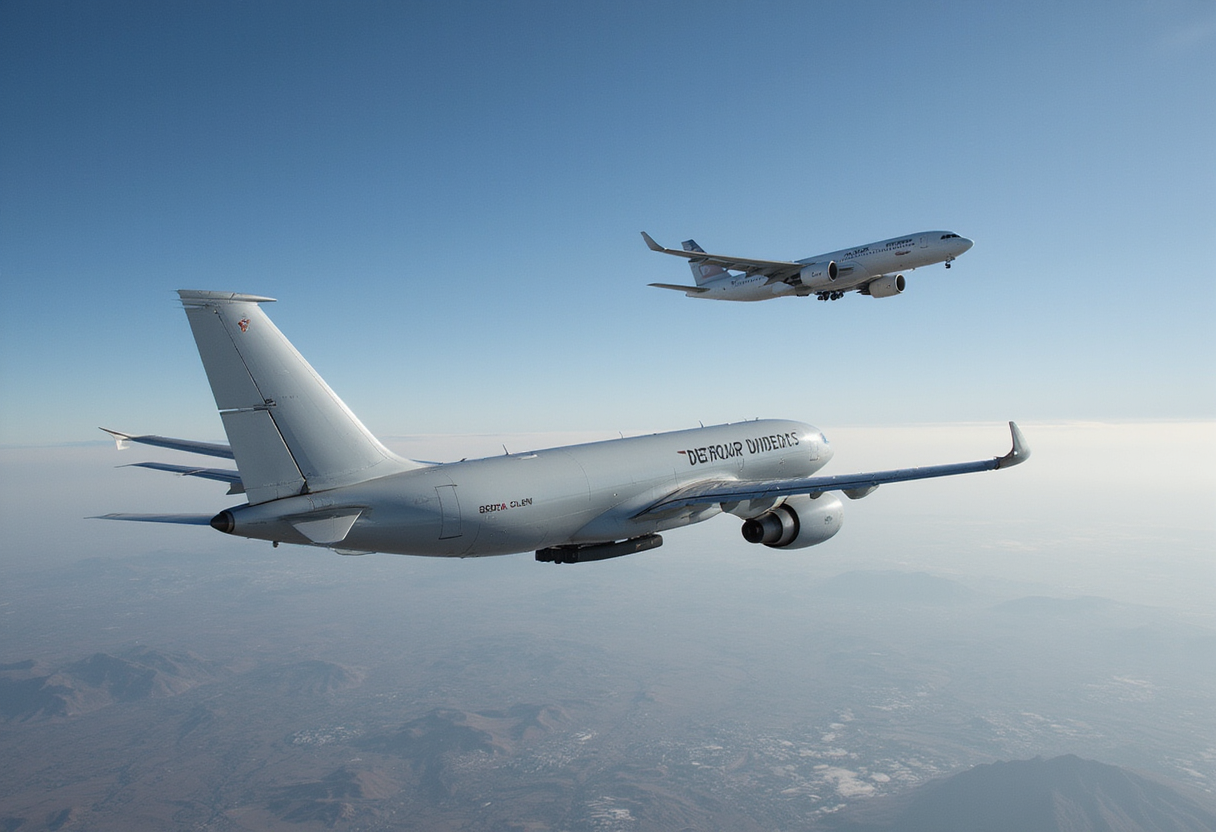
Syrian airspace is emerging as a financial beneficiary of the war involving Iran, as airlines rerouting to avoid the conflict zone push traffic and overflight revenue through Damascus-controlled corridors, according to a new analysis by the Center for Strategic and International Studies (CSIS).
The report, titled "Detour Dividends: How Syrian Airspace Benefits from the Iran War," frames the payoff in blunt commercial terms: when conflict closes or renders unattractive the airspace of Iran and its neighbors, carriers must fly longer routings, and the corridors they choose generate overflight fees for whoever controls them.
What changes when airlines avoid Iranian airspace?
Avoiding Iranian airspace lengthens routings between Europe, the Gulf, South Asia and points east. Every additional flight minute carries a cost in fuel, crew time and aircraft utilization. Carriers weigh those costs against the fees charged by alternative corridor states — and Syria, CSIS argues, now sits on a set of detour paths that airlines are actually flying.
That marks a striking shift. For more than a decade, most Western carriers avoided Syrian airspace entirely, first during the civil war and then under sanctions and security advisories. The country's reintegration into international civil aviation followed the collapse of the Assad government in December 2024, after which regulators and carriers began reassessing whether the corridors could reopen to traffic.
Who profits from the detours?
The CSIS analysis identifies the beneficiaries as those who control and monetize the reopened corridors. Overflight fees are paid per flight to the state providing air navigation services, so traffic diverted around Iran translates directly into revenue for the Syrian authorities now managing that airspace.
The report's framing — "detour dividends" — implies the benefit is structural rather than incidental: as long as the Iran conflict suppresses use of Iranian airspace, the detour patterns that route traffic through alternatives persist, and the revenue follows.
What does this mean for airlines and regulators?
For network planners, the calculus is straightforward. A reopened Syrian corridor can shave distance off routings that would otherwise swing farther south or north, saving fuel and block time on Europe–Gulf and Europe–South Asia sectors. The decision to use it depends on security assessments, insurance availability and the position of national regulators, not on cost alone.
For the Syrian authorities, overflight income offers a rare, immediately monetizable source of foreign revenue — one that scales with the duration of the conflict rather than with any diplomatic breakthrough.
How durable is the dividend?
CSIS's argument carries an implicit expiry condition. The dividends exist because of the war. A de-escalation that reopens Iranian airspace would restore the shortest routings and erode the traffic now transiting Syrian corridors.
Conversely, any deterioration in Syrian airspace security — or a reversal in regulatory acceptance of the corridors — would cut the flows just as quickly as they appeared. The analysis therefore points to a contingent benefit: valuable while the conflict lasts, and structurally vulnerable to both its resolution and its expansion.
via Google News: Air traffic control and airspace (Source)
More from Grace Kim
Show full bio
News editor covering consumer brands and retail at Flightdeck Report.
369 articles
Same bay
- FDR520Syria advances airspace redesign talks after L602 route launch · September 28, 2026
- FDR643Iran Missile Launch Puts Saudi and UAE Airspace Under Pressure · October 10, 2026
- FDR628EASA Warns Airlines to Avoid Parts of Saudi Airspace · October 1, 2026
- FDR320Baghdad and Muscat Close to Iranian Carriers as US Sanctions Bite · September 30, 2026
- FDR270Dubai Bars Iranian Aircraft and Tehran Retaliates With Airspace Ban · September 26, 2026