Clearance CLR-8063 · AIR586
AIRLON
AirportsClearance sheet
Long Thanh Airport Sets December 2026 Opening With 366 Weekly Flights
ACV confirms Long Thanh International Airport opens December 24, 2026 with 366 weekly flights, first phase of a $16 billion, 100-million-passenger hub.
Read-back
- Long Thanh International Airport enters operation December 24, 2026, per ACV.
- Phase one covers 366 weekly flights: 322 domestic and 44 international.
- Total investment is about US$16 billion across three phases.
- Final design capacity is 100 million passengers and 5 million tons of cargo annually.
- The 5,000-hectare site sits 40 km east of Ho Chi Minh City in Dong Nai.
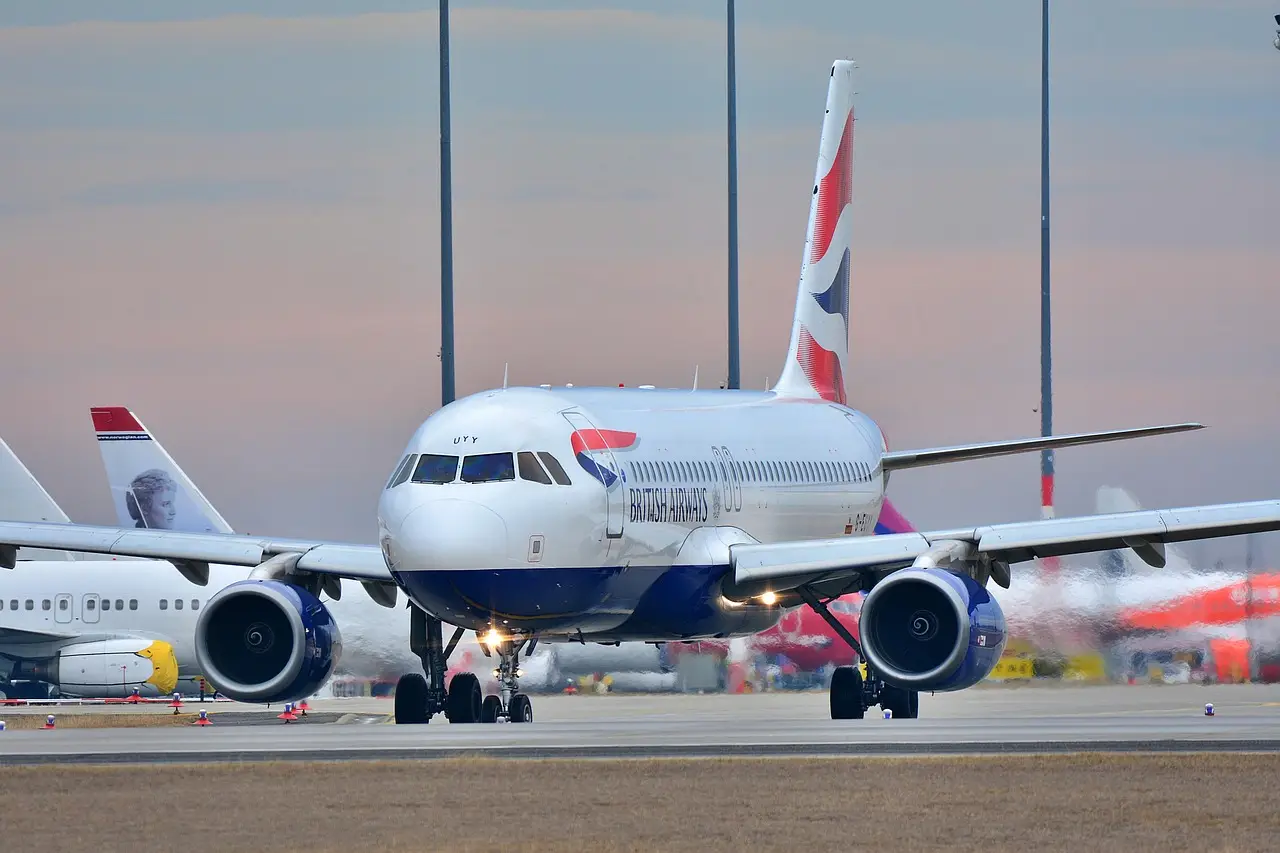
Long Thanh International Airport will enter service on December 24, 2026, according to the Airports Corporation of Viet Nam (ACV), giving southern Viet Nam a fixed date for its largest aviation infrastructure undertaking. The state operator's announcement converts a project long discussed in phases and projections into a schedule that carriers, freight forwarders and schedule planners can now price.
The opening figure matters as much as the date. Phase one operations will cover 366 flights per week — 322 domestic and 44 international. That split, roughly 88 percent domestic, defines the airport's first-year commercial character: a reliever field for Vietnamese trunk routes before it matures into a long-haul gateway. An airline deciding whether to move operations in 2026 is, in practice, deciding whether 44 weekly international slots justify the transition from Tan Son Nhat.
What does the December 2026 date change?
The airport sits in Dong Nai City, about 40 kilometers east of Ho Chi Minh City — close enough to serve the same catchment, far enough to require new ground transport economics for every operator and passenger. ACV positions the facility explicitly as congestion relief for Tan Son Nhat International Airport, which has carried the growth of one of Southeast Asia's fastest-expanding air travel markets on a constrained urban site.
The site itself is unusually large. Long Thanh covers around 5,000 hectares, which is the land bank that makes the phased build-out plausible rather than aspirational. Total investment is put at roughly US$16 billion, planned across three phases. The end-state design capacity is 100 million passengers and 5 million tons of cargo annually.
Those numbers deserve translation. A 100-million-passenger terminal complex would place Long Thanh in the same capacity tier as the world's busiest hub airports, and the 5 million tons of annual cargo would make it a serious freight node for the Asia-Pacific region. The $16 billion bill, spread across three phases, is comparable to the cost of major new hub programs elsewhere in Asia — capital that must eventually be recovered through passenger charges, cargo volumes and the commercial development the project is expected to stimulate.
Relief for Tan Son Nhat, or competition?
The immediate functional question is distribution. With 322 of the first-phase 366 weekly flights serving domestic routes, Long Thanh will begin as an overflow valve for the dense Vietnamese internal network. The 44 international weekly flights represent the opening wedge of ACV's stated ambition for the airport to become one of Southeast Asia's major aviation hubs.
ACV frames the project in three ways that go beyond airline operations:
- easing congestion at Tan Son Nhat International Airport;
- supporting Viet Nam's growing demand for air travel and logistics;
- positioning the country as a key transit and trade gateway in the Asia-Pacific region.
The first is measurable from day one. The second depends on whether the December 2026 opening attracts sufficient carrier commitment to shift traffic rather than merely add capacity. The third — regional hub status — is the long game, and it will be decided over the full three-phase build-out, not by the opening schedule.
What happens after December 24, 2026?
The certified, confirmed facts are these: an operator, an opening date, a phase-one flight program, a site, a budget and an ultimate design capacity. Everything beyond the first 366 weekly flights remains promised rather than scheduled, and the gap between 100 million annual passengers and a first-phase domestic-heavy operation is measured in decades, not runway lengths.
Still, the date is the story. For a project of this scale, a firm December 24, 2026 entry into service gives regulators, airlines and logistics operators a common planning horizon, and it commits ACV publicly to a schedule against which delivery performance can now be judged.
via en.baochinhphu.vn (Source)
More from Grace Kim
Show full bio
News editor covering companies, deals and strategy in Commercial aviation industry coverage at Flightdeck Report.
584 articles
Same bay
- FDR694Long Thanh airport to open on 24 December 2026 at 366 weekly flights · November 2, 2026
- FDR985Emirates puts A350 on all four daily Vietnam flights by December · October 29, 2026
- FDR193Vietjet enters European Union with Hanoi–Almaty–Prague A330 services · October 12, 2026
- FDR705Vietnam's central airports add runways, stands and terminal capacity · November 4, 2026
- FDR340Vietnam weighs SAF scale-up as carriers log first 2,200 tonnes · October 10, 2026