Clearance CLR-5776 · AIR627
AIRLUF
Airlines & NetworksClearance sheet
Lufthansa scraps five-year network plans as US demand sags
Lufthansa Group is moving seat capacity from the US to South America and Asia-Pacific after weak first-half 2026 demand, CCO Dieter Vranckx said at Routes 2026.
Read-back
- Lufthansa Group is shifting capacity from US routes to South America and Asia-Pacific after weak H1 2026 demand.
- New routes are expected to become profitable at least twice as fast as the previous two-year allowance.
- The group runs five airlines — Lufthansa, SWISS, Austrian, Brussels Airlines, Eurowings — across six European hubs.
- Vranckx puts TAP Air Portugal merger completion at one year to 18 months, pending regulatory approvals.
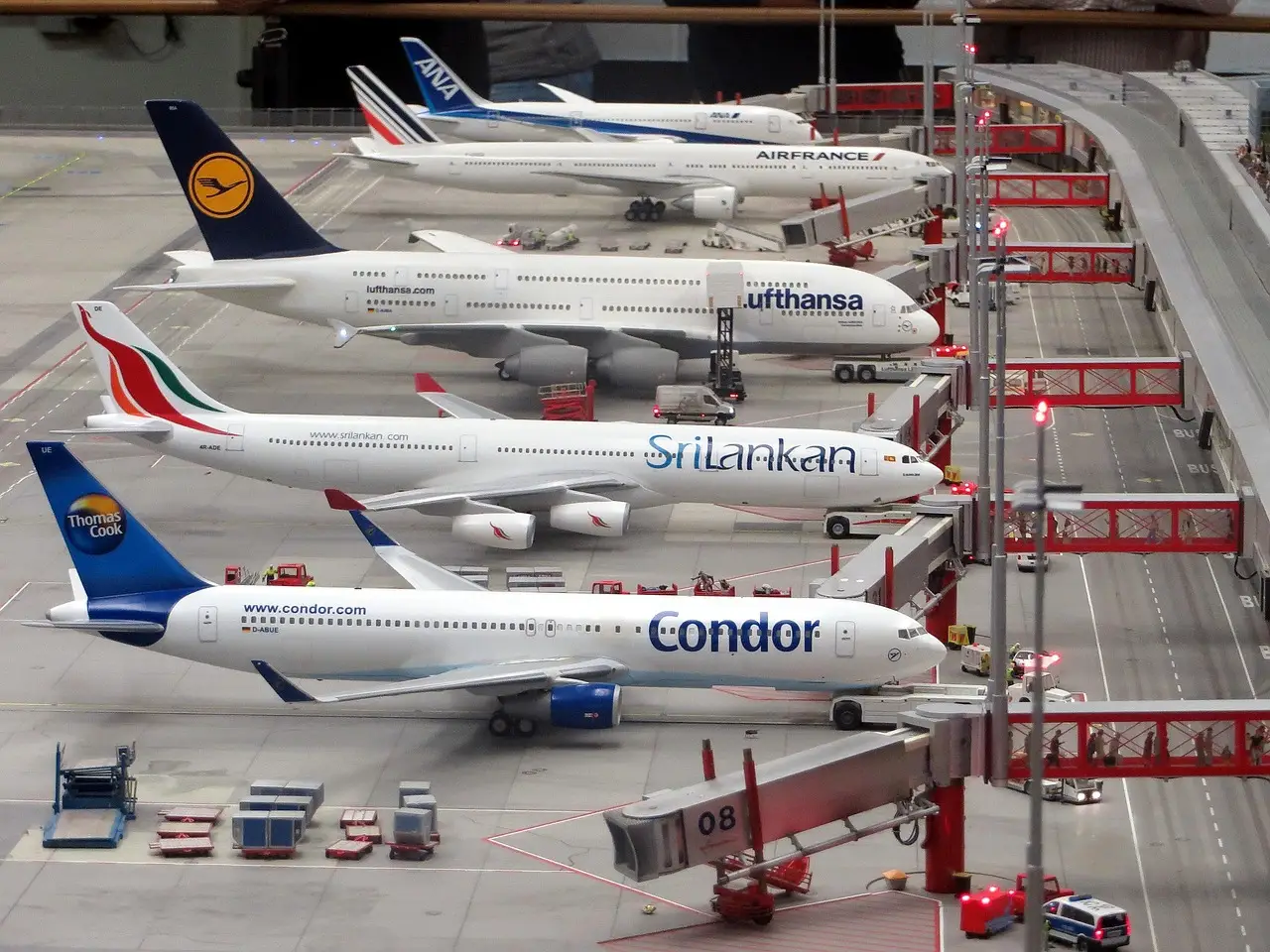
Lufthansa Group is shifting seat capacity away from the United States after US destinations underperformed on demand in the first half of 2026, group chief commercial officer Dieter Vranckx told the Routes 2026 conference in Frankfurt.
The capacity is moving to South America and Asia-Pacific, where Vranckx says demand is stronger. He expects new routes in those markets to reach profitability at least twice as fast as under the group's previous playbook. That playbook gave a new long-haul destination a year to settle and another year to build demand before profit was expected.
"We need to go much faster into profitability," Vranckx said. "We need to see an immediate impact in the market. We need to see that we create value in that market."
What does this change for network planning?
Vranckx's answer is blunt: the traditional model is dead. Capacity now has to be deployed and monitored constantly across the group's hubs to keep each one profitable. Five-year network strategies are, in his words, a thing of the past.
"We don't see the need for every hub to serve Oslo," Vranckx said. "The times of setting up a network strategy for the next five to 10 years and then to follow through are probably over."
The group operates five airlines — Lufthansa, SWISS, Austrian Airlines, Brussels Airlines and Eurowings — across six European hubs. Vranckx said network and capacity decisions are increasingly taken from a group-wide perspective rather than airline by airline.
"We will always look at the whole concept as if it would be one airline, and we optimise the five airlines and the six hubs commercially from that perspective," he said.
The claim is easy to state and harder to verify. Vranckx offered no figures on how much capacity is moving, which US routes are losing seats, or which South American and Asia-Pacific markets gain them. He also gave no timeline for the shift. The twice-as-fast profitability target is a management ambition, not a delivered result. Whether a group running six hubs can genuinely redeploy widebody capacity at short notice remains untested at this scale.
On short-haul, Vranckx said some traffic concentrates better at a few airports rather than operating from every hub the group owns. That points toward further consolidation of point-to-point flying at selected hubs. He named no airports.
Where does TAP fit?
The group's acquisition of TAP Air Portugal follows the same logic, Vranckx said. Lufthansa assessed TAP on three criteria: financial value, geographical proximity and network fit.
"TAP should be similar to ITA. Ideally, since we are an ambitious airline group, I always say it should go faster than ITA," he said, referencing the group's integration of ITA Airways.
Vranckx put merger completion into the group at between one year and 18 months. That estimate carries two caveats he acknowledged himself: the outcome depends on the acquisition process and on regulatory approvals. An 18-month window is a target, not a commitment, and Brussels has rarely moved on airline mergers at the speed buyers request.
The bet behind the shift
n The strategy rests on one assumption: that global demand fluctuations will persist, and that Lufthansa's ability to move capacity between hubs is a competitive advantage worth exploiting. If demand stabilizes, constant redeployment adds complexity for limited gain. If volatility continues, a group treating five airlines as one network can chase profitable markets faster than rivals locked into fixed plans.
What the conference remarks did not include: fleet numbers, seat counts, specific route cuts or additions, and any financial guidance tied to the US demand shortfall. Until Lufthansa publishes capacity data showing the shift, the twice-as-fast profitability claim stays a promise.
Vranckx's Frankfurt appearance signals that the group's next network decisions — and the first evidence of whether faster profitability is achievable — will land in the coming schedule changes rather than in a long-term plan document.
via travelradar.aero (Source)
More from James Calloway
Show full bio
Staff writer covering people, launches and day-to-day practice in Commercial aviation industry coverage at Flightdeck Report.
619 articles
Same bay
- FDR761Freighter capacity divides air cargo winners and losers as rates climb · November 6, 2026
- FDR148Two Airlines Open Summer 2027 Sales With 47 New Routes · October 12, 2026
- FDR754Lufthansa Cargo moves to strengthen network and Asia Pacific capacity · October 12, 2026
- FDR374Norse Atlantic capacity falls a third as carrier exits US transatlantic routes · October 9, 2026
- FDR460American Airlines Adds Seven New International Routes · September 29, 2026