Clearance CLR-1861 · SAF356
SAFMYD
Safety & OperationsClearance sheet
MyDefence Launches AI-Powered Wearable Drone Detector Wingman Edge
MyDefence has launched Wingman Edge, an AI-powered body-worn drone detector extending counter-UAS early warning to the individual operator.
Read-back
- MyDefence has launched Wingman Edge, an AI-powered wearable drone detector.
- The device is designed for individual wearers rather than vehicle or fixed installation.
- Detection range, weight, price and delivery date have not been published.
- The launch extends MyDefence's existing body-worn and vehicle-mounted counter-UAS product line.
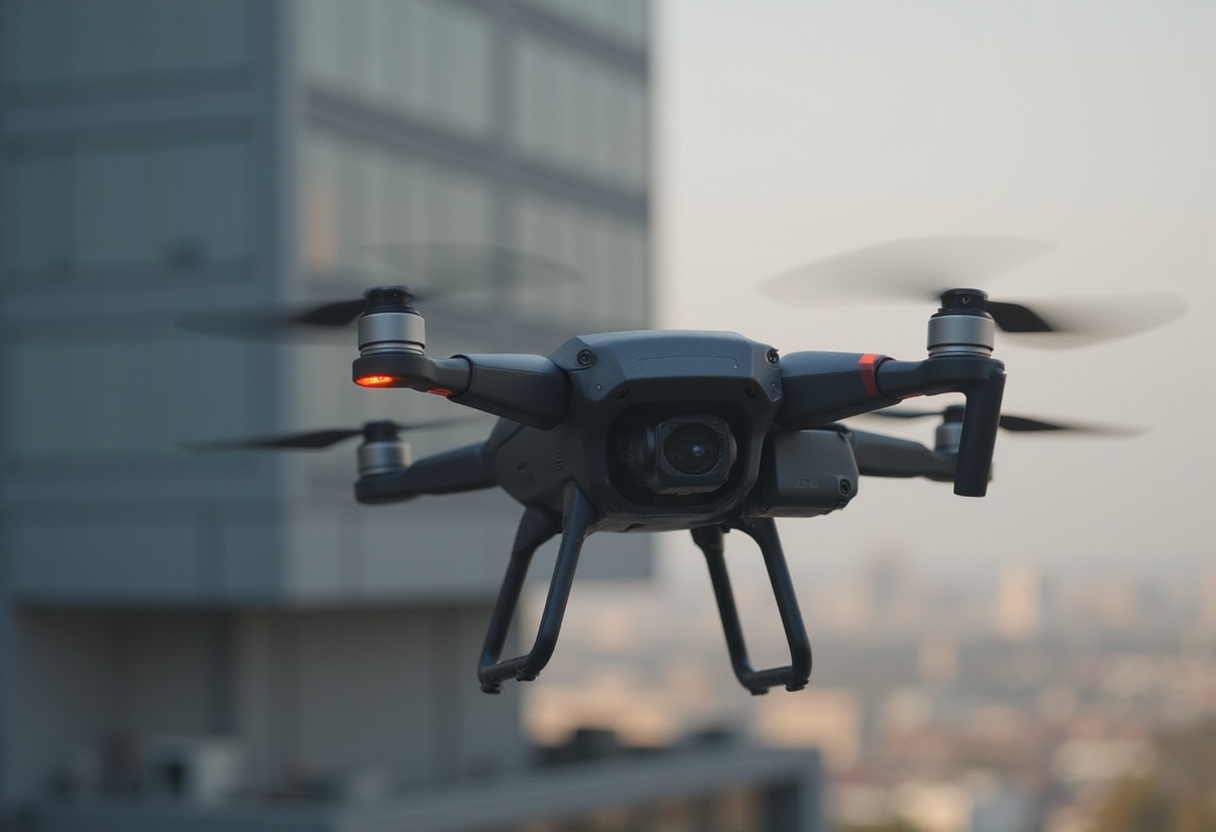
Danish counter-drone specialist MyDefence has launched Wingman Edge, an AI-powered wearable drone detector that puts counter-UAS capability on the individual operator rather than on a vehicle or fixed installation.
The company announced the product via a news release picked up by industry outlet Unmanned Airspace. Details published so far are limited to the launch itself: the device is body-worn, it uses artificial intelligence to process detection data, and it is designed to alert the wearer to nearby unmanned aircraft.
MyDefence is an established name in the soldier-worn counter-drone segment. Its existing product line already includes body-worn and vehicle-mounted detection and jamming systems sold to defence and security customers. Wingman Edge extends that portfolio further toward the dismounted user.
What does a wearable detector change?
Counter-UAS architectures typically divide into layered functions: detection, identification, tracking and defeat. Detection hardware has migrated over the past decade from fixed site-based radar and radio-frequency sensors toward man-portable and body-worn form factors, driven by the way small commercial drones moved the threat from installations to convoys, patrols and dispersed units.
A wearable detector shifts the smallest unit of that architecture from the squad to the individual. The trade-offs are familiar from other soldier-borne electronics: weight, power draw and battery endurance against detection range and classification performance. MyDefence has not yet published range, weight, battery-life or frequency-coverage specifications for Wingman Edge, so those figures remain to be verified against procurement documentation.
The company's use of the term AI-powered points to onboard classification — distinguishing hostile drones from other radio-frequency emitters and reducing false alarms — rather than detection alone. That capability claim follows an industry-wide pattern in which sensor makers lean on machine learning to cut operator workload; the proof standard is measured false-positive rate and time-to-alert in field conditions, not in marketing literature.
Who is this for?
Wearable drone detection addresses two customer sets. The first is military: dismounted infantry and special forces who need early warning of reconnaissance or strike drones without carrying a dedicated counter-UAS kit. The second is security forces protecting public events, critical infrastructure perimeters and VIP movements, where the detector functions as a personal early-warning layer feeding a wider response chain.
The launch lands in a counter-drone market that has expanded sharply since small drones proved decisive in recent conflicts, and in which fixed-site systems alone no longer cover mobile and dispersed users. Body-worn detection sits at the low-cost, high-volume end of that market.
What remains unverified?
Several questions will determine whether Wingman Edge is a shipping product or a launch announcement ahead of availability. MyDefence has not stated a delivery date, unit price, detection range, weight or the specific drone classes the system is tuned to detect. Nor has the company named launch customers or contract awards tied to the device.
For procurement officials and integrators, the items to verify are straightforward: independent test data on detection performance, size-and-weight figures against soldier load budgets, and export-approval status under Danish and allied dual-use regimes.
MyDefence says Wingman Edge is available now as part of its wearable counter-UAS portfolio; specification sheets and customer programme details should follow as the product reaches the market.
via Google News: Air traffic control and airspace (Source)
More from Nathan Brooks
Show full bio
Correspondent covering media and advertising at Flightdeck Report.
353 articles
Same bay
- FDR602AIDC Runs Counter-Drone Drill to Extend Infrastructure Airspace Cover · September 30, 2026
- FDR748DroneShield Lands $500 Million JIATF-401 Contract · September 30, 2026
- FDR957Tactien Group launches independent C-UAS evaluation tool · October 10, 2026
- FDR513UK UTM strategy under reset, DroneX coverage indicates · October 10, 2026
- FDR929DOT Weighs Cellular Networks as Backbone for Drone Airspace Safety · September 28, 2026