Clearance CLR-8312 · SAF239
SAFONE
Safety & OperationsClearance sheet
One Telecoms Failure, 7,000 Delayed Flights: Inside the U.S. ATC Ground Stop
Friday's FAA ground stop delayed or cancelled nearly 7,000 flights after a telecoms fault hit all 22 Air Route Traffic Control Centers, exposing aging U.S. ATC infrastructure.
Read-back
- Friday's telecoms outage affected all 22 Air Route Traffic Control Centers and disrupted nearly 7,000 flights.
- A GAO review found 51 of the FAA's 138 ATC systems unsustainable and 54 more potentially unsustainable.
- Congress provided $12.5 billion in July 2025; phase one now costs an estimated $10.6 billion and phase two $10.2 billion.
- By May 2026 the FAA had replaced 2,560 of 5,170 copper lines with fibre, with telecoms completion due December 2028.
- U.S. ATC handles more than 50,000 flights per day.
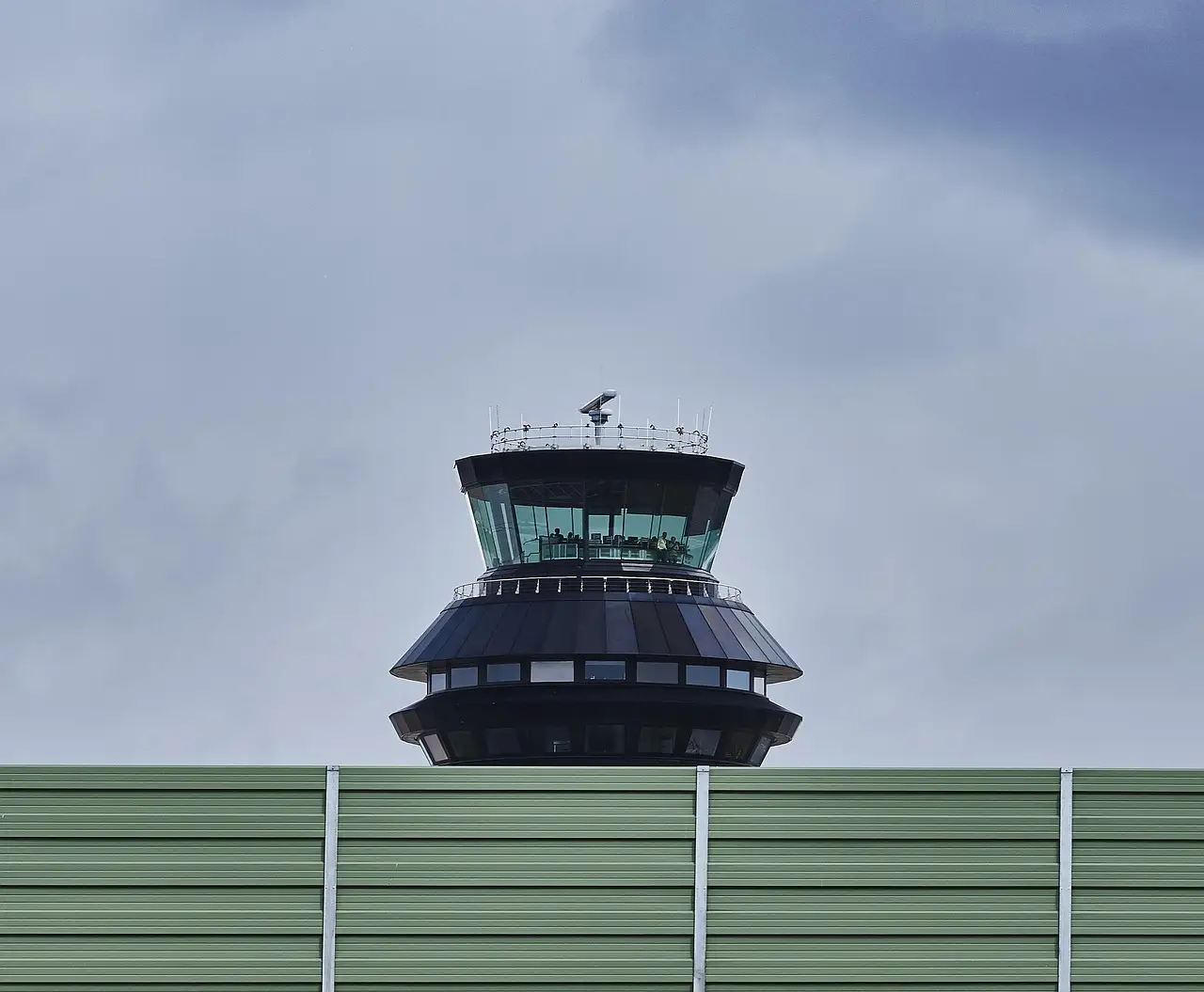
A single telecommunications failure on Friday grounded departures at every airport in the United States and left nearly 7,000 flights delayed or cancelled, according to FlightAware tallies. The FAA attributes the disruption to a temporary telecoms outage affecting all 22 Air Route Traffic Control Centers — the regional facilities that handle aircraft between airports.
Homeland Security Secretary Markwayne Mullin told reporters there was "no indication yet of anything nefarious." That shifts attention from sabotage to a structural question: why can one telecoms fault halt departures nationwide?
What failed on Friday?
The outage struck the telecoms circuits linking controllers to remote radio and radar sites across the country. When those links fail, controllers cannot reliably talk to aircraft. Transportation Secretary Sean Duffy confirmed all 22 centers were affected. The FAA has not yet published a technical root cause or confirmed when normal operations will fully return.
Notably, the radars and radios themselves kept working. The weak point was the connection between facilities — a pattern that repeats across recent incidents.
A pattern, not an accident
Friday's outage is the latest telecoms failure to disrupt U.S. air traffic control in under two years:
- 21 September: The Philadelphia TRACON (a terminal radar facility) lost its primary communications circuit and found its backup line already cut. Duffy said an Amtrak construction crew had accidentally cut a fibre line in New Jersey. Arrivals stopped at JFK, LaGuardia, Newark, Philadelphia and Boston; the problem took eight hours to resolve.
- Spring 2025: Newark suffered two radar and radio blackouts. On both occasions, controllers in Philadelphia lost contact with aircraft for around 90 seconds. Officials blamed a burnt-out copper wire for the first.
The September event carries a warning: the cut backup line was fibre. New technology alone does not guarantee resilience — diverse routing and truly independent backups matter as much as the medium.
How deep does the problem run?
Watchdogs have documented the decay for years. In September 2024, the Government Accountability Office (GAO) found that 51 of the FAA's 138 ATC systems were unsustainable, with 54 more potentially unsustainable. Of those 105 systems, 58 were critical to airspace safety and efficiency, and communications featured heavily: 25 communications systems carried unsustainable or potentially unsustainable ratings.
The core issue is that the network still runs on equipment that is hard to maintain and harder to replace while it stays in service.
What is being done?
The government's answer is the Brand New Air Traffic Control System, announced in May 2025, which aims to replace radar, radio and telecoms infrastructure by the end of 2028. Congress provided $12.5 billion in July 2025 as a first instalment.
The FAA appointed Peraton as prime integrator in December 2025. First priorities included moving remaining copper infrastructure onto fibre and building a new digital command centre. Progress is measurable:
- By May 2026, the FAA had replaced 2,560 of its 5,170 copper lines with fibre.
- The telecoms programme has accelerated by 21 months, with completion now due in December 2028.
- The FAA plans to migrate nearly 30,000 services onto Internet Protocol networks.
What does this change for taxpayers and airlines?
The funding does not cover the plan. The FAA now estimates phase one systems work at $10.6 billion — about $1.6 billion more than Congress set aside. Phase two carries a further $10.2 billion estimate with no start date, and the Department of Transportation continues to lobby for roughly $20 billion more.
Delivery governance also concerns the GAO. It found no integrated master schedule for phase one, only 11,389 separate project schedules, and no full lifecycle cost estimate. The GAO concluded the agency is "buying delivery speed at the risk of cost uncertainty and potential disruptions." There is no evidence yet linking Friday's fault to the upgrade work itself.
Did the system fail safely?
In one sense, yes. Aircraft already airborne continued to their destinations, and controllers held departures rather than launch aircraft into airspace they could not reliably communicate with. That was the right call. Yet a modern network should lose a link without losing the country.
No air navigation service provider is immune — NATS learned that in August 2023 when a flight planning failure disrupted UK airspace on a bank holiday Monday. The difference is scale: U.S. ATC handles more than 50,000 flights a day, so every weak link carries a far heavier cost.
The verdict on Friday's ground stop is that it reflects a system in urgent need of replacement. But the real test of the upgrade will be resilience, not novelty — and until the copper is gone and the backups are truly independent, U.S. ATC remains one cut cable away from another national stop.
via theaviationhub.co.uk (Source)
More from Sophie Lindqvist
Show full bio
Senior reporter covering people, launches and day-to-day practice in Commercial aviation industry coverage at Flightdeck Report.
634 articles
Same bay
- FDR218FAA Halts All US Departures After Telecom Outage Hits ATC Centers · November 14, 2026
- FDR987Four-Hour FAA Ground Stop Grounds Thousands of Flights Nationwide · November 14, 2026
- FDR858Telecom Outage Halts All U.S. Departures as FAA Radar and Radio Links Fail · November 14, 2026
- FDR574ATC Failure Grounds Hundreds of U.S. Flights, Exposing Aging Infrastructure · October 14, 2026
- FDR513ATC Failure Grounds Hundreds of US Flights, Exposing Ageing Infrastructure · September 28, 2026