Clearance CLR-5898 · AIR575
AIRPOL
Airspace & RegulationClearance sheet
Poland activates aviation units for national airspace protection
Poland has activated aviation units to protect national airspace, placing combat aircraft and air-defence assets on operational tasking amid heightened regional security tensions.
Read-back
- Poland has activated aviation units to protect its national airspace
- The activation places Polish air assets on active air-defence tasking
- No details were reported on units, aircraft types, duration or triggering incident
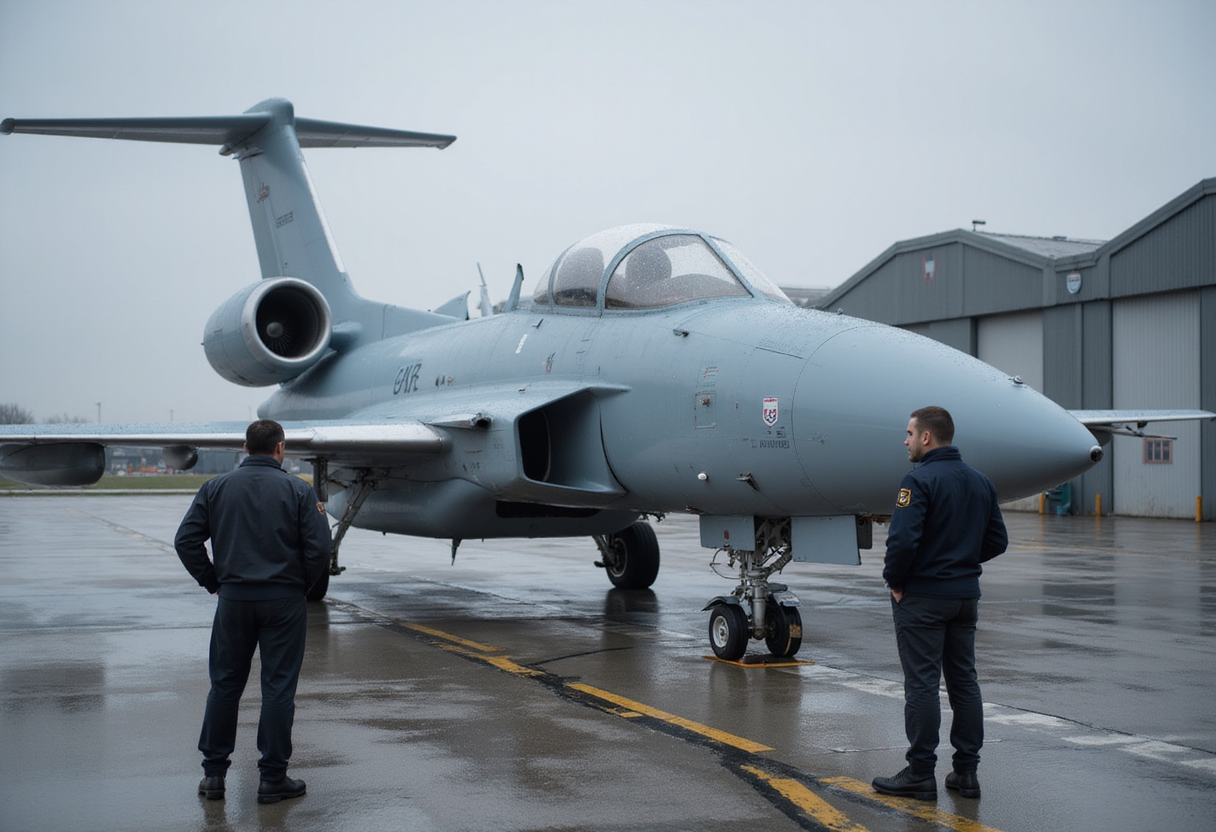
Poland has activated aviation units to protect its national airspace, moving air-defence assets onto active tasking rather than standby readiness. The reported activation places Polish Air Force combat aircraft and associated units on an operational footing for the surveillance and, if required, the defence of Polish airspace.
The decision makes aviation a visible instrument of Polish airspace policy. An activation of this kind typically involves combat aircraft held at quick-reaction alert, ground-based radar and command-and-control chains brought to higher readiness, and interception procedures for aircraft that breach or approach Polish airspace without clearance.
What is reported at this stage is the activation itself. What remains unstated in the available reporting is the number of squadrons involved, the specific aircraft types committed, the duration of the tasking, and whether the measure responds to a specific incident or constitutes a broader, standing reinforcement of air-policing arrangements.
Poland operates its airspace-protection mission within NATO's integrated air- and missile-defence framework. Allied air-policing detachments have rotated through the region since Russia's annexation of Crimea in 2014, and the alliance reinforced its eastern flank after the full-scale invasion of Ukraine in February 2022. Within that architecture, national assets — rather than allied rotations — carry the primary burden of responding to airspace violations over Polish territory.
The operational cost of a sustained activation is not trivial. Quick-reaction alert tasking consumes airframe hours, engine cycles and crew readiness at a rate that planned training cycles do not anticipate. For a force that also must maintain its training pipeline, its NATO commitments and its conversion to newer types, every hour spent on alert is an hour drawn from elsewhere. Sustained tasking therefore has direct consequences for fleet availability, maintenance planning and, over time, for the size of the fleet Poland needs.
An activation also carries network and capacity implications for the wider Polish air-defence system. Combat aviation is one layer; ground-based air defence, radar coverage and command-and-control form the rest. Whether the activation of aviation units accompanies comparable steps in those layers is a question the available report does not answer.
The strategic context is unavoidable. Poland borders Ukraine and the Russian exclave of Kaliningrad, and its airspace borders a theatre in which drones, cruise missiles and ballistic weapons have repeatedly appeared near — and at times in — NATO airspace. Missile fragments and drone wreckage have previously fallen on Polish territory, and intercept obligations under Article 5 arrangements give such incidents immediate alliance significance.
It is precisely in this environment that distinguishing the certified from the promised matters. Poland is executing one of Europe's largest air-power modernisation programmes, with fixed-wing purchases from the United States and South Korea, alongside investments in ground-based air defence. What is flying today on active tasking is the legacy and interim force; what the modernisation delivers over the coming years is a question of delivery schedules, training output and industrial capacity — all of which determine how sustainable an active airspace-protection posture actually is.
The next indicators to watch are concrete: the units and aircraft types publicly identified on the tasking, any NATO statements referencing allied support to the Polish posture, and whether Warsaw frames the activation as a response to a specific event or as a permanent elevation of its air-defence readiness.
via Google News: Air traffic control and airspace (Source)
More from Priya Raman
Same bay
- FDR388Poland formalizes procedures for shooting down objects in its airspace · September 30, 2026
- FDR951Poland to Change Rules of Engagement for Airspace Violations · September 28, 2026
- FDR334Poland Moves to Ease Rules of Engagement for Airspace Incursions · September 28, 2026
- FDR884Russian Helicopter Breaches Polish Airspace · September 30, 2026
- FDR826Russian Military Helicopter Briefly Entered Polish Airspace · September 27, 2026