Clearance CLR-3854 · AIR889
AIRREG
Aircraft & EnginesClearance sheet
Regent sets 2027 production target as Viceroy seaglider returns to water
Regent Craft flew its Viceroy wing-in-ground-effect prototype over Narragansett Bay on 30 September, advancing a 2027 production target contingent on US Coast Guard-led certification.
Read-back
- Viceroy prototype flew over Narragansett Bay on 30 September 2026 after aborting an initial takeoff attempt due to a 2-4kt tailwind
- Regent is planning for at least 50 Squire deliveries in 2027, with the production line active by late 2026
- Viceroy final assembly is scheduled to begin in the fourth quarter of 2027, with customer deliveries to follow shortly after
- US Marine Corps Warfighting Lab collaboration expanded by $5 million to a total of $19.3 million
- Viceroy was damaged during October 2025 hydrofoil stress testing and returned to the water in March 2026
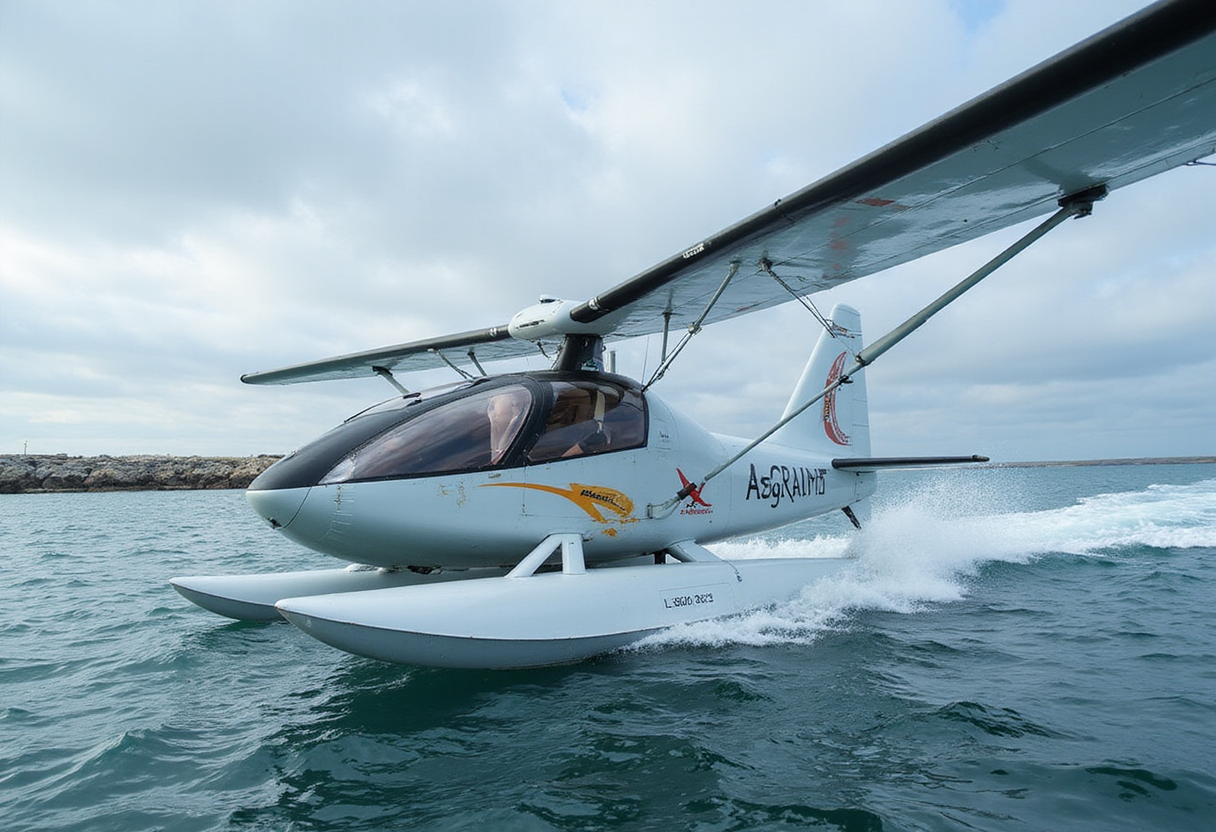
Regent Craft flew its 12-passenger Viceroy wing-in-ground-effect (WIG) prototype over Narragansett Bay on 30 September, completing a public demonstration that positions the Rhode Island start-up to begin Squire production by late 2026 and target at least 50 military-drone deliveries in 2027.
Viceroy accelerated on its first run but aborted the takeoff when operators, hoping for a headwind, encountered a 2-4kt tailwind. The craft repositioned and flew successfully on the second attempt. The flight came five months after an October 2025 hydrofoil stress-test incident sidelined the prototype.
What caused the October 2025 setback?
Larry Wirsing, Regent's vice-president of programmes, said the earlier failure stemmed from a control instability rather than a structural limit. "We encountered an instability, and there was some biomechanical coupling with the operator that then caused us to have an outrigger strike on the water and damage the wing," he said.
Regent responded with hydrofoil upgrades and changes to the controller implementation and topology. Viceroy returned to the water in March 2026. Wirsing said the controls test programme has "progressed really well" since then, and the hydrofoil issues are "in the rearview mirror and well behind us now".
Hydrofoils sit at the centre of the seaglider concept. By lifting the hull clear of the water, the craft can "operate in higher sea states than a seaplane," Wirsing said. He described the system as "the largest, most-complex hydrofoiling system that has ever been created."
Who certifies the seaglider?
Regent's developers have long argued that the US Coast Guard (USCG), not the FAA, should serve as the lead regulator, citing international standards and provisions in US law. The FAA confirmed a supporting role: "The FAA is working collaboratively with the United States Coast Guard by providing technical support."
The Coast Guard issued the certificate of inspection (COI) under which all demo-day operations were conducted. No FAA experimental certificate was used. "The Coast Guard is the regulatory authority for certification of the seagliders," Wirsing said.
He expects the Coast Guard to draw on FAA expertise for aviation-specific items such as wing design. "The FAA and the Coast Guard are collaborating on the regulatory approval process and the certification for the seaglider," he said. "We expect that the Coast Guard would tap into the FAA for areas [that are] more aviation-centric and for which the Coast Guard doesn't have expertise."
Internationally, Regent anticipates that an organisation such as Lloyd's Register would act as regulator. How that dual-track framework will resolve in practice remains unclear.
What does this mean for pilots?
Crew licensing follows the maritime path. Viceroy captains will qualify as Coast Guard mariners rather than FAA pilots. "There's no FAA pilot requirement," Wirsing said. "They'll be maritime captains."
The cockpit is being designed to mirror vessel controls, with a left-right stick and a throttle quadrant. Regent will automate transitions between three operating modes: hull-borne displacement, hydrofoil-borne running with the hull out of the water, and flight within ground effect.
What are the production plans?
Regent unveiled a 23,700sq m (255,000sq ft) manufacturing facility in North Kingstown on the same day as the demonstrations. The Squire production line will be active by late 2026, with at least 50 deliveries planned for 2027. Viceroy final assembly is scheduled to begin in the fourth quarter of 2027, with customer deliveries following shortly after.
Both craft use 12 wing-mounted electric propellers. Specs released by Regent:
- Viceroy: 12 passengers, two pilots, 160nm (296km) range, 160kt cruise
- Squire: 5.5m (18ft) wingspan, 4m length, 100nm (185km) range, 70kt speed, 50lb payload
Squire is a remotely piloted drone. Regent lists surveillance, logistics support, search and rescue, and anti-submarine warfare among its intended missions. The company also disclosed an additional $5 million from the US Marine Corps Warfighting Lab, bringing the total value of that collaboration to $19.3 million.
What testing remains?
Regent plans to keep running Squire and Viceroy on Narragansett Bay for the next 12 to 24 months while training its manufacturing workforce. Squire will continue to participate in military exercises and could be used operationally outside the US.
Whether the timeline holds will depend on continued hydrofoil maturation, the final shape of the Coast Guard-led certification framework, and the company's ability to scale an airframe-and-propulsion architecture with no direct commercial precedent.
via FlightGlobal (Source)
More from Grace Kim
Show full bio
News editor covering consumer brands and retail at Flightdeck Report.
350 articles
Same bay
- FDR778Regent's Seaglider Prototype Faces Setbacks Before First Flight · September 30, 2026
- FDR679UK orders probe into ATC failure that grounded thousands · October 10, 2026
- FDR841UK CAA widens NATS review to cover leadership after 2,000-flight outage · October 9, 2026
- FDR476Military Flight Plan Triggered Nats Outage, Report Says · September 30, 2026
- FDR499US Coast Guard searches Atlantic for missing Canadian air ambulance · October 10, 2026