Clearance CLR-6369 · AIR752
AIRREM
AirportsClearance sheet
Remote Stands Go Digital: Ground Handlers Rethink Boarding
BGS posted 99.51% on-time performance in 2025 as Swissport's TurnSmart AI reached 2,200 devices with 98% milestone accuracy, reshaping remote-stand boarding safety.
Read-back
- BGS reported average on-time performance of 99.51% in 2025.
- Swissport's TurnSmart AI turnaround system runs on more than 2,200 devices with 98% milestone-capture accuracy.
- Swissport has deployed over 4,000 AI-enabled cameras across its GSE fleet at more than 60 airports.
- Jetway boarding bridges have an expected service life of approximately 20 years.
- Delta Air Lines deploys Aviramp step-free boarding equipment in South America, the Caribbean and Africa.
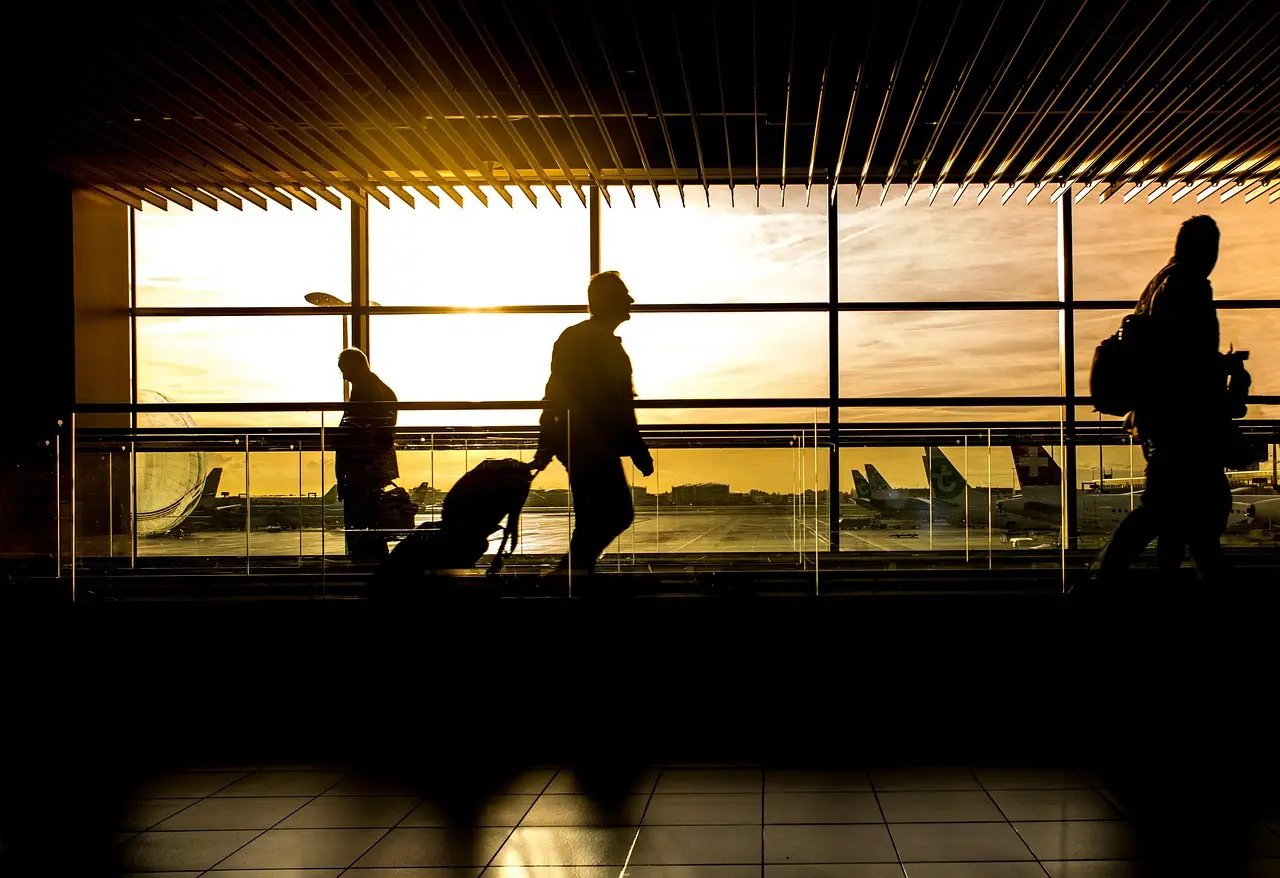
Ground handler BGS reported average on-time performance of 99.51% in 2025, a figure it attributes to advance planning at remote stands — aircraft positions served by buses and stairs rather than boarding bridges, which are becoming a structural part of airport capacity as terminals run out of gates.
The operational stakes are rising. Remote-stand boarding requires dispatching buses, positioning passenger stairs and accessibility equipment, and moving people through an apron (the aircraft parking and servicing area) shared with baggage tractors, fuel trucks and running engines.
"Remote stands require much more coordination than boarding through a standard airport gate," said Vytautas Cekanavicius, CEO of ground handler BGS. "Even a small delay in one part of the process can affect the entire operation, so preparation and communication are essential."
Swissport, which handles remote boarding as one workflow spanning gate dispatch, bus staging and aircraft boarding, stresses that weather, equipment availability and aircraft readiness can each force last-minute resource shifts while passenger separation from ramp traffic is maintained.
What keeps passengers safe on an active apron?
Passengers, unlike trained ramp staff, rarely understand apron hazards: moving ground support equipment (GSE), operating aircraft and vehicle traffic. BGS relies on designated walking routes, clear instructions, lighting and continuous supervision — and hard limits.
"The apron is an active working area, with moving vehicles, operating aircraft and ground equipment," Cekanavicius said. "Passengers may not be familiar with this environment, so they must be clearly guided and supervised at all times."
"If there is any risk, passenger movement is stopped until it is safe to continue," he added.
Swissport identifies pedestrian routing and separation from active ramp operations as fundamental. Where infrastructure allows, designated walkways and signage keep pedestrians apart from vehicles — a requirement that gets harder when several aircraft are serviced simultaneously.
Where does technology change the equation?
Swissport's TurnSmart, an AI-powered turnaround visibility system, has been deployed across more than 2,200 devices, with camera analytics capturing operational milestones at 98% accuracy, the company said. Because the system is mobile, it works at both remote and contact stands, unlike fixed cameras that monitor only designated areas.
The handler has also deployed more than 4,000 AI-enabled cameras across its GSE fleet at more than 60 airports, providing real-time safety alerts, plus aircraft proximity detection and telematics. Swissport Labs, its innovation hub, is exploring autonomous ground handling.
"Technology complements our operational expertise; it augments the experience and judgement of our people with better data and real-time visibility," Swissport said.
Cekanavicius cautions that software cannot substitute for basics: "Sometimes, however, the simplest measures have the greatest impact: good lighting, clearly marked routes, high-visibility clothing, and well-maintained buses and stairs."
How is accessible boarding changing?
Aviramp, a manufacturer of mobile step-free boarding ramps, says airports increasingly want passengers with reduced mobility (PRM) on the same route as everyone else, rather than separated into ambulifts — high-lift vehicles requiring trained drivers.
"Airports want PRM passengers to board with dignity and stay with their families, not be taken off to one side," said Adam Corfield, head of global sales, and Lee Burrows, installation, spare parts and customer service manager at Aviramp. "That's driving demand for inclusive, step-free solutions and for safer ways to handle personal wheelchairs, which are heavier than ever."
Staffing pressure reinforces the shift. "Ground teams are stretched, particularly in the UK, and that affects the availability of drivers for high lifts and steps," the company noted. "Airports want equipment that's easy to operate, doesn't need specialist staff and can be put into action straight away."
Aviramp reports demand at regional airports and major hubs in North America, Europe, Asia and Australia, and points to Delta Air Lines deploying its equipment in South America, the Caribbean and Africa, where high-lift equipment may be unavailable or costly. Its ChairLifter removes manual lifting when transferring personal wheelchairs, and the company is adding sensors, interlocks, solar-powered systems, and ID-card-based access that logs who operated equipment and when.
What about contact stands?
Boarding bridges are evolving too. "The number one problem for gate equipment is damage," said John Thompson of Jetway, part of Oshkosh AeroTech. "The thing that takes away most of their revenue is the inability to get that airplane back in the air."
Jetway's JetDock is a semi-autonomous docking system: an operator presses and holds a button and the bridge positions itself. "It's not a full autonomous product," Thompson said. "It still uses a person at the head end of the bridge, and they push a button and everything is done."
Its iOPS platform monitors bridge health plus preconditioned air and ground power units in real time, letting maintenance staff diagnose faults on mobile devices without dispatching technicians. Thompson says Jetway bridges have an expected service life of about 20 years with proper maintenance, with refurbishment options extending existing assets rather than replacing them. Remote docking — operating bridges from a separate location — is in development, though adoption depends on regional labor agreements and airline procedures.
What does this change for airports?
The common thread across handlers and manufacturers is that boarding, whether at a jet bridge or a remote stand, is now treated as one monitored, data-backed process rather than a sequence of separate tasks. As airports push more traffic through constrained infrastructure and remote stands, the interplay of trained personnel, step-free equipment and real-time monitoring will determine both turnaround reliability and passenger safety on the apron.
via bgs.aero (Original)
More from Sophie Lindqvist
Show full bio
Senior reporter covering people, launches and day-to-day practice in Commercial aviation industry coverage at Flightdeck Report.
564 articles
Same bay
- FDR434Menzies, Swissport, Çelebi and dnata Vie for Dhaka Terminal Contract · October 14, 2026
- FDR138Road feeder slot management: the bottleneck cargo operators can't book around · October 14, 2026
- FDR620Menzies Adds Passenger Services at Kuala Lumpur, Completing Full-Service Handling Rollout · October 2, 2026
- FDR739Swissport Shifts GSE Focus From Electrification to Data-Driven Fleet Management · October 9, 2026
- FDR915First Hydrogen Truck Begins Service at Milan Malpensa Cargo City · October 10, 2026