Clearance CLR-9707 · AIR578
AIRSAS
Airlines & NetworksClearance sheet
SAS at 80: Restructured, Re-Allied and on the Air France-KLM Path
Eighty years after its first Stockholm–New York flight, SAS enters its ninth decade restructured, newly allied to SkyTeam and on the threshold of Air France-KLM ownership.
Read-back
- SAS first flew on 17 September 1946, from Stockholm to New York, as a consortium of the Swedish, Norwegian and Danish national airlines
- The airline completed a major corporate restructuring after COVID-19 and has switched from Star Alliance to SkyTeam
- SAS is on the threshold of becoming an Air France-KLM subsidiary and has placed significant new aircraft orders since the pandemic
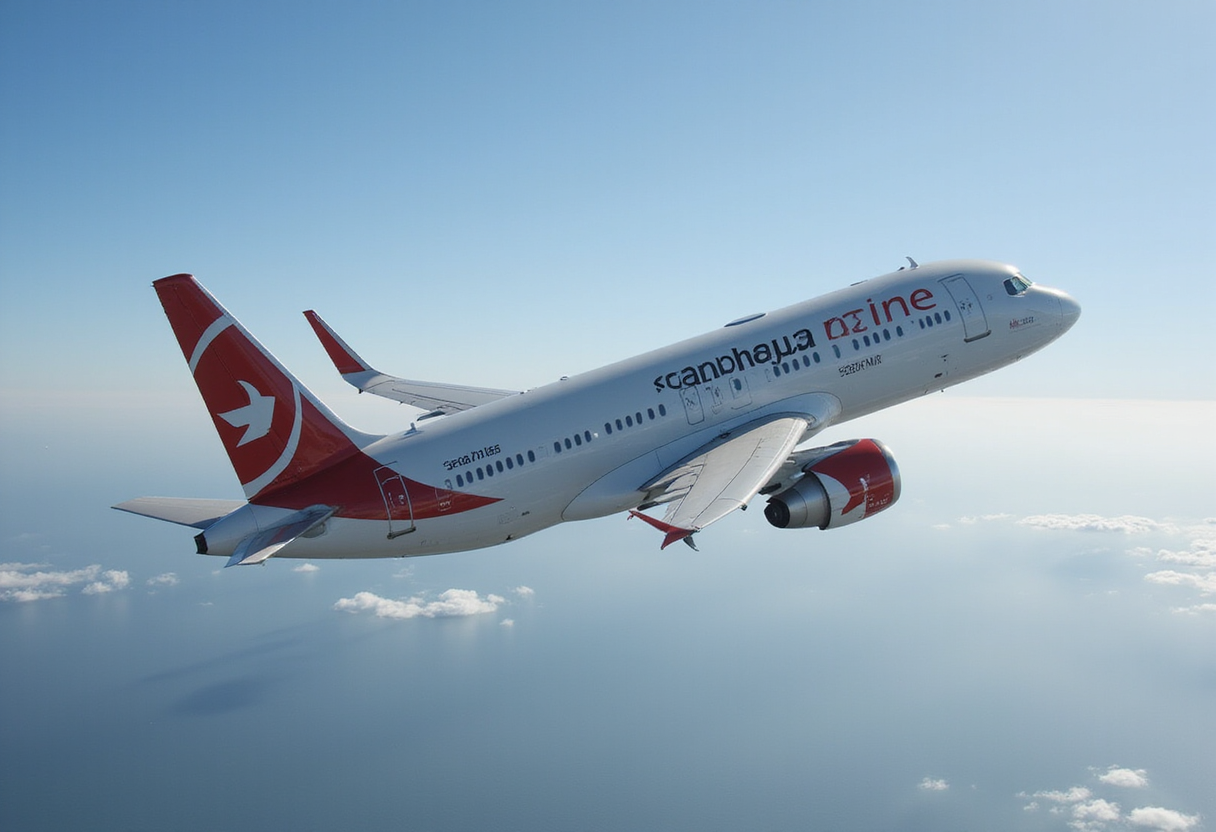
Scandinavian Airlines marked its 80th anniversary on 17 September, eight decades after its first flight departed Stockholm for New York in 1946. The airline that took off that day was a consortium of the national carriers of Sweden, Norway and Denmark; the company that celebrates today is a restructured operator switching alliances and preparing to enter the Air France-KLM group.
That trajectory — from three-state consortium to prospective subsidiary of a Franco-Dutch group — frames the strategic position SAS occupies at 80. The airline enters its ninth decade with a completed corporate restructuring behind it, new aircraft orders on its books, and a seat change from Star Alliance to SkyTeam already executed.
A record of firsts
SAS's history is a catalogue of cabin and ground-service innovations that later became industry standards. The airline introduced Tourist Class in 1952, a move that reshaped fare structures across the North Atlantic market. It fitted in-flight entertainment in 1968, when most carriers still treated audio and video aloft as a novelty. In 1982 it split business class check-in from the general flow and opened dedicated lounges — a product feature that now defines premium terminal experience worldwide.
The airline installed its first sleeper seats in 1992, well before flat-bed competition hardened on intercontinental routes. In 2006 it went further, adding windows to business class lavatories and rolling out biometric check-in across an entire domestic market — Sweden — an early large-scale deployment of fingerprint-based boarding tied to security requirements.
Each of these firsts reflected a carrier that competed on service design rather than scale. That legacy now sits alongside a much harder-edged agenda: repairing a balance sheet and repositioning the airline within Europe's consolidated landscape.
Restructuring and reorientation
The COVID-19 pandemic forced SAS into a major corporate restructuring, which the airline has since completed. The restructuring coincided with the most consequential strategic realignment in the company's modern history: the decision to leave Star Alliance, its home for roughly two decades, for SkyTeam — the alliance anchored by Air France-KLM and Delta.
The alliance move was not cosmetic. It presaged the deeper step now underway: SAS stands on the threshold of becoming an Air France-KLM subsidiary, which would fold Scandinavia's leading carrier into the same group structure that already contains Air France, KLM and Transavia. For a company founded as a joint venture of three national airlines, the shift to ownership by a single European group closes a long arc of state-backed, multinational operation.
Fleet renewal runs in parallel. SAS has placed significant new aircraft orders since the pandemic, signalling that the restructured company intends to compete on capacity and economics rather than shrink into a niche. The orders also position the carrier to meet the same fleet-decarbonisation pressures facing every European network airline, with newer types replacing older, less efficient aircraft across its Scandinavian network.
The SWOT picture
A strengths-weaknesses-opportunities-threats assessment of SAS at 80 yields a clear pattern.
Strengths rest on brand recognition across Scandinavia, an eight-decade operating record, and a history of product innovation that few carriers can match. The completed restructuring gives the airline a cleaner cost and debt base than it has had in years.
Weaknesses follow from the same history: SAS carries the legacy structures of a three-nation consortium and the inefficiencies that restructuring was designed to address. The airline spent the post-pandemic period repairing its finances rather than expanding.
Opportunities centre on the Air France-KLM transaction. Group membership would give SAS access to a consolidated European network, joint commercial coordination with SkyTeam partners, and the purchasing scale of a multi-brand operator. The new aircraft orders support a fleet-led competitive reset.
Threats come from the competitive environment itself: the consolidation that offers SAS opportunity also intensifies rivalry with the Lufthansa Group and low-cost carriers across the Nordic region. Integration into a larger group carries execution risk, and alliance transitions rarely proceed without friction for corporate contracts and connecting traffic.
Outlook
Eighty years after that first Stockholm–New York departure, SAS has fewer certainties than at almost any point in its history — and arguably more strategic optionality. The coming months will determine whether the Air France-KLM transaction completes and how quickly the restructured, re-fleeted carrier converts its new group position into sustainable profitability in the Nordic market.
via CAPA News (Source)
More from Nathan Brooks
Show full bio
Correspondent covering media and advertising at Flightdeck Report.
149 articles
Same bay
- FDR559SAS anchors rebrand in 'Scandinavian as Standard' at 80 years · September 28, 2026
- FDR431SAS opens widebody talks with Airbus and Boeing · September 30, 2026
- FDR750ATR pitches US regionals on three-class 72-600 with forward boarding · September 26, 2026
- FDR745SAS Places Record Long-Haul Airbus Order to Drive Expansion · September 30, 2026
- FDR969SAS Commits to 40 Airbus A330s in Largest Aircraft Order of Its History · September 30, 2026