Clearance CLR-4208 · AIR925
AIRSHR
AirportsClearance sheet
Shreveport Regional advances plans for new ATC tower and added gates
Shreveport Regional Airport is advancing plans for a new air traffic control tower and additional aircraft gates, per KSLA. Construction timelines, gate counts and capital costs remain undisclosed.
Read-back
- Shreveport Regional Airport is planning a new air traffic control tower and additional aircraft gates
- Construction timelines, capital costs, and gate counts have not been disclosed in public reporting reviewed by KSLA
- SHV currently receives scheduled service from American Airlines, Delta Air Lines, and United Airlines via regional partners
- FAA Contract Tower conversions at similarly sized airports have typically preceded new tower construction in the past 15 years
- AIP entitlement funding for a primary non-hub airport generally runs $1 million to $3 million annually
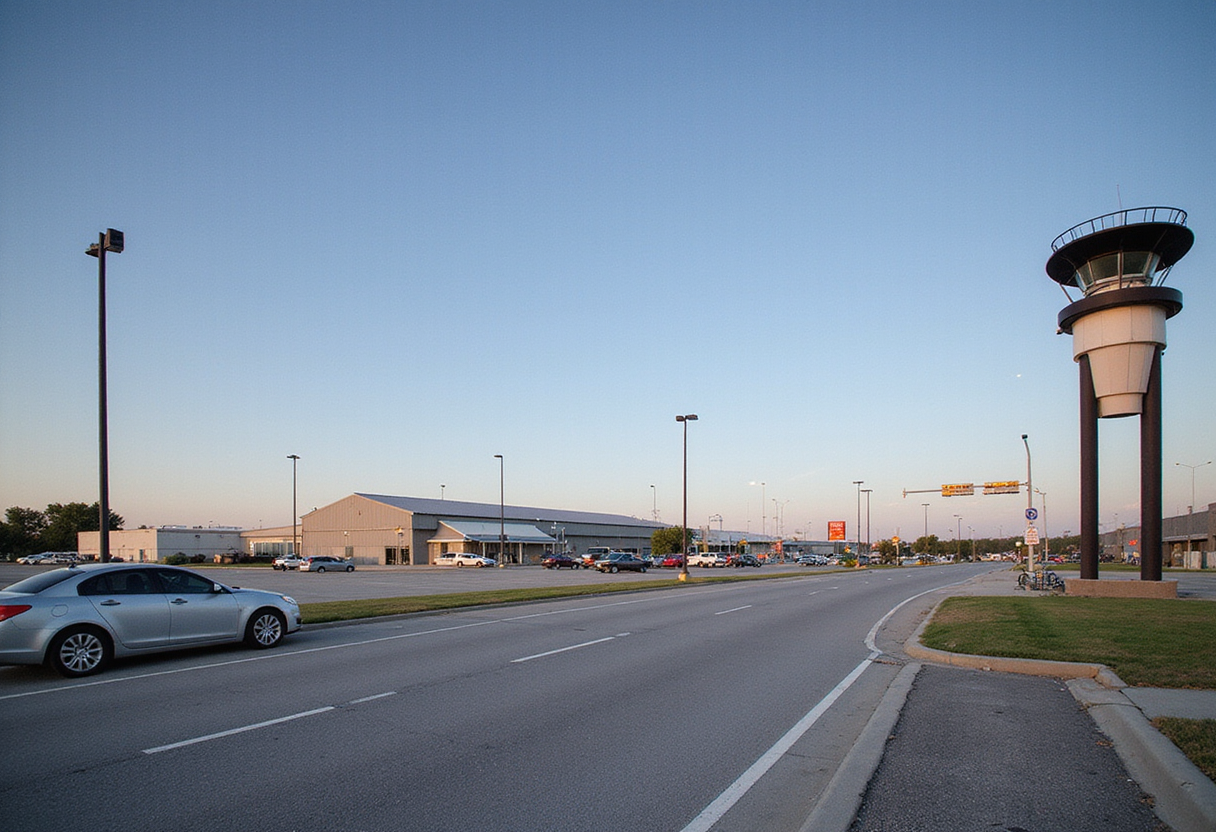
Shreveport Regional Airport is moving forward with plans for a new air traffic control tower and additional aircraft gates, according to local reporting by KSLA. The Louisiana airport has begun planning work on both projects, though specific construction timelines, capital costs, and the number of new gates have not yet appeared in public filings or press releases.
What is actually on the drawing board?
The two items sit on parallel tracks. The air traffic control tower replacement is the larger program and the one most exposed to federal review. Gate additions, by contrast, fall under the airport sponsor's own capital plan and rarely require FAA airspace approval unless a new terminal footprint changes runway taxi routes.
For tower replacement, the typical sequence at a Part 139 primary airport runs from siting study and environmental assessment through design, bid, and a three-to-five-year construction cycle. Site selection on constrained airports can add another 12 to 24 months before ground is broken. KCAD-funded or FAA-staffed, the project will need a benefit-cost analysis before AIP entitlement dollars are unlocked.
The gate expansion is the simpler deliverable. Regional airports have steadily added jetbridge-equipped positions as fleets shift toward larger Embraer E175s and CRJ-900s, both of which demand the same fixed infrastructure as mainline narrowbodies.
Why Shreveport, and why now?
Shreveport Regional (SHV) sits behind Baton Rouge Metropolitan and Louis Armstrong New Orleans International in Louisiana enplanement rankings. The airport serves the Shreveport-Bossier City metropolitan area and a regional economy anchored by aerospace manufacturing, defense depots, and petrochemical operations across the Ark-La-Tex region.
Scheduled service at SHV is concentrated among American Airlines, Delta Air Lines, and United Airlines, each of which feeds SHV passengers into Dallas/Fort Worth, Atlanta, and Houston Intercontinental respectively. Regional partners—including Envoy, SkyWest, and CommutAir—operate the flying under those brands.
Adding gates would give the airport room to add frequency on existing routes or absorb a new-entrant carrier if a low-cost operator elects to enter the market. Underused gates and aging tower infrastructure are a familiar combination at mid-sized regional airports where mainline capacity has migrated toward 737 MAX and A321neo operations in the past decade.
Who pays, and who decides?
A new ATC tower will require FAA coordination regardless of whether it ends up federally staffed or operated under the FAA Contract Tower Program. Most regional airports in SHV's size bracket have converted to contract operations in the past 15 years as the FAA consolidated TRACON functions and lowered its headcount baseline.
The funding stack for both projects is likely to blend several sources:
- FAA Airport Improvement Program entitlements, which generally run $1 million to $3 million annually for a primary non-hub
- Louisiana Department of Transportation and Development aviation allocations
- Airport revenue bonds, backed by landing fees, parking, and concession revenue
- Passenger Facility Charge revenue, capped at $4.50 per enplaning passenger under current federal authorization
Specific funding splits and bond authorizations will not appear until the airport publishes an updated master plan or a board agenda item referencing the projects.
What comes next?
Airport authority staff will need to publish a master plan amendment, an environmental assessment, or both before either project moves into design. KSLA's initial reporting places both efforts at an early planning stage, before contracts or council approvals. Detailed reporting on construction sequencing, gate counts, and tower design is likely to follow as the projects advance through FAA review and local board action.
via Google News: Air traffic control and airspace (Source)
More from Sophie Lindqvist
Show full bio
Senior reporter covering industry trends and analytics at Flightdeck Report.
396 articles
Same bay
- FDR249Tyler airport moves forward with new air traffic control tower · October 10, 2026
- FDR724Lambert-St. Louis Expansion Holds to 2027 Timeline · September 27, 2026
- FDR253US Airports Rethink Expansion as Forecasts Lose Predictability · September 30, 2026
- FDR625US Airport Expansion Programs Target Capacity Constraints · September 26, 2026
- FDR719Tyler Pounds Regional Airport Plans New Air Traffic Control Tower · October 1, 2026