Clearance CLR-6294 · AIR249
AIRTYL
AirportsClearance sheet
Tyler airport moves forward with new air traffic control tower
Tyler airport has begun planning a new air traffic control tower, joining a growing queue of US regional airports seeking to replace aging FAA-contracted ATC infrastructure with modernized facilities.
Read-back
- Tyler airport has begun planning a new air traffic control tower, per KLTV.com
- The FAA's Contract Tower Program currently covers more than 250 airports
- FAA tower replacement and modernization funding exceeds $100 million annually under recent appropriations
- Construction contracts are typically awarded 18 to 36 months after site selection
- No project cost or construction timeline has been released by the airport authority
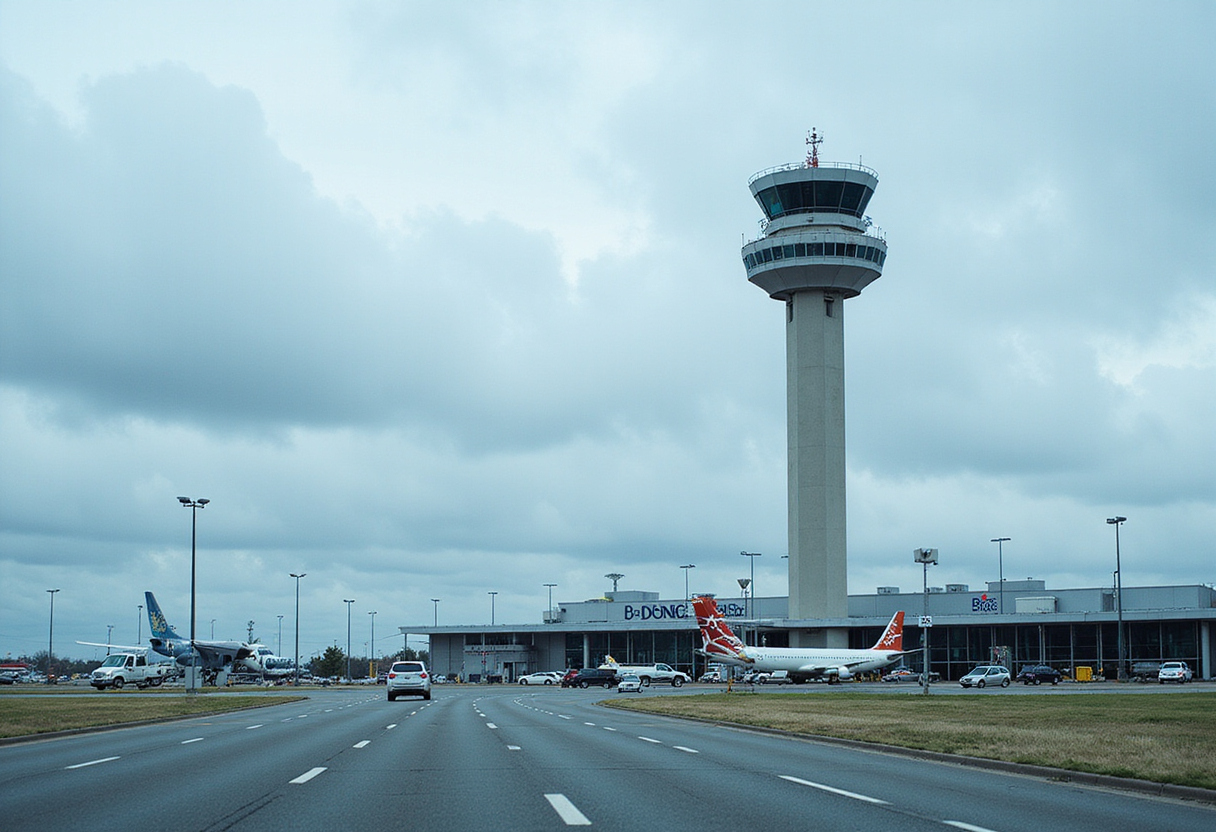
Tyler airport has begun planning a new air traffic control tower, according to local reporting from KLTV.com. The East Texas facility joins a national pipeline of regional airports pursuing tower replacement as existing structures reach the end of their service life.
The project enters a crowded federal queue. The FAA's Contract Tower Program currently covers more than 250 airports, and the agency's sustained capital outlays for tower replacement and modernization exceed $100 million annually under recent appropriations. A new Tyler tower would compete for that funding alongside comparable projects at peer regional airports, where capacity-driven operating costs have risen as traffic has recovered to within several percentage points of 2019 levels.
Tower siting decisions typically follow a multi-year federal process that begins with a feasibility study assessing line-of-sight, obstruction clearance, and controller sightlines to current and planned runway geometry. The FAA then issues a design and construction schedule bound to congressional appropriations cycles, with construction contracts usually awarded 18 to 36 months after site selection.
For an airport the size of Tyler, the operational case centers on controller ergonomics and weather observation rather than throughput. Most contract towers serve airports below the traffic volumes that would require a staffed federal tower, so the cost-benefit calculus weighs equipment reliability and controller retention rather than near-term capacity gains.
What does the project change for Tyler?
A new facility would consolidate radar, weather, and ground-to-cockpit communications infrastructure that today is distributed across equipment rooms added piecemeal over decades. Modern towers also carry lower maintenance costs because vendors have largely moved to commercial-grade networks rather than proprietary hardware.
The airport authority has not released a project cost or construction timeline. Until the FAA publishes an environmental assessment or awards a design contract, any delivery date remains indicative. Whether the new tower enables additional instrument approaches or extended operating hours depends on the equipment suite the FAA approves at final design — a decision that typically follows construction completion by another 12 to 18 months.
For travelers, the headline is continuity rather than change. The replacement cycle keeps existing safety and weather services in place while moving infrastructure into a building designed for current avionics and controller technology.
Broader context
The FAA's tower replacement backlog now exceeds the agency's average annual replacement rate by a factor that officials have described as sustainable only through supplemental appropriations. Congressional testimony in recent years has placed deferred maintenance at major FAA facilities above the $1 billion mark.
Regional airport authorities have responded by self-funding land acquisition and site preparation, then seeking federal cost-share for the structure itself. That model preserves local control over schedule while shifting most capital risk to Washington.
Whether Tyler pursues that funding route — and how quickly the project moves from planning to construction — will determine when controllers and the airlines they serve actually occupy the new facility.
via Google News: Air traffic control and airspace (Source)
More from Priya Raman
Same bay
- FDR719Tyler Pounds Regional Airport Plans New Air Traffic Control Tower · October 1, 2026
- FDR625US Airport Expansion Programs Target Capacity Constraints · September 26, 2026
- FDR970FAA Grants Mankato Airport $11.5M for New Control Tower · September 27, 2026
- FDR844Gary airport opens $18.3 million control tower as growth marker · September 28, 2026
- FDR984San Antonio Moves to Finance $2.3 Billion Airport Expansion · September 30, 2026