Aircraft & EnginesClearance sheet
SkyDrive, Kyushu Electric set three eVTOL urban workstreams
SkyDrive and Kyushu Electric Power will examine three eVTOL workstreams, linking aircraft development with urban planning, regional transport, tourism and sustainable local growth.
Read-back
- Three workstreams cover urban development, operating and business frameworks, and regional transport and economic challenges.
- The partnership agreement was announced on 18 November.
- Candidate regions face declining populations and changing transport needs.
- No aircraft count, delivery schedule, passenger capacity or launch date was disclosed.
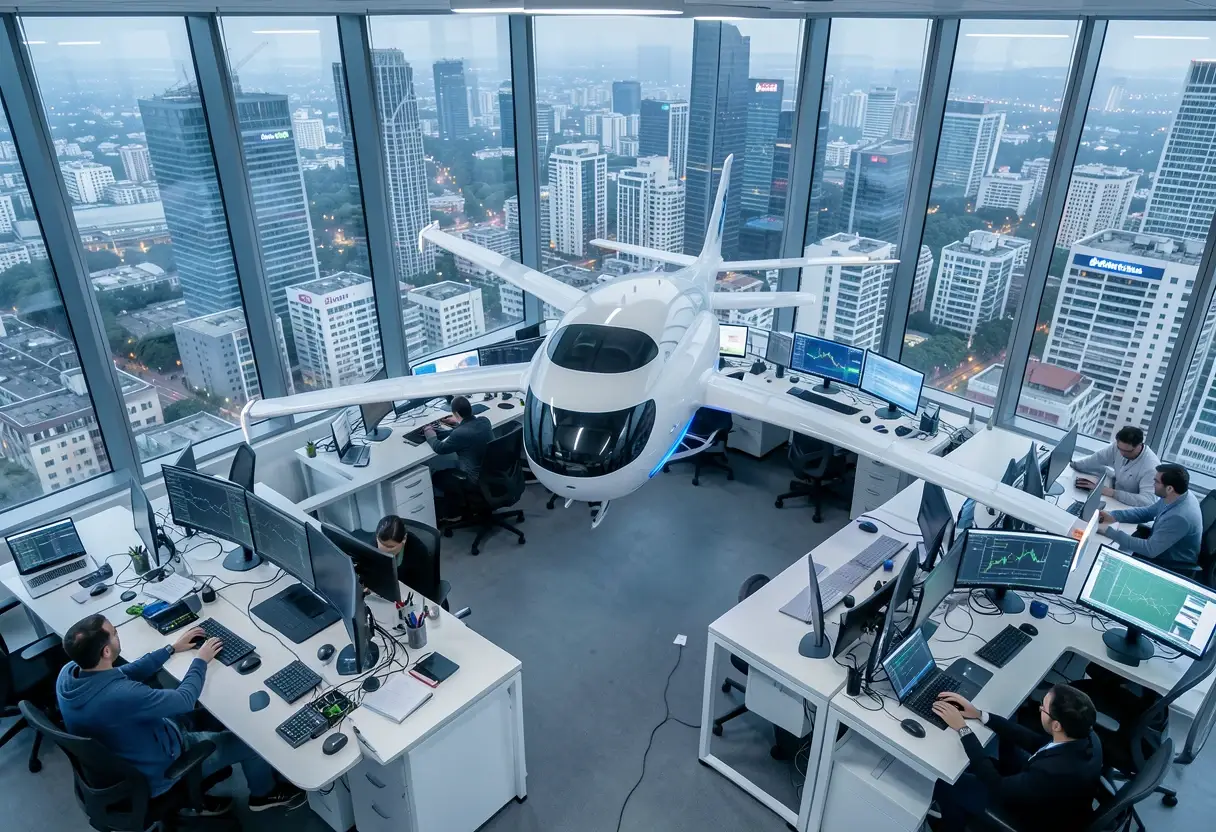
- The commercial SKYDRIVE SD-05 appears in a concept rendering rather than a passenger operation.
SkyDrive and Kyushu Electric Power have set three workstreams for their joint electric vertical take-off and landing (eVTOL) effort, announced on 18 November: urban integration, operating and business frameworks, and responses to regional transport and economic challenges.
The comprehensive partnership agreement makes urban planning and regional mobility the setting for the aircraft program, rather than a stand-alone demonstration. Neither company disclosed an aircraft count, route schedule, fare, delivery date or passenger capacity, leaving this as a planning exercise rather than a launch schedule.
Three tasks, no timetable
The agreement divides the work into three tasks. Each connects the aircraft program with a different part of regional planning.
- Evaluate the role of eVTOLs in community and urban development.
- Develop operational frameworks and business models with relevant stakeholders.
- Identify initiatives addressing regional transport challenges and supporting local economic development.
The sequence moves from land-use fit to service design, then to transport and economic priorities. That gives each side a defined planning question without assuming passenger demand or a final operating model.
SkyDrive brings the development and manufacturing of compact eVTOL aircraft. Kyushu Electric Power brings experience in regional community planning and urban development. In the announcement, the companies said the collaboration would combine their expertise to explore “new approaches to regional mobility and sustainable local growth.”
That combination gives SkyDrive a planning route into local mobility discussions. It gives Kyushu Electric a way to test whether eVTOL services fit development objectives, including connectivity and tourism, but neither role includes a disclosed aircraft purchase, operating contract or funded service.
Following the demand case
The companies will also study how eVTOL services could improve connectivity, attract visitors and generate tourism demand. Their stated target is regions with declining populations and changing transport needs, where they say eVTOL services could support more sustainable local growth.
The announcement does not identify the candidate regions, resident or visitor volumes, or specific transport routes. It gives no target for flights per hour, aircraft utilization, ticket prices or cost per journey, so the commercial case remains a set of hypotheses rather than a forecast.
The timing of demand will also matter to network design and cost. A service dependent on occasional visitors and a service carrying regular local passengers would require different aircraft-utilization and operating assumptions, but the announcement does not choose between those models.
What does this change for regional mobility?
This agreement changes what the two organizations can study, not what a passenger can book today. It puts eVTOLs on Kyushu Electric Power’s community-planning agenda while requiring SkyDrive to consider how compact aircraft, operating frameworks and business models fit local conditions.
For a region considering eVTOLs, the practical value is a method for testing land-use fit, mobility demand and local economic goals together. The limitation is that the study has not established schedule, capacity or affordability. Nor does the announcement name a regulator, certification standard, lessor, airline, maintenance provider or airport operator, so it identifies no public approval for commercial flight.
The supplied image reinforces the distinction between plan and operation. It is a concept rendering of the commercial SKYDRIVE SD-05 model in an urban setting, not evidence of a revenue flight, passenger service or certified aircraft.
The agreement also gives no SD-05 flight-test date, delivery schedule or target start date for passenger operations. Until those dates and volumes exist, regional planners can treat eVTOLs as an option under evaluation rather than scheduled transport capacity.
The next evidence point will be a defined operating and commercial concept supported by demand, cost and regulatory evidence. For now, the three workstreams establish where SkyDrive and Kyushu Electric Power will look, not how many passengers an SD-05 service could carry or when it could begin.
via unmannedairspace.info (Source)
More from Sophie Lindqvist
Show full bio
Senior reporter covering people, launches and day-to-day practice in Commercial aviation industry coverage at Flightdeck Report.
707 articles
Same bay
- Gold Coast sets 2028 target for electric flying-taxi flights · November 17, 2026
- Vertical Aerospace Secures 50-Aircraft Order from India · September 27, 2026
- Málaga hosts VERT-IGO airspace integration trials for eVTOLs and cargo drones · October 19, 2026
- JAL puts driverless towing tractors to work at third airport, Fukuoka · October 26, 2026
- JAL Orders Up to 26 Embraer E190-E2s for J-AIR Regional Fleet Renewal · October 14, 2026