Clearance CLR-8416 · SAF487
SAFSYD
Safety & OperationsClearance sheet
Sydney Airport near-misses trigger regulatory 'bombshell'
A series of near-miss events at Sydney Kingsford Smith, Australia's busiest and capacity-capped airport, has produced a response significant enough to be called a bombshell.
Read-back
- A series of near-miss events has occurred at Sydney Kingsford Smith Airport, Australia's busiest airport
- The Weekly Times characterises the aftermath of the incidents as a 'bombshell'
- Sydney operates under an 80-movements-per-hour cap and a night curfew, compressing operations into a tight window
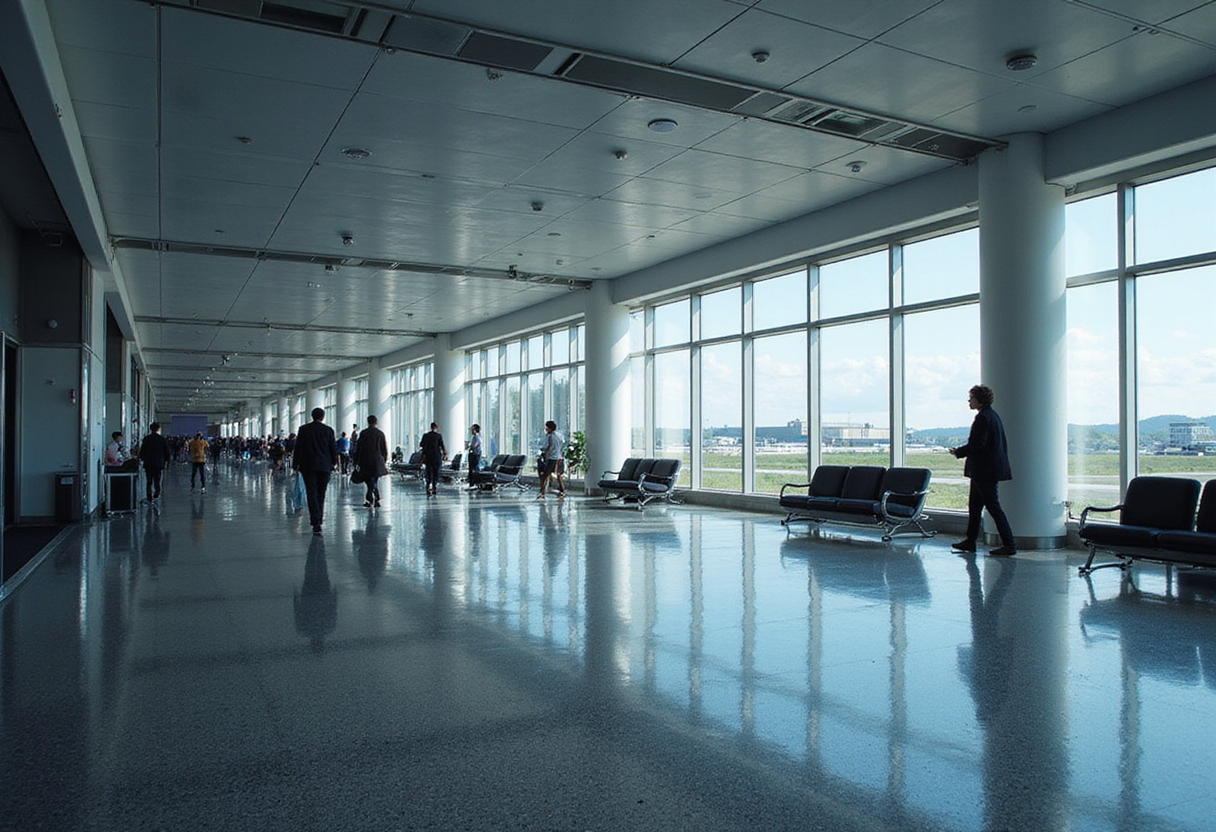
A series of near-miss events at Sydney Airport has prompted what The Weekly Times characterises as a "bombshell" response, placing Australia's busiest gateway and its air traffic management under fresh scrutiny.
The report, published by The Weekly Times, centres on a run of separation incidents at Sydney Kingsford Smith Airport, the country's largest aviation hub. The publication does not detail the specific response in its headline alone, but the framing signals that the aftermath of the near-misses has produced a development significant enough to be described in those terms — whether a regulatory intervention, a procedural change, or a disclosure that alters the official account of what occurred on the airport's runways and taxiways.
Sydney handles the heaviest scheduled traffic of any Australian airport, operating under a movement cap of 80 aircraft movements per hour and a curfew regime that compresses operations into a tightly defined window. That density matters contextually: any degradation in separation assurance at a airport running near its structural capacity limits carries network consequences well beyond the aerodrome itself, affecting airline scheduling, slot allocations and flow-on delays across the domestic trunk routes that converge on Sydney.
Near-miss events at major hubs typically trigger action from the Civil Aviation Safety Authority and Airservices Australia, the state-owned air navigation provider, alongside investigation work by the Australian Transport Safety Bureau. The ATSB classifies such occurrences as loss-of-separation or runway-incursion events depending on the geometry of the conflict, and its findings frequently feed into procedural revisions at air traffic control positions covering the Sydney basin's complex airspace, which also serves Bankstown, Camden and the wider terminal manoeuvring area.
The significance of a "bombshell" after such incidents depends on what the response targets. Post-incident actions at comparable airports have historically ranged from controller staffing adjustments and revised sequencing procedures to equipment certification changes and, in the most serious cases, suspension or restriction of specific operating patterns. Each of those paths carries different cost and capacity implications for the airlines that depend on Sydney — Qantas, Virgin Australia and Regional Express among them — and for the airport operator, Sydney Airport Corporation.
The Weekly Times report arrives amid broader pressure on aviation safety oversight in Australia, where the ATSB has in recent years examined a string of high-profile occurrence investigations. The aviation safety system's integrity rests on the assurance that near-miss events are reported, investigated and acted upon before they escalate into hull losses, and any suggestion that this chain has broken at Sydney would constitute a serious finding indeed.
Readers should treat the headline-level detail with appropriate caution. The specific aircraft types, operators, dates and separation distances involved in the near-misses, the identity of the authority or body responsible for the response, and the precise nature of the announced measure all require confirmation from the full report and from primary sources — the ATSB's occurrence database, CASA registers and Airservices Australia notices to airmen — before drawing conclusions about operational impact.
What is established is that a pattern of near-miss events at Australia's capacity-constrained primary gateway has produced a development that a mainstream outlet considers explosive enough to label a bombshell, and that the incident sequence and the response will now face examination against Australia's air safety record, one of the strongest globally. The coming weeks should clarify whether the response involves procedural change, personnel action or something more structural at Sydney Airport.
via Google News: Aviation safety (Source)
More from Priya Raman
Same bay
- FDR604Sydney Airport records near misses 20% above national average · September 30, 2026
- FDR140Revelation Follows Near-Misses at Sydney Airport · September 30, 2026
- FDR674ATSB Opens Preliminary Reviews Into Sydney Airport Incidents · September 30, 2026
- FDR9417NEWS Spotlight turns to Australia's air traffic crunch · September 30, 2026
- FDR721Staffing Pressures at Center of Sydney Airport Near-Miss Probes · September 30, 2026