Clearance CLR-6151 · AIR736
AIRTRA
Air CargoClearance sheet
Transpacific cargo demand up 12% in June as AI flows fill e-commerce gap
Transpacific westbound cargo demand grew 12% in June as AI and semiconductor flows replaced e-commerce, with forwarders warning that Boeing and Airbus output limits will keep capacity tight into 2026.
Read-back
- Westbound transpacific cargo demand from Asia Pacific grew 12% in June 2026
- Chicago Rockford handled 9.2% more landed weight in 2025, ranking 12th among US cargo airports
- Air Canada expects to take delivery of more than 20 aircraft in 2026, including most of its 14 Boeing 787-10 order
- CEVA launched three weekly 777-200F flights from Hanoi to Chicago in June; DHL GF added three weekly Bangkok-Cincinnati rotations in July
- Dimerco forecasts Malaysia air cargo volumes, including intra-Asia, will at least double within the next year
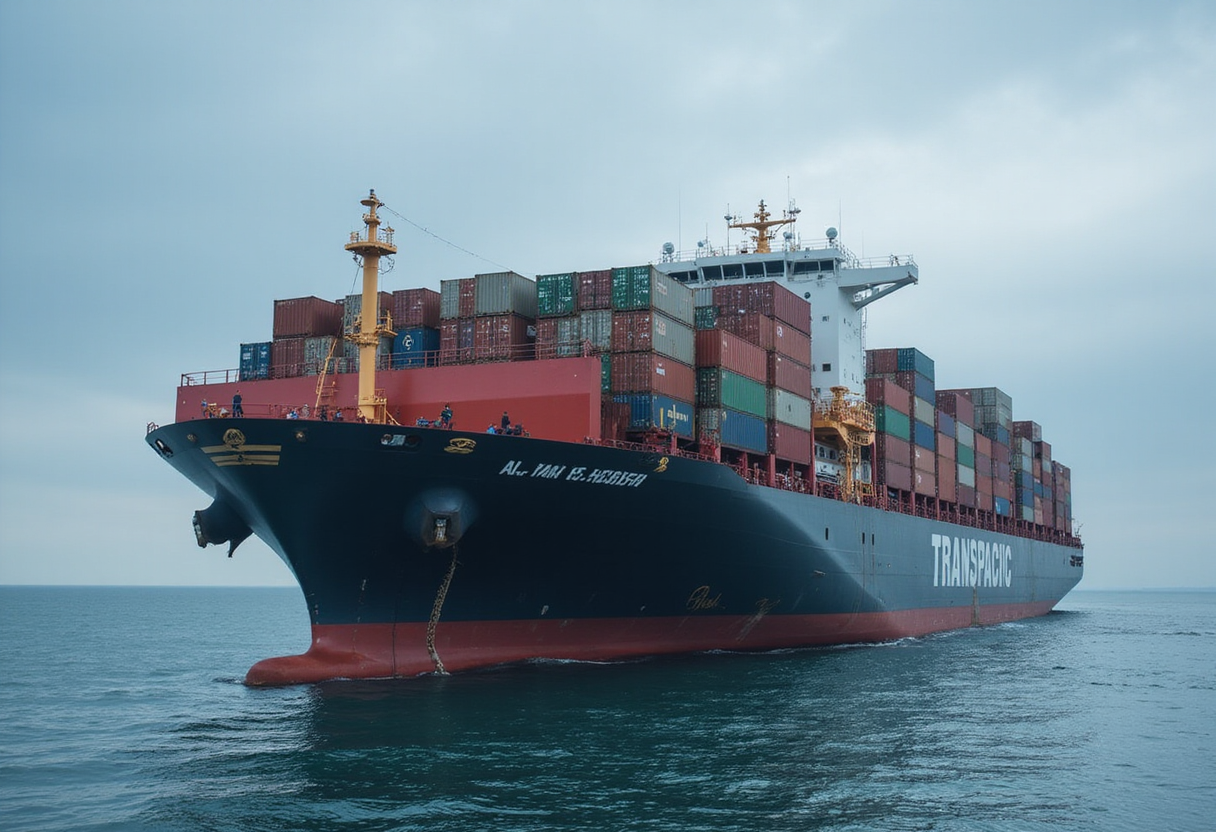
Westbound transpacific air cargo demand from Asia Pacific grew 12% in June, with load factors sitting at "lofty heights" as AI-related hardware replaces e-commerce as the principal growth driver, DHL Global Forwarding (DHL GF) told Air Cargo News.
"Looking ahead, we expect transpacific demand to remain healthy over the coming 12 months," said Fabio Weiss, DHL GF senior vice president of airfreight, Asia Pacific. "Continued investment in AI, cloud infrastructure and advanced computing should sustain demand for high-value, time-sensitive components, while continued supply chain diversification is creating a wider network of export origins across Asia."
How tight is capacity heading into peak season?
Forwarders and airlines report no slack period through the first half of the year and expect the same through the rest of 2026. Kenneth Leung, Dimerco Express Group senior vice president, warned that charters will be in demand to support flows out of Taiwan, Vietnam, Malaysia, Thailand and Singapore.
"Capacity will be tight due to demand from AI, semiconductor and high-tech manufacturing as well as from shippers that need to ensure adequate inventories for the end-of-year holiday season," Leung said.
The squeeze reflects production constraints on both airframers. Boeing and Airbus widebody output remains depressed, and feedstock for passenger-to-freighter conversions has thinned — a combination that will cap belly and dedicated lift into 2026.
Where are the new freighters flying?
The EU's tighter rules on low-value parcel imports have weakened Asia-Europe demand, pushing freighters back toward the Pacific. Dedicated-freighter activity has picked up on three fronts since June:
- CEVA Logistics launched three weekly Boeing 777-200F flights from Hanoi to Chicago on June, using aircraft from CMA CGM Air Cargo.
- DHL GF added Bangkok-Cincinnati 777F service at three weekly rotations under its TransPac Connect product, alongside Hanoi and Taipei origin coverage to US gateways.
- DSV added a weekly 777F rotation from Seoul to Chicago Rockford (RFD), joining existing Shanghai and Luxembourg services.
CEVA's three Hanoi-Chicago flights and DHL GF's three Bangkok-Cincinnati flights added 12 weekly widebody rotations to the transpacific market between them.
What is Chicago Rockford doing with the demand?
RFD handled 9.2% more landed weight in 2025 than the prior year, lifting it to 12th among US cargo airports. The airport spent close to $100m on parking stands and a cargo warehouse during the pandemic and is now adding a temperature-controlled facility to replace an off-site warehouse used for pharma. Executive director Zack Oakley said the new building should open by the second quarter of 2026.
RFD recently picked up twice-weekly freighter flights from Jinan Yaoqiang International Airport operated by Rich Sale International, a Shanghai-based cross-border e-commerce forwarder, and Oakley confirmed interest in adding direct Asia-Latin America service.
What is shifting in the Asian origin map?
Production relocations are redrawing the origin map. Weiss said Vietnam and Thailand are emerging sources for technology components, while Singapore and Malaysia now play significant roles in server-rack assembly alongside Taiwan and mainland China.
Leung forecast Malaysia volumes, including intra-Asia traffic, will at least double within the next year as capital equipment manufacturers have either relocated or expanded production lines there. He cited Taiwan, Korea and Singapore alongside Malaysia as established nodes.
Where does Air Canada fit?
Air Canada (AC) is restructuring its Asia flows around that redistribution. Managing director of commercial cargo Matt Casey said the carrier moved more than 10m kg on interline partners last year, accounting for a double-digit percentage of its Asian cargo, with much of its Southeast Asia traffic still routed via Japan and Korea.
AC expects to take delivery of more than 20 aircraft in 2026, including a large share of its 14-aircraft Boeing 787-10 order. The carrier has announced three-times-weekly Vancouver-Guangzhou service from May and daily Shanghai-Toronto flights. Casey also flagged growing parcel flows to Guatemala, San Jose, Lima and Bogota following AC's partnership with the Abra Group (Avianca, GOL).
How are the Japanese carriers positioned?
Nippon Cargo Airlines (NCA) has nearly completed its integration with All Nippon Airways (ANA), with only IT systems outstanding for early next year, according to NCA Americas president Shawn McWhorter. Once unified, the network opens up Malaysia, Southeast Asia and Australia capacity previously held back by limited Bangkok lift.
NCA also has a fledgling partnership with Mexican cargo operator mas and is watching whether a Latin American carrier will commit to Dallas/Fort Worth service, which McWhorter considers a faster transit than routing via Miami. He cautioned that published industry data undercounts the dedicated-freighter surge: "Lots of industry statistics don't include dedicated forwarder traffic, so you don't know if the market has shrunk or if a change you see is due to capacity that has not been reported."
The bottleneck now sits on the supply side. With Boeing and Airbus output still constrained and freighter-conversion feedstock scarce, transpacific lift will struggle to keep pace with the AI, semiconductor and diversified manufacturing flows that Weiss expects to define the market for at least the next 12 months.
via Air Cargo News (Source)
More from Nathan Brooks
Show full bio
Correspondent covering media and advertising at Flightdeck Report.
299 articles
Same bay
- FDR869Transpacific air cargo demand outpaces available lift · October 9, 2026
- FDR259EU De Minimis Curb Slows Asia Pacific Cargo Growth to 1.1% · September 28, 2026
- FDR456Ocean congestion and tariff clarity could push Q4 cargo to air · October 10, 2026
- FDR296Air Cargo Tonnages Rebound Ahead of Chinese Holiday, WorldACD Data Shows · September 27, 2026
- FDR896Transpacific Rates Stay Elevated as Peak Season Nears · September 27, 2026