Clearance CLR-3666 · AIR259
AIRTUR
Aircraft & EnginesClearance sheet
Türkiye's airline fleet reaches 800 aircraft as traffic hits record
Türkiye's fleet hit 800 aircraft at end-2025, up 43% from 558 in 2021, SHGM data shows. Passengers reached a record 247 million across 356 destinations.
Read-back
- Türkiye's airline fleet reached 800 aircraft at end-2025, up from 558 in 2021 (+43%).
- Turkish Airlines operates 473 aircraft; Pegasus 128; SunExpress 81.
- Passenger numbers hit a record 247 million in 2025 across 356 destinations in 133 countries.
- Fleet seating capacity grew from 104,464 to 157,785 seats between 2021 and 2025.
- The fleet comprises 760 passenger aircraft and 40 cargo aircraft.
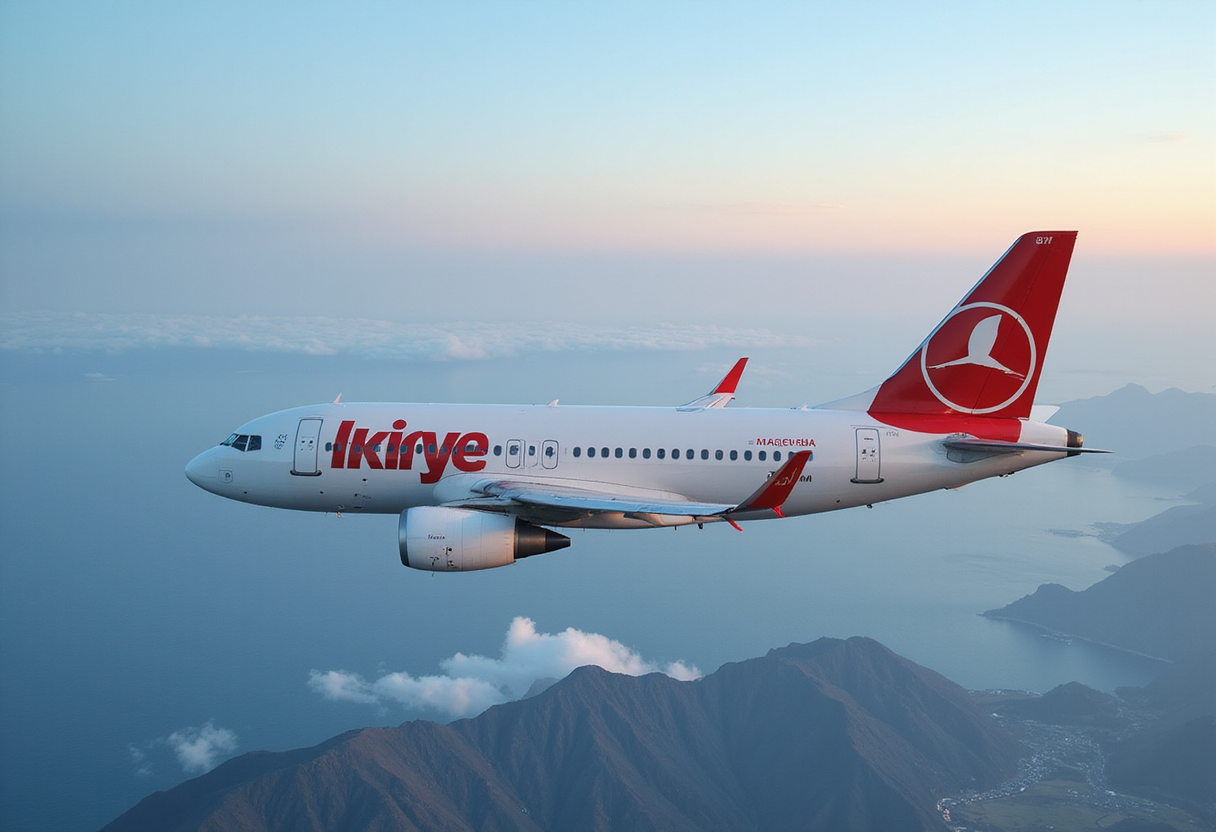
Türkiye's commercial airline fleet reached 800 passenger and cargo aircraft at the end of 2025, up 43% from 558 aircraft in 2021, according to data from the Directorate General of Civil Aviation (SHGM).
The five-year expansion tracks a broader surge in Turkish air travel. By the close of 2025, carriers based in the country served 356 destinations across 133 countries, and annual passenger numbers passed 247 million — a national record.
Seating capacity across the fleet grew from 104,464 seats in 2021 to 157,785 seats at the end of 2025, an increase of roughly 51% that outpaced the growth in aircraft count, pointing to a shift toward larger-gauge types.
How is the fleet split?
Passenger aircraft dominate the national register:
- 760 aircraft configured for passenger transport
- 40 aircraft in cargo operations
Turkish Airlines operates the largest share by far, with 473 aircraft — nearly 60% of the national fleet. Pegasus Airlines follows with 128 aircraft, and SunExpress, the Turkish Airlines–Lufthansa joint venture, operates 81.
What is driving the growth?
The Directorate General's data links fleet expansion to sustained infrastructure investment. Istanbul Airport, opened as one of the world's largest aviation hubs, anchors the system, while expansion projects at Antalya and Ankara Esenboğa airports have added capacity across multiple cities.
New airport construction in secondary cities has supported network growth alongside the trunk-hub buildout, feeding the expansion in destination count from the 2021 baseline to the current 356-point international network.
What does the fleet picture signal?
The 242-aircraft increase over five years — an average of roughly 48 additions per year — positions Türkiye among Europe's fastest-growing aviation markets in absolute fleet terms. Turkish Airlines alone accounts for a fleet larger than most European flag carriers operate, and its share of the national total underscores the concentration of capacity at the flag carrier.
Cargo remains a small fraction of the fleet at 5%, even as the passenger network has scaled to 133 countries — a segment where dedicated freighter capacity could constrain growth should demand for air cargo outpace belly capacity on the widening widebody network.
The SHGM figures cover aircraft used for passenger and cargo services. They indicate that the pace of Turkish fleet growth has continued through 2025, with the record 247 million passengers handled suggesting the expanded fleet is flying at historically high utilization — and that further Istanbul-hub capacity additions will shape the next phase of network development.
via static.hurriyetdailynews.com (Original)
More from Nathan Brooks
Show full bio
Correspondent covering media and advertising at Flightdeck Report.
356 articles
Same bay
- FDR347Türkiye's Airline Fleet Reaches 800 Aircraft · September 30, 2026
- FDR789Turkey ranks seventh-largest aviation market globally, IATA reports · October 9, 2026
- FDR268Turkish Airlines locks in 100 MAX 8s, with delivery window set for 2033–2037 · October 9, 2026
- FDR247IATA Data Show Air Cargo Demand Up 4.4% in August · September 30, 2026
- FDR372Ethiopian Airlines to Acquire 10 Boeing 777 Freighters · October 1, 2026