Clearance CLR-7902 · AIR491
AIRUNI
Airlines & NetworksClearance sheet
United Bans AI Agents From Booking, First US Carrier to Write It Down
United rewrote its contract of carriage on 11 November to bar third-party AI agents from booking, modifying or servicing reservations — the first U.S. carrier to do so in writing.
Read-back
- United revised its contract of carriage on 11 November 2026 to ban third-party AI agents from booking, modifying or servicing reservations
- The ban is codified in Rule 6.J.6; Rule 5.H allows United to cancel any reservation touched by an AI agent in breach
- United is the first U.S. carrier to put such an AI-agent restriction in writing
- CEO Scott Kirby said: "To be honest, I don't want to create another middleman"
- Southwest has opened its inventory to ChatGPT users for flight discovery, contrasting with United's restrictive stance
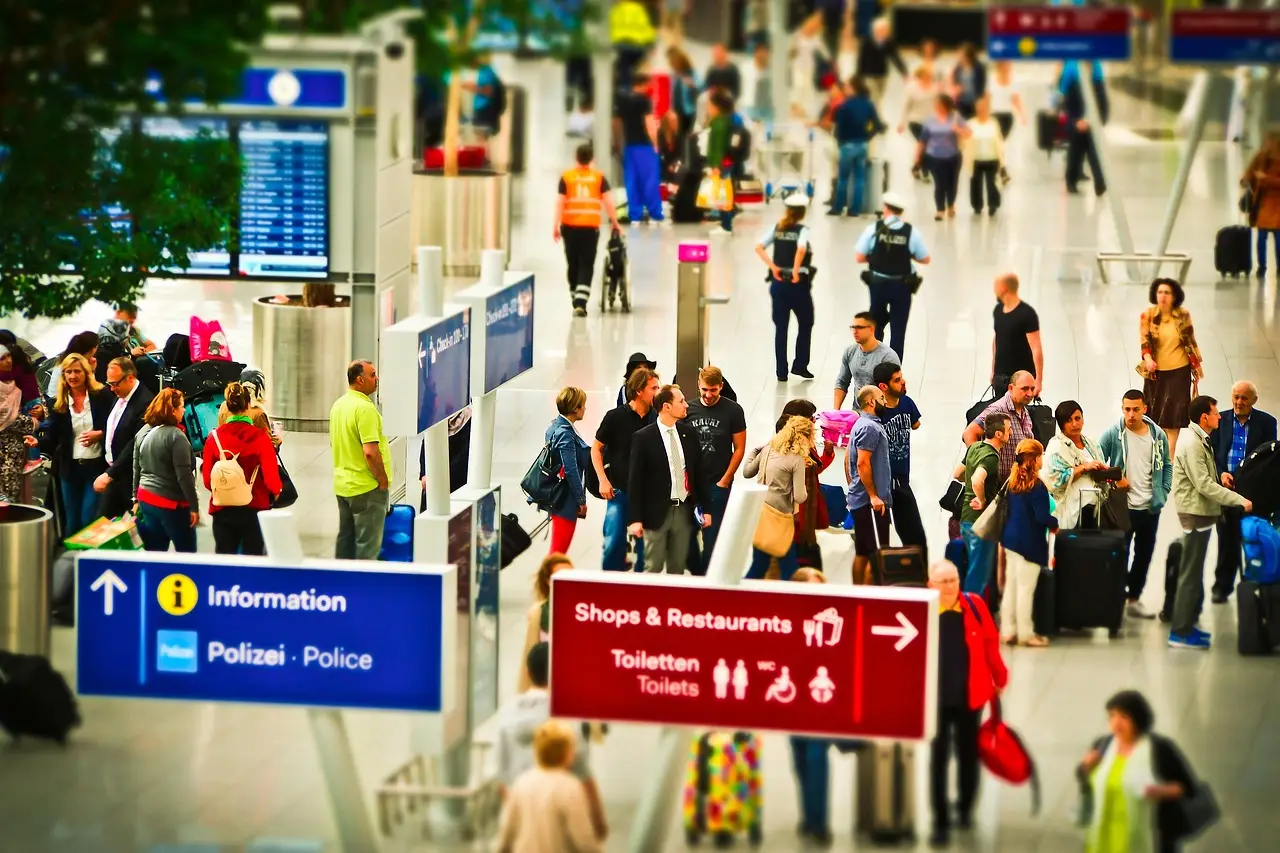
United Airlines revised its contract of carriage (the legal terms governing every ticket it sells) on 11 November to ban third-party AI agents from booking, modifying or servicing reservations, becoming the first U.S. carrier to put such a restriction in writing.
The prohibition sits in Rule 6.J.6 of the updated contract. A companion provision, Rule 5.H, gives United the right to cancel any reservation touched by an AI agent in breach of the policy — whether the agent made, changed or serviced the booking. That enforcement clause is what turns a policy statement into a rule with teeth.
United confirmed the ban applies on two fronts: directly through its own digital platforms and indirectly through travel agencies and aggregators. In a statement, the airline said: "United is taking steps to restrict access — directly within our digital platforms and indirectly via travel agencies and aggregators — to prohibit use by unauthorized, third-party personal AI agents or assistants."
Why is United acting now?
The airline has built its case on four arguments:
- Credential security. Customers who hand account logins to third-party tools expose sensitive personal and financial data.
- Transaction errors. United cited purchases made in error and unwanted changes to customer accounts.
- Loyalty exposure. MileagePlus miles can be redeemed without the customer's full knowledge or consent.
- Hazardous-materials law. Federal regulations require passengers to confirm at booking that they understand what they may and may not carry. United argues an autonomous AI agent cannot reliably fulfil that legal requirement on a passenger's behalf.
CEO Scott Kirby framed the commercial logic in blunter terms. Speaking about AI intermediaries, he told View from the Wing: "To be honest, I don't want to create another middleman."
That remark points at the distribution economics underneath the policy. Every intermediary between United and its customer — search engines, metasearch, online travel agencies — takes a share of the transaction or owns part of the customer relationship. An AI agent that completes purchases autonomously would add another layer, and potentially the most powerful one yet.
Henry Harteveldt, aviation analyst at Atmosphere Research Group, read the move exactly that way. "United is saying they don't want to add yet another, and potentially even more powerful, intermediary than they already face in terms of Google search, price-comparison metasearch sites and online travel agencies," he told CBS News.
What does this change for passengers?
For most travellers, almost nothing. United tickets remain available through Kayak, Hopper and Google Flights, because those platforms search and display fares rather than acting autonomously on a traveller's behalf.
The policy draws its line between two kinds of tool. A platform that surfaces prices for a human to review and confirm stays permitted. An AI agent that completes a transaction on its own does not.
Harteveldt reinforced the practical impact: "consumers shouldn't find it any more difficult to find good fares on the airline."
How does this compare with other carriers?
Southwest Airlines has taken the opposite approach at the browsing stage. It has opened its flight inventory to ChatGPT users through its own website, positioning the AI tool as a discovery channel for customers rather than a mechanism for completing bookings.
The contrast maps the current range of airline positions. United's stance is explicitly restrictive and contractually enforceable. Southwest's is comparatively open, at least for search. Where the other major U.S. carriers land remains unsettled.
The commercial weight of the decision is amplified by United's broader activity — the carrier has recently announced new 2027 routes from San Francisco and expanded domestic first-class access — so its distribution channel strategy matters at scale.
The bottom line
Among U.S. carriers, United's prohibition is the clearest and most enforceable stance yet, backed by contract provisions that allow cancellation of reservations made in breach. Travellers using standard price-comparison platforms will feel no effect. Developers and users of autonomous travel agents, however, now face a carrier that has codified its refusal — and whether rivals follow United's restrictive path or Southwest's open one will shape how AI agents enter airline distribution over the next booking cycle.
via theaviationhub.co.uk (Source)
More from Sophie Lindqvist
Show full bio
Senior reporter covering people, launches and day-to-day practice in Commercial aviation industry coverage at Flightdeck Report.
616 articles
Same bay
- FDR194NTSB links protected data and cautious AI to safety gains · November 6, 2026
- FDR349UK CAA Asks Pilots to Help Tackle Airspace Infringements · October 13, 2026
- FDR113Aviation's AI Question Shifts From Capability to Automated Impact · October 21, 2026
- FDR132US carriers refuse Boeing's latest 737 Max flight software, sticking with 2017-era U13 · October 10, 2026
- FDR749FlyersRights sues DOT over delay-cause rule it says shifts costs to passengers · October 31, 2026