Airspace & RegulationClearance sheet
US seeks up to $50 billion after five-hour ATC ground stop
A five-hour nationwide ATC ground stop on 13-14 November 2026, the second-worst such incident in US history after 9/11, has pushed the government to seek USD30-50 billion more — while controllers still track flights on paper strips.
Read-back
- A US-wide ATC failure caused a ground stop of over five hours on 13-14 November 2026, the second-worst such incident after 9/11.
- The government immediately sought an additional USD30-50 billion, on top of an earlier commitment of similar size.
- Much of the new funding will go to airport infrastructure rather than ATC, which still uses paper strips, copper wire and floppy discs.
- NextGen, the modernisation programme implemented a decade ago, has run out of steam.
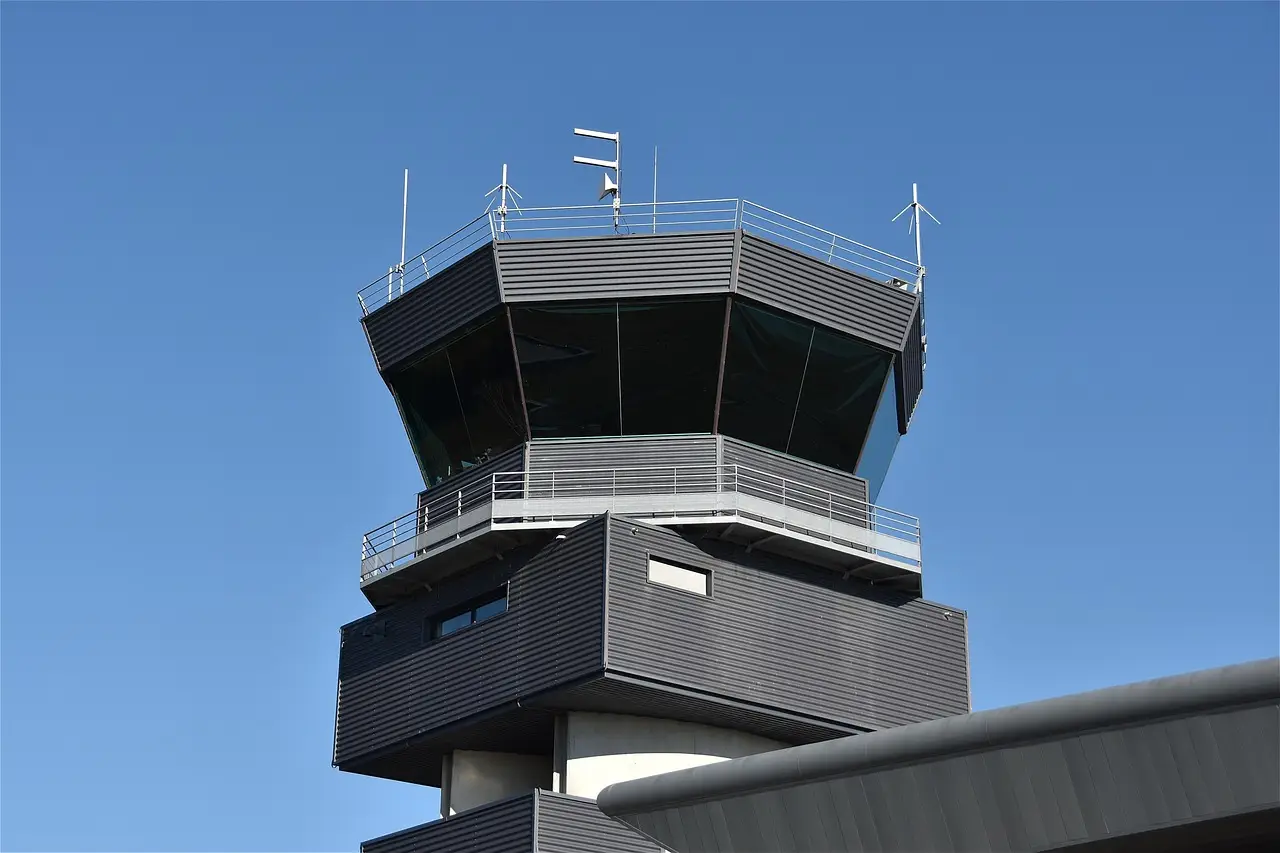
A five-hour nationwide ground stop on 13-14 November 2026 — triggered by a failure of US air traffic control systems — has prompted the government to seek an additional USD30-50 billion in funding, on top of an earlier commitment of similar size.
It was the second-worst incident of its kind in US aviation history, after 9/11. Aircraft across the country sat where they were while controllers worked around a system that, in much of the network, still relies on paper flight strips to track movements, copper wire for communications and floppy discs for data storage.
The money tells only part of the story. Much of the new funding will go to airport infrastructure rather than ATC itself, which means the systems that failed may continue to run on the same technology that failed them. That gap — between the scale of the investment and the narrowness of its target — sits at the centre of the debate now underway.
CAPA - Centre for Aviation's Chief Airport Analyst, David Bentley, argues that the incident sends a clear warning: ATC modernisation in the US has become an imperative, not a preference.
Why the funding isn't the fix
The sums sound large, but the US has been here before. NextGen, the modernisation programme implemented a decade ago, has run out of steam. What was once the flagship answer to ageing infrastructure is now itself part of the backlog.
There is also a structural problem that money alone doesn't address. The US system mixes administrative oversight with safety oversight in a single institutional frame, and the two roles pull against each other. Detaching them is, in the analysis CAPA puts forward, a pressing need in its own right — one that predates the November failure but that the failure has now made impossible to defer.
Politically, the timing is awkward. ATC, in CAPA's blunt assessment, is rapidly becoming an embarrassment for the current administration — one where the previous administration at least appeared to take the issue more seriously. A second-worst-ever national ground stop tends to sharpen that comparison.
Is privatisation the answer?
The harder question is institutional rather than fiscal. There are strong arguments, Bentley notes, for partially or wholly privatising ATC in the US. The obstacle is cultural and political: the service is deeply embedded in the public sector, and any move to extract it will meet resistance.
But privatisation, in this context, means something more specific than a sale. It would amount to what CAPA calls 'ATC reform' — converting government-run ATC systems into user-funded ATC utilities, a model already operating in a host of other countries. The US would not be experimenting; it would be catching up with a proven structure elsewhere.
That reframing matters. 'Privatisation' carries baggage in US policy debates. 'User-funded utility' describes the same outcome in terms of who pays and who governs — airlines and other airspace users, through charges, rather than Congress through appropriations.
What happens next
The concern, in the end, is about appetite rather than arithmetic. The worry, as CAPA frames it, is that it might require an even bigger meltdown still to prompt real action — that the November failure, for all its scale, will produce funding announcements rather than structural change.
The test will come in how the USD30-50 billion is allocated. If airport infrastructure again absorbs the bulk of it while controllers keep paper strips, copper wire and floppy discs, the next five-hour ground stop will have been signposted well in advance.
via CAPA News (Source)
More from Nathan Brooks
Show full bio
Correspondent covering technology and product news in Commercial aviation industry coverage at Flightdeck Report.
711 articles
Same bay
- FAA Chief Says Air Traffic Control Modernization Needs Billions More · October 10, 2026
- US Pursues Additional $30 Billion for ATC Modernization · September 30, 2026
- Reason Foundation questions $30 billion ATC modernization plan · October 16, 2026
- Duffy advances $30 billion ATC modernization proposal · October 19, 2026
- After 10,000 Cancellations, US Moves to Replace Air Traffic Control System · November 16, 2026