Clearance CLR-3113 · SUS196
SUSWAS
SustainabilityClearance sheet
Washington Offers $1-2 per Gallon SAF Tax Credit as Output Passes 20 Million Gallons
Washington's $1-2 per gallon SAF tax credit, announced Nov. 6, pairs with a confirmed 20-million-gallon annual production capability — the strongest state incentive in the US.
Read-back
- Governor Bob Ferguson announced a SAF tax credit on Nov. 6: $1 per gallon for fuel with at least 50% lower emissions, $2 for lower-emissions fuel.
- Washington's Department of Ecology confirmed the state can produce over 20 million gallons of SAF per year.
- State funding backed SkyNRG's Walla Walla facility and the Cascadia Sustainable Aviation Accelerator.
- Startup Twelve opened its AirPlant One facility in Moses City last year, producing fuel with 90% lower lifecycle emissions from captured CO2 and water.
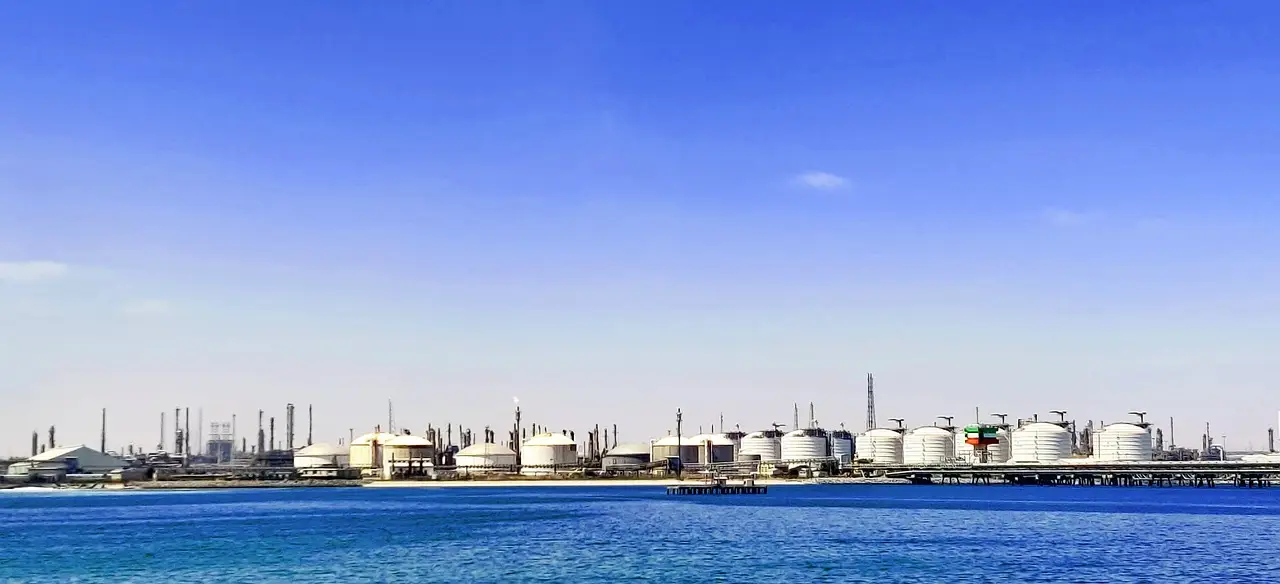
Washington will pay producers up to $2 per gallon of sustainable aviation fuel, the strongest state incentive in the United States. Governor Bob Ferguson announced the credit on Nov. 6, pairing it with confirmation that the state can now produce more than 20 million gallons of SAF per year.
What does the credit pay?
The structure is tiered by lifecycle emissions. Producers receive $1 per gallon for fuel that releases at least 50% less greenhouse gas than conventional jet fuel. Fuel with emissions below that threshold qualifies for $2 per gallon.
Washington's Department of Ecology confirmed the 20-million-gallon annual production capability. That figure triggered the incentive package. It is a production ceiling, not a guarantee of output. The source gives no figure for how many gallons Washington actually produces today.
Who is building the capacity?
The state has spread its bets across research, startups and infrastructure:
- Washington State University has become a leader in SAF production research.
- SkyNRG, which sources and supplies SAF, received state funding for its new production facility in Walla Walla.
- The Cascadia Sustainable Aviation Accelerator, formed with state money, supports producers and works to scale production and deployment.
- Twelve, a startup operating in Moses City, opened its AirPlant One facility last year and has a second site in development.
Twelve's technology stands out on paper. It uses only captured carbon dioxide and water as inputs, and the resulting fuel carries 90% lower lifecycle emissions than conventional jet fuel. One facility plus one site in development is a small base for a 20-million-gallon claim. The Department of Ecology confirmed the aggregate figure; the state did not publish a per-producer breakdown.
What does this change for airlines?
SAF remains scarce and expensive. The credit addresses the cost side, not the volume side, and the two problems are not the same. A $1-2 per gallon offset narrows the price gap with conventional jet fuel but does nothing by itself to expand refinery throughput beyond the 20-million-gallon ceiling.
For context, US airlines burn roughly 20 billion gallons of jet fuel annually, so Washington's capability covers a fraction of one percent of national demand even at full utilization. The credit's real function is to make Washington the cheapest place in the country to build the next SAF plant, not to fuel today's fleets.
What the state said
Ferguson framed the credit as economic strategy as much as climate policy:
"Aerospace has long been a cornerstone of Washington's economy, supporting generations of good-paying jobs and driving innovation across our state. It's also in our DNA to make big bets on bold ideas, which is what we're doing with sustainable aviation fuels. Between our long history of aviation innovation, our intentional investments into the sector and our climate-forward policies, we're making sure Washington is the best state in the country to produce sustainable aviation fuels."
That is a strong claim. Washington leads on state incentives; whether it leads on actual output against other states' announced projects is a question the announcement does not answer.
Jake Gentry, executive director of the Cascadia Sustainable Aviation Accelerator, was more direct about the economics:
"The challenge has been making it affordable at commercial scale, and this credit goes a long way toward closing that cost gap. Washington state built the aviation industry, and this type of investment positions us to lead in the next chapter of sustainable aviation."
Gentry names the real barrier: commercial-scale cost. The credit "goes a long way" toward closing it — a qualifier worth noting, since he does not say it closes the gap entirely.
What is promised, what is flying
The record so far: one confirmed 20-million-gallon capability, one operating Twelve facility, one Twelve site in development, one SkyNRG plant funded in Walla Walla. The promises: leadership in sustainable aviation production and a scaled fuel supply for the industry.
The next test is whether producers claim the credit at volume, which will require expanded facilities rather than expanded incentives.
via travelradar.aero (Source)
More from James Calloway
Show full bio
Staff writer covering people, launches and day-to-day practice in Commercial aviation industry coverage at Flightdeck Report.
650 articles
Same bay
- FDR614$1.4B Sustainable Aviation Fuel Plant Planned for Louisiana · September 28, 2026
- FDR207Minnesota Lawmakers Weigh Expansion of State SAF Tax Credit · October 10, 2026
- FDR162Washington State University study weighs realistic SAF trajectory · September 30, 2026
- FDR704GeorgiaSAF Pushes Commercial-Scale SAF Project Forward · October 15, 2026
- FDR225Minnesota SAF plant to supply 30 million gallons yearly to MSP · September 30, 2026